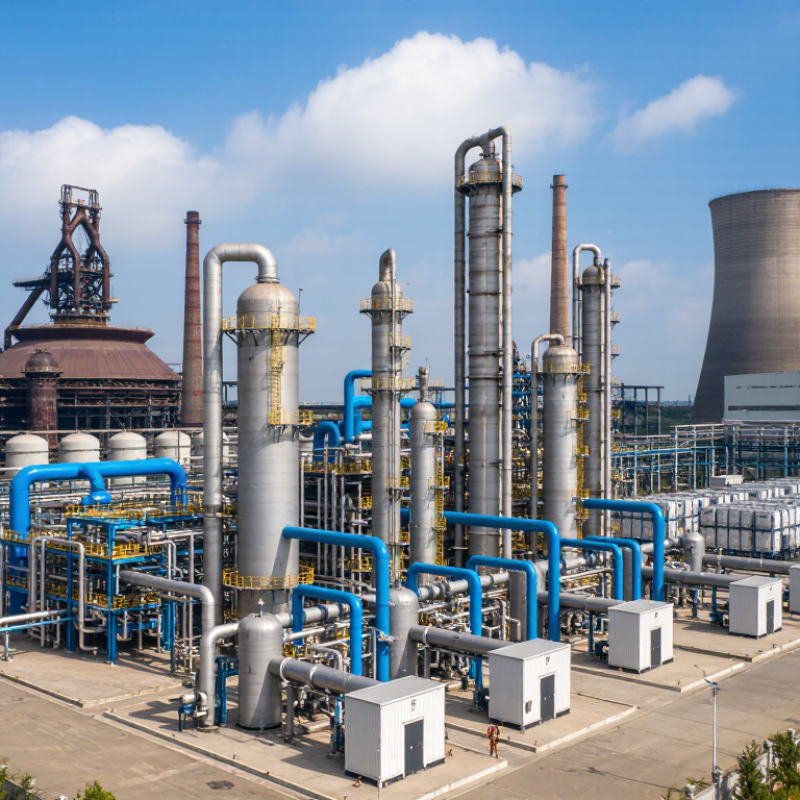
| Cryogenic ASU | Compresses, cools, and liquefies air, then separates its components by distillation at cryogenic temperatures. | Can produce oxygen, nitrogen, and argon. Oxygen is commonly supplied at about 99.5% or higher; nitrogen can reach very high purity, depending on design and specification. | Typically selected for large, continuous demand. Products may be delivered as gas by pipeline or as liquid for storage and transport. | Steelmaking, chemicals, refineries, large medical or industrial gas networks, and liquid-gas production. | Higher capital cost and greater process complexity; often attractive where demand is steady and high or multiple products are needed. Requires careful assessment of power, backup supply, and storage needs. |
| VPSA oxygen unit | Uses vacuum pressure swing adsorption: adsorbent beds preferentially remove nitrogen from air, with vacuum used during regeneration. | Typically produces oxygen-enriched gas around 90–95% oxygen by volume; it is not a source of liquid oxygen. | Commonly suited to medium-to-large, continuous on-site oxygen demand; practical capacity depends on the installation and required delivery pressure. | Glass production, wastewater treatment, non-ferrous metallurgy, and oxygen enrichment in industrial processes. | Compare total power use, oxygen flow and pressure, turndown range, maintenance access, and the cost of backup oxygen. Product purity is below that of many cryogenic systems. |
| PSA oxygen unit | Uses pressure swing adsorption, typically with zeolite molecular sieves, to remove nitrogen from compressed air. | Usually supplies oxygen at approximately 90–95% by volume; actual purity depends on operating conditions and system design. | Often used for small-to-medium on-site requirements, with modular configurations available. Product is generally supplied as gas. | Healthcare oxygen systems designed for applicable regulations, aquaculture, combustion support, and smaller industrial processes. | Check applicable medical or industrial standards, flow at the required pressure, air-treatment requirements, alarm and monitoring provisions, and backup arrangements. |
| PSA nitrogen unit | Uses carbon molecular sieve beds to preferentially adsorb oxygen and other components from compressed air, producing nitrogen-rich gas. | Nitrogen purity can range from roughly 95% to 99.999% or higher in specialized designs; higher purity generally affects flow and energy use. | Suitable for on-site gaseous nitrogen across a broad range of industrial flow requirements; capacity and purity are interdependent. | Food packaging, electronics, heat treatment, chemical blanketing, and laser cutting, subject to the process specification. | Specify purity at the point of use, peak and average flow, delivery pressure, dew point, and allowable oxygen content. Compare compressor and air-dryer energy use with delivered-gas alternatives. |
| Membrane nitrogen unit | Passes compressed air through selective hollow-fiber membranes; oxygen, water vapor, and other faster-permeating gases pass through more readily than nitrogen. | Commonly produces nitrogen at moderate purity, often around 95–99.5%; achievable purity and flow depend on membrane design and operating conditions. | Often selected for compact, continuous gaseous nitrogen supply at relatively modest flow and purity requirements. | Tire inflation, fire prevention systems, tank blanketing, and general inerting where the specified purity is suitable. | Check feed-air quality, required pressure and purity, membrane replacement considerations, and whether the process needs a higher-purity PSA or cryogenic supply. |