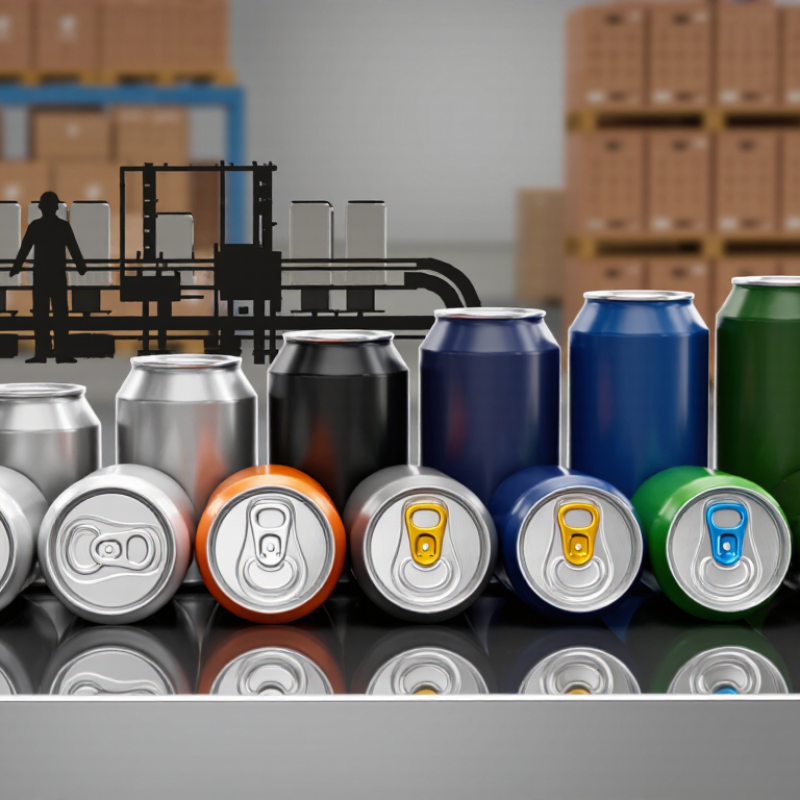
| Standard Beverage Can | 330 ml | Body: aluminium alloy 3004 or 3104
End: aluminium alloy 5182 | Approx. 115–123 mm height
Approx. 52–67 mm body diameter, depending on neck and end format | Good balance of formability, strength, low weight, corrosion resistance, and high-speed manufacturing performance. | Mainstream beer, lager, cider, and carbonated alcoholic beverages. | Wall thickness consistency, flange dimensions, dome strength, seam integrity, internal coating coverage, and pressure resistance. |
| Slim Can | 250–330 ml | Body: aluminium alloy 3104 or equivalent can-body alloy
End: aluminium alloy 5182 | Approx. 134–160 mm height
Approx. 53–58 mm body diameter | Higher and narrower design that provides a premium appearance while requiring precise control of drawing, ironing, necking, and buckling resistance. | Premium beer, flavoured beer, low-alcohol beverages, and portion-controlled products. | Dimensional accuracy, sidewall uniformity, top-load strength, neck profile, seam measurements, and resistance to denting. |
| Sleek Can | 250–355 ml | Body: aluminium alloy 3104 or equivalent can-body alloy
End: aluminium alloy 5182 | Approx. 140–170 mm height
Approx. 57–66 mm body diameter | Combines a narrow profile with a larger fill volume. Requires consistent material temper and accurate forming control. | Specialty beer, craft-style packaged beer, and premium retail products. | Paneling resistance, base stability, pressure performance, print registration, coating adhesion, and seam quality. |
| Large Format Can | 440–500 ml | Body: aluminium alloy 3104 or equivalent can-body alloy
End: aluminium alloy 5182 | Approx. 145–170 mm height
Approx. 66–67 mm body diameter | Provides greater serving volume. Structural performance depends on accurate material thickness, temper, dome design, and internal pressure control. | Beer, lager, cider, and high-volume retail or food-service formats. | Axial load, radial expansion, dent resistance, seam integrity, internal pressure, and transport durability. |
| Alcohol-Free or Low-Alcohol Beer Can | 250–500 ml | Body: aluminium alloy 3004 or 3104
End: aluminium alloy 5182 | Format-dependent; standard, slim, sleek, and large formats are commonly used. | Uses the same aluminium packaging structure as conventional beer cans. Product-specific filling conditions and shelf-life requirements determine coating and closure specifications. | Alcohol-free beer, low-alcohol beer, malt beverages, and functional beer-style drinks. | Internal coating compatibility, oxygen and carbon dioxide management, seam tightness, taste neutrality, and shelf-life testing. |
| Standard Can End | Matched to the can body | Commonly aluminium alloy 5182 with a suitable temper | Common nominal end diameters include approximately 52 mm and 57 mm, depending on the can format. | High strength and good resistance to opening and internal pressure. The end design must match the body flange and seaming specification. | Beer and carbonated beverage cans requiring standard opening systems. | End thickness, score-line depth, tab retention, opening force, pressure resistance, and double-seam dimensions. |
| Internal Protective Coating | Not applicable | Food-contact coating applied to the aluminium interior | Coating coverage must include the body, base, shoulder, and end area as specified by the packaging design. | Reduces direct contact between beverage and aluminium and helps protect flavour, product quality, and package integrity. | All beer and carbonated alcoholic beverage formats. | Coating weight, coverage, adhesion, cure, pinholes, beverage compatibility, extractables, and sensory neutrality. |
| Exterior Surface and Decoration | Not applicable | Coated aluminium with suitable exterior ink and varnish system | Decoration must follow the can body curvature and avoid interference with the flange, neck, base, and seam areas. | Provides corrosion protection, print appearance, abrasion resistance, and brand-neutral space for legally required information. | Retail beer cans, export packaging, seasonal products, and multipack formats. | Ink adhesion, colour consistency, abrasion resistance, barcode readability, coating cure, and print registration. |
| Food-Contact Compliance | Not applicable | Aluminium and coating materials suitable for intended food contact | Requirements depend on the destination market, beverage chemistry, coating formulation, and manufacturing process. | Documentation should demonstrate that the finished package is suitable for beer contact under the declared filling, storage, and distribution conditions. | Global import and export programs. | Applicable food-contact declarations, migration or extractables testing, formulation records, batch traceability, and change-control documentation. |
| Common Reference Standards | Not applicable | Aluminium sheet and packaging materials should be specified by alloy, temper, thickness, and applicable standard. | Dimensions and tolerances should be confirmed against the buyer’s approved can drawing. | Potential references include EN 573-3 for aluminium chemical composition, ASTM B209 for aluminium and aluminium-alloy sheet and plate, and market-specific food-contact regulations. | International sourcing, qualification, and supplier audits. | Material certificates, chemical composition, mechanical properties, dimensional inspection, coating test reports, and production batch records. |
| Recyclability | Not applicable | Aluminium packaging material | Can and end are designed as a lightweight, compact packaging system. | Aluminium can material is widely recyclable when collected and processed through an appropriate recycling system. Recycling performance depends on local collection and sorting infrastructure. | Markets seeking lightweight packaging and circular-material strategies. | Recycled-content declaration where applicable, material identification, coating compatibility, scrap recovery, and local recycling requirements. |
| Transport and Storage Performance | Not applicable | Finished aluminium can with approved coating, decoration, and closure | Packaging configuration should be evaluated together with trays, cartons, shrink film, pallets, and warehouse conditions. | Properly specified cans can provide efficient stacking and low package weight, but they remain sensitive to severe dents, seam damage, abrasion, and excessive heat. | Domestic distribution and international shipping. | Drop testing, vibration testing, pallet stability, corrosion inspection, seam protection, warehouse temperature, and humidity control. |