Request Quote

Request a quote from Nidec Drive Technology America Corporation.

This quote form is intended for customers and partners in North America seeking information about Nidec Drive Technology America Corporation’s Precision Gearing Technologies. For inquiries related to the Nidec motor group division or from outside this region, please visit the global Nidec Group website to find the appropriate regional or product-specific contact.

Subscribe to Nidec Newsletter

Subscribe to our email newsletter to stay current with our precision gearing solutions, featured products, company updates, and industry news.

2026 Best Worm Drive Gearbox Suppliers?

Choosing a worm drive gearbox supplier is not a catalog exercise. It means matching reduction ratio, torque, mounting position, duty cycle, and lubrication to the machine’s real operating conditions. A compact reducer may fit beneath a conveyor, yet run hot if its load or service hours were underestimated. Details matter.

The U.S. Department of Energy’s Improving Motor and Drive System Performance sourcebook reports that motor-driven systems use about 68% of the electricity consumed by U.S. manufacturing. That figure is not specific to worm gearboxes, but it shows why drive-system selection deserves careful review. Robert L. Norton, an engineering author whose work covers machine design and gearing, offers a useful principle—in paraphrase: select gears for actual loads, speeds, and service conditions. Fit matters.

This guide compares 2026 worm drive suppliers through practical criteria: published torque ratings, materials, thermal limits, customization, documentation, and after-sales support. It also considers efficiency and back-driving behavior; neither should be assumed from a product label alone. Ask for test data. Ask how ratings change under continuous operation. A polished datasheet helps, but it cannot replace application-specific engineering review. The comparison is a starting point, not a substitute for validating a gearbox against your equipment, environment, and maintenance plan.

2026 Best Worm Drive Gearbox Suppliers?

What Is a Worm Drive Gearbox?

What Is a Worm Drive Gearbox?

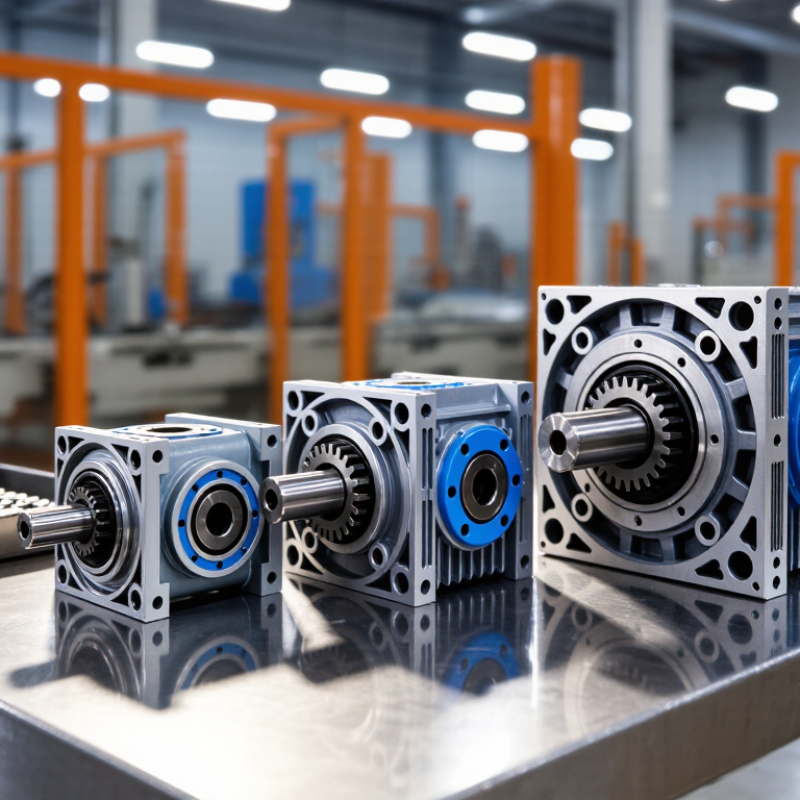
A worm drive gearbox uses a screw-shaped shaft, called the worm, to turn a toothed wheel. The shafts usually meet at right angles. This compact arrangement can deliver high reduction ratios in one stage, making it useful where space is tight and slow, controlled output is needed. You can picture the worm pushing across the wheel’s teeth, rather than two ordinary gears simply rolling together. That sliding contact matters.

It creates friction and heat, so efficiency depends on the ratio, materials, lubricant, speed, and operating temperature. Self-locking is sometimes possible, but it is not guaranteed; vibration or changing loads can allow movement. The U.S. Department of Energy’s 2014 Improving Motor and Drive System Performance: A Sourcebook for Industry reports that motor-driven systems account for about 68% of U.S. manufacturing electricity use. This is a system-level figure, not a worm-gearbox efficiency measurement, but it shows why transmission losses deserve attention.

For selection, compare rated torque and input speed with the real duty cycle, then check thermal capacity and lubrication requirements. Ask suppliers for efficiency data at your actual ratio and load, not just a headline figure. A small casing can still run hot. That detail is easy to miss. A gearbox that suits intermittent positioning may not suit continuous operation, even when both applications require the same output torque.

How Worm Drive Gearboxes Work and Where They Are Used

A worm drive gearbox uses a screw-shaped worm to turn a toothed wheel positioned at a right angle. The teeth slide against each other, creating smooth, quiet motion and allowing large speed reductions in a compact housing. This arrangement suits conveyors, lifting equipment, packaging lines, and rotary gates, where controlled movement matters more than high output speed.

Picture a conveyor advancing slowly beneath a noisy production line. A worm gearbox can help keep that movement steady. The design is simple, but not friction-free.

That friction creates heat and can reduce efficiency, especially with high reduction ratios or poor lubrication.

The U.S. Department of Energy’s Improving Motor and Drive System Performance sourcebook estimates that motor-driven systems use about 70% of electricity consumed by U.S. industry. That figure covers motor systems broadly, not worm gearboxes alone, but it shows why matching a gearbox to its load matters.

Check the required torque, duty cycle, mounting position, lubricant, and operating temperature before selecting one. A small mismatch can mean excess heat or wasted energy.

There is a catch: self-locking may occur in some designs, but it should not be treated as a dependable brake without engineering verification.

One detail is easy to overlook. Room temperature is not the gearbox’s operating temperature.

Key Specifications for Comparing Worm Gearboxes

A useful supplier comparison starts with the gearbox’s working conditions, not its catalog ratio. Record input speed, required output speed, peak and continuous torque, daily operating hours, and starts per hour. A 40:1 ratio may suit a conveyor, yet the same unit can overheat under frequent starts. Check rated input power and service factor against the real load, including brief jams or shock loads. Ask how ratings change with mounting position and ambient temperature. Small details matter.

Evaluate efficiency, thermal capacity, backlash, and noise alongside dimensions. Worm drives can be compact and quiet, but sliding contact creates heat and often lowers efficiency compared with other gear types. Request a thermal rating for the intended duty cycle, plus lubricant grade, fill method, and inspection interval. Confirm shaft diameter, hollow-bore fit, flange pattern, and allowed radial and axial loads before ordering. Fit matters. Review housing material, seals, corrosion protection, and ingress rating for the actual site, such as a washdown area or dusty packaging line. Ask for test data, drawings, and a clear warranty process. A datasheet cannot fully reproduce a hot, dusty installation.

How to Evaluate Worm Drive Gearbox Suppliers in 2026

2026 Best Worm Drive Gearbox Suppliers?

How to Evaluate Worm Drive Gearbox Suppliers in 2026

Choosing a worm drive gearbox supplier in 2026 means checking engineering evidence, not catalog torque alone. The IEA’s 2011 report, Energy-Efficiency Policy Opportunities for Electric Motor-Driven Systems, estimates these systems use about 45% of global electricity. That is substantial. Gearbox efficiency depends on ratio, lead angle, speed, lubrication, and operating temperature. Ask suppliers to state test conditions beside every efficiency figure. Numbers need context.

Request a rating calculation aligned with ISO/TS 14521:2010, including input speed, duty cycle, ambient temperature, and service-factor assumptions. Ask for evidence. Compare measured load-test results, oil specifications, housing temperatures, backlash tolerances, and noise readings with your application. A gearbox running intermittently in a dusty washdown area needs different seals and thermal margins than a steady conveyor drive. A capable supplier should explain these trade-offs plainly.

Check whether the supplier can trace alloy and heat-treatment records, provide spare-part lead times, and support failure analysis. Request performance data for your ratio and load, not a generic efficiency promise. Warranty terms matter, but so does response time during a stoppage. I would still question one assumption: a lower quote may reflect a lighter duty rating, yet the documentation does not always make that obvious. Ask for the calculation sheet before approval.

Leading Worm Drive Gearbox Suppliers and Their Strengths

2026 Best Worm Drive Gearbox Suppliers?

Leading Worm Drive Gearbox Suppliers and Their Strengths

The strongest worm drive gearbox suppliers do more than quote a ratio and a price. They help match torque, speed, duty cycle, and mounting position to the actual machine. Look for clear load calculations, material specifications, and documented testing. A supplier that can explain heat limits and lubrication intervals is often more useful than one offering the widest catalog. Small details matter: a gearbox running beside a warm motor may need different service assumptions than one operating intermittently.

Engineering support is a real differentiator. Some suppliers excel at compact custom housings; others offer shorter lead times, application testing, or a broad range of shaft and flange options. Ask for measured backlash, noise, and thermal performance under stated conditions. “High efficiency” alone is not enough. The International Energy Agency’s 2011 report, Energy-Efficiency Policy Opportunities for Electric Motor-Driven Systems, estimates that motor-driven systems consume about 45% of global electricity. That figure covers entire systems, not gearboxes alone, but it underscores why transmission losses deserve attention.

A careful comparison should include total operating conditions, not just purchase cost. Request test methods and clarify whether ratings assume continuous duty, a specific lubricant, or ideal alignment. Real installations are rarely ideal. One caveat: worm gearing can offer compact right-angle reduction and useful resistance to back-driving, yet it may generate more heat than some alternatives. The best supplier makes that trade-off visible rather than hiding it in a catalog.

2026 Best Worm Drive Gearbox Suppliers? - Leading Worm Drive Gearbox Suppliers and Their Strengths

This comparison covers supplier types rather than named companies. Capabilities vary by supplier and product line; confirm specifications, availability, and certifications directly before purchasing.

Supplier Type Typical Strengths Best Suited For What to Verify Potential Trade-Offs
Large industrial gearbox manufacturer Broad product ranges, established engineering processes, and support for common industrial mounting and shaft configurations. General machinery, conveyors, material handling, and projects requiring a choice of standard sizes or configurations. Rated output torque, service factor, thermal capacity, mounting position, shaft arrangement, and documented quality controls. Standard configurations may not suit unusual space, interface, or operating requirements; custom changes can affect cost and lead time.
Precision motion specialist Focus on compact drives, repeatable positioning, low-backlash options, and integration with motors or motion-control systems. Automation equipment, indexing systems, packaging machinery, and applications where controlled movement is important. Backlash measurement method, permissible radial and axial loads, repeatability data, lubrication requirements, and motor compatibility. Precision features may increase cost; confirm that the gearbox is rated for the application's actual duty cycle and shock loads.
Custom engineering gearbox supplier Can assess non-standard interfaces, materials, ratios, sealing, or operating conditions when a catalog product is unsuitable. Special-purpose machinery, restricted installation spaces, unusual environmental conditions, and OEM equipment designs. Engineering review process, drawings and tolerances, prototype validation, testing scope, change control, and production support. Design work and validation can extend development schedules and require higher initial engineering or tooling investment.
Regional gearbox manufacturer Local technical communication, familiarity with regional standards, and potentially convenient service or delivery arrangements. Buyers prioritizing nearby technical support, regional sourcing, or coordination with local machine builders. Local inventory, service coverage, spare-parts availability, applicable conformity documentation, and export capability if needed. Available product range and international support may differ from those of larger suppliers; check long-term parts continuity.
Authorized distributor or stockholding supplier Access to stocked standard units, help comparing catalog options, and consolidated purchasing for related components. Replacement purchases, maintenance needs, and projects using standard catalog sizes with short delivery requirements. Exact model and revision, traceability, stock status, warranty handling, technical escalation route, and genuine documentation. Custom engineering and application analysis may be limited; confirm that the selected unit is suitable rather than relying on dimensional similarity alone.

Selection note: Worm gearboxes can provide high reduction in a compact arrangement, but sliding contact can produce more heat and lower efficiency than some other gearbox types. Compare the supplier’s rated torque, duty cycle, thermal limits, lubrication guidance, and application data—not ratio alone.