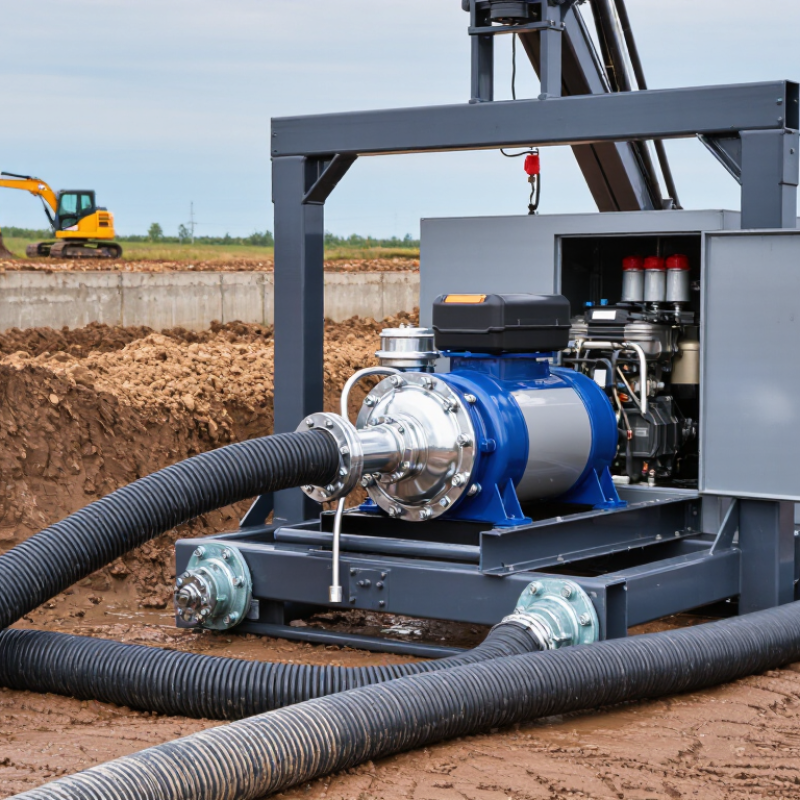
| Pump type | Above-ground centrifugal pump with a diesel engine, suction casing, check valve, and automatic or assisted priming system | The pump can evacuate air from the suction line and begin pumping without manual filling at every start | Confirm whether the model is truly self-priming and identify the required priming method and maximum priming lift |
| Sewage and wastewater duty | Designed for liquids containing suspended solids, sludge, debris, and variable contamination levels | The hydraulic passage and impeller must tolerate solids without frequent blockage | Match the pump construction to raw sewage, stormwater, industrial wastewater, or sludge service |
| Flow rate | Common portable and trailer-mounted ranges are approximately 20–1,500 m³/h, depending on pump size and operating head | Flow is the volume that must be moved within a specified time | Determine the required flow in m³/h or L/s from site inflow, drainage volume, or process requirements |
| Total dynamic head | Typical sewage-pump applications operate at approximately 10–90 m of total head; actual values vary by pump design | Total head combines static elevation, pipe friction, fittings, valves, and discharge pressure | Calculate total dynamic head instead of selecting a pump from lift height alone, then verify the duty point on the pump curve |
| Solid-passage diameter | Typical non-clog sewage pumps provide a clear passage of about 50–100 mm; larger passages are available for heavy debris service | The passage indicates the approximate size of solids that can pass through the pump without blockage | Choose a passage larger than the expected debris size and install suitable screening when large objects may enter the suction line |
| Suction lift | Practical suction lifts are commonly limited to approximately 7–8 m at sea level; performance decreases with altitude, temperature, hose losses, and air leakage | Suction lift is the vertical distance from the liquid surface to the pump centerline | Keep the suction hose short, airtight, and as straight as possible; verify the manufacturer's maximum priming and suction-lift data |
| Discharge connection | Portable sewage pumps commonly use discharge sizes of approximately 50–300 mm | Connection size affects velocity, friction loss, hose compatibility, and installation time | Select a discharge size that supports the required flow without excessive friction loss or unnecessary hose weight |
| Diesel engine power | Approximately 5–300 kW is used across small portable units, trailer-mounted pumps, and larger dewatering systems | Engine power must cover hydraulic demand, mechanical losses, starting loads, and operating conditions | Use the complete pump curve and engine rating; do not size the engine from flow rate alone |
| Engine operating speed | Many diesel pump packages operate near 1,500–2,400 rpm, depending on engine, pump speed, and drive arrangement | Speed influences noise, fuel consumption, wear, and the hydraulic operating point | Choose a speed that meets the duty point while avoiding continuous operation at the engine's maximum rating |
| Fuel consumption | A practical planning range for diesel engines is approximately 0.25–0.35 L/kWh, depending on load, engine size, speed, and condition | Fuel use determines operating autonomy and the required fuel-tank capacity | Calculate fuel demand from the expected engine load and verify the manufacturer's fuel-consumption curve |
| Fuel-tank autonomy | Common packaged units provide approximately 8–24 hours of operation, depending on tank volume and load | Longer autonomy reduces refueling frequency during emergency drainage or remote operation | Specify the required runtime and include reserve capacity for access limitations and changing loads |
| Pump casing and wetted materials | Common options include cast iron for general sewage service and stainless steel or special alloys for more corrosive liquids | Material selection affects abrasion resistance, corrosion resistance, service life, and maintenance cost | Check pH, chloride content, abrasives, temperature, and chemical compatibility before selecting materials |
| Impeller configuration | Vortex, recessed, semi-open, and non-clog impellers are commonly used for wastewater and sewage applications | Impeller geometry balances solids handling, efficiency, head, and blockage resistance | Use a vortex or non-clog design for debris-heavy liquids and compare efficiency at the actual duty point |
| Seal arrangement | Mechanical seals are standard; silicon carbide, tungsten carbide, carbon, and ceramic faces may be selected for different services | The seal prevents liquid from entering the bearing housing or engine-side components | Select seal materials according to abrasives, temperature, chemicals, and expected dry-running risk |
| Control and protection | Typical systems include low-oil shutdown, high-coolant-temperature shutdown, overspeed protection, emergency stop, and low-fuel alarms | Protection systems reduce the risk of engine damage and unsafe operation | Specify automatic start/stop, float control, remote monitoring, and alarm functions when unattended operation is required |
| Portability and installation | Configurations include skid-mounted, wheel-mounted, trailer-mounted, and sound-attenuated enclosures | The package must be suitable for transport, lifting, access, weather exposure, and site safety requirements | Check dry weight, lifting points, trailer regulations, ground conditions, enclosure ventilation, and weather protection |
| Noise and emissions | Noise and exhaust requirements depend on engine size, enclosure design, operating speed, location, and applicable local regulations | Urban, residential, indoor, and environmentally sensitive sites may impose additional restrictions | Confirm the required emissions stage, exhaust arrangement, sound level, ventilation, and site permits before purchase |
| Maintenance access | Useful features include a cleanout cover, replaceable wear components, accessible oil and filter points, and serviceable seals | Easy access reduces downtime when blockages, wear, or routine service occur | Compare cleanout time, spare-parts availability, service intervals, and local technical support |
| Final duty-point check | Required flow, total dynamic head, solids size, suction lift, liquid properties, operating hours, and ambient conditions | A pump is correctly selected only when all major operating conditions are considered together | Request the pump curve, engine-performance data, priming limits, fuel-consumption data, dimensions, and maintenance schedule before approval |