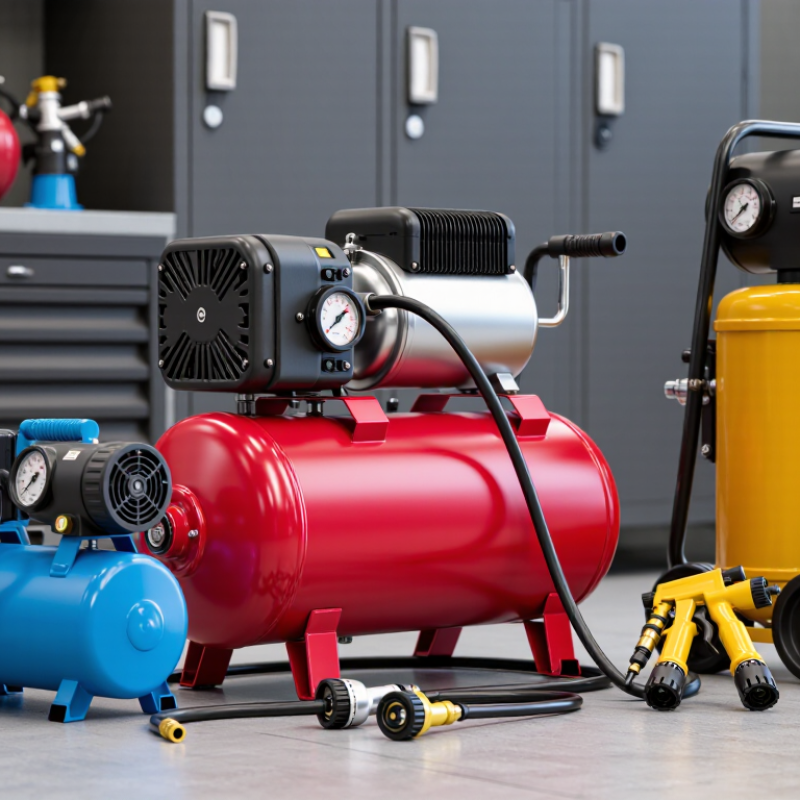
| Portable Reciprocating Compressor | 0.10–2.0 m³/min | 7–12 bar(g) | 0.75–15 kW | Approximately 8–14 kW per m³/min | Intermittent to moderate duty; commonly operated with rest periods | Oil-lubricated or oil-free versions available | Positive-displacement piston design; compact receiver-mounted packages; good pressure capability at low capital cost | Periodic piston-ring, valve, lubricant, belt, and condensate-service checks | Hand tools, service garages, workshops, small construction sites, and light pneumatic equipment |
| Oil-Injected Rotary Screw Compressor | 0.7–50 m³/min | 7–13 bar(g) | 5.5–315 kW | Approximately 6–8.5 kW per m³/min | Continuous or high-duty operation; suitable for variable production demand | Oil-injected compression with separator, oil cooler, and filtration circuit | Twin-screw air end; smooth airflow; variable-speed drive options; package layouts may include an integrated dryer | Scheduled oil, separator, intake-filter, oil-filter, cooler, and drive-system servicing | Manufacturing plants, fabrication, automotive production, packaging, and general industrial air systems |
| Oil-Free Rotary Screw Compressor | 1.0–40 m³/min | 7–10 bar(g) | 15–250 kW | Approximately 7–11 kW per m³/min | Continuous duty where compressed-air purity is critical | No oil in the compression chamber; bearings and gears may use separate lubrication systems | Dry screw elements; often uses multi-stage compression, intercooling, and advanced coating or sealing technologies | Requires careful control of cooling, air-end condition, filters, seals, and water quality where applicable | Food and beverage, pharmaceuticals, electronics, medical air, textiles, and sensitive process applications |
| Scroll Compressor | 0.08–3.0 m³/min | 6–10 bar(g) | 1.5–30 kW | Approximately 7–12 kW per m³/min | Continuous duty with multiple-module sequencing; individual modules cycle as demand changes | Oil-free compression chamber; oil may be present only in motor or bearing areas depending on design | Orbiting scroll elements; low vibration and low noise; modular configuration improves part-load matching | Generally low routine maintenance; intake filters, cooling paths, valves, and bearings still require inspection | Dental and medical systems, laboratories, light manufacturing, instrument air, and indoor installations |
| Rotary Vane Compressor | 0.2–10 m³/min | 4–10 bar(g) | 2.2–75 kW | Approximately 7–11 kW per m³/min | Moderate to continuous duty, depending on cooling and vane material | Usually oil-lubricated; oil-free variants are available for selected low-flow duties | Eccentric rotor with sliding vanes; compact footprint; stable flow and relatively low pulsation | Vane, filter, oil, separator, and cooling-system replacement intervals are important lifecycle factors | Vacuum-pressure systems, workshops, printing, packaging, pneumatic conveying, and small process lines |
| Centrifugal Compressor | 25–1,000+ m³/min | 3–12 bar(g) per stage; higher pressure may require multiple stages | 200–10,000+ kW | Approximately 5.5–8 kW per m³/min near design load | Designed for continuous, high-volume operation with stable demand | Compression chamber is normally oil-free; gearbox and bearing arrangements vary by design | Dynamic impeller-based compression; high flow capacity; low pulsation; sensitive to surge and operating-point changes | Requires specialist inspection of impellers, bearings, seals, inlet controls, coolers, and anti-surge systems | Large process plants, petrochemicals, steel, refineries, utilities, and high-volume air separation |
| High-Pressure Reciprocating Compressor | 0.05–20 m³/min | 20–350+ bar(g), usually through multiple stages | 5.5–1,000+ kW | Highly dependent on pressure ratio and staging | Intermittent, batch, or continuous duty depending on cylinder cooling and package design | Oil-lubricated or oil-free cylinder designs available | Multi-stage piston compression with intercoolers; strong pressure capability; higher pulsation and vibration than rotary designs | More intensive servicing of valves, piston rings, packing, lubricating systems, pulsation dampers, and safety devices | Gas filling, pressure testing, PET production, gas processing, and high-pressure industrial systems |
| Two-Stage Piston Compressor for Professional Workshops | 0.25–1.5 m³/min | 10–15 bar(g) | 2.2–11 kW | Approximately 8–15 kW per m³/min | Intermittent or short-cycle operation; not normally selected for uninterrupted plant demand | Most commonly oil-lubricated | Low-pressure and high-pressure cylinders with intercooling; receiver capacity helps manage short demand peaks | Regular oil changes, belt alignment, drain maintenance, valve inspection, and receiver safety checks | Automotive repair, metalworking, spray painting, tire service, and maintenance departments |
| Variable-Speed Compressor Package | 0.5–50 m³/min, depending on compressor element | 7–13 bar(g), depending on configuration | 5.5–315 kW | Usually lowest at part-load conditions when correctly sized | Well suited to fluctuating demand; continuous duty subject to minimum and maximum speed limits | Oil-injected, oil-free screw, or other compressor elements may be used | Inverter-controlled motor speed adjusts output; reduces unloaded running and may lower energy use under variable demand | Electrical drive, cooling, motor bearings, sensors, filters, and control software require planned service | Facilities with changing shifts, multiple production lines, seasonal demand, or frequent load variation |