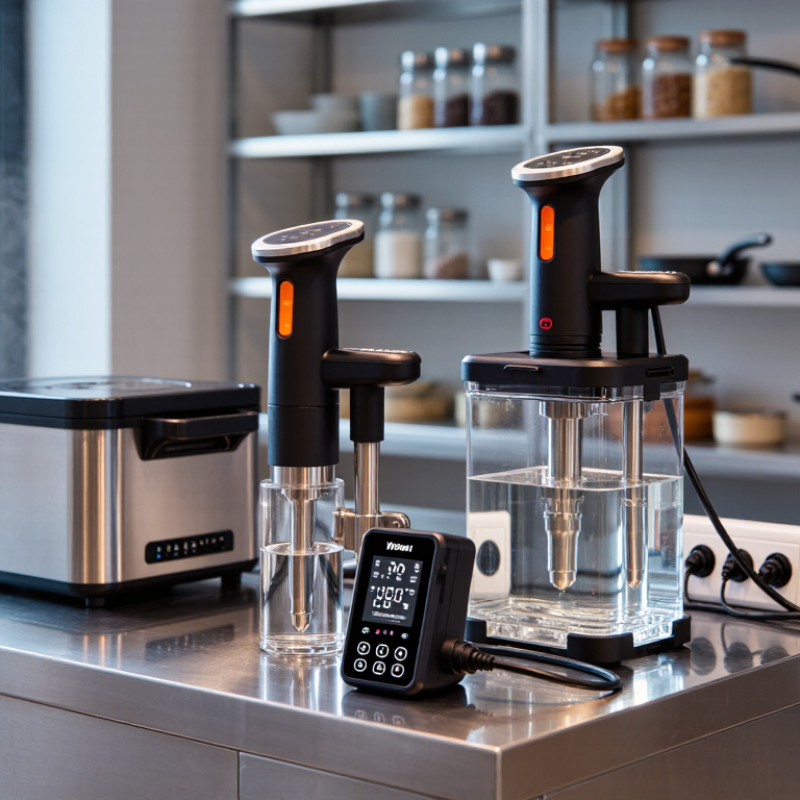
| Immersion Circulator | A heating and circulation unit clipped to a separate water container. | Usually about 5–95°C, depending on the model. | Approximately 5–50 L working volume; larger units are available. | Home kitchens, culinary training, small restaurants, product testing and small-batch preparation. | Portable, space-efficient, flexible container choice and generally lower initial cost. | Requires a suitable container; evaporation, noise and circulation limits may affect long cooks. | Best for buyers seeking flexible, entry-level or small-batch equipment. |
| Integrated Water Bath | A dedicated tank with built-in heating, circulation and a fitted lid. | Commonly about 5–95°C; some professional models support a narrower or wider controlled range. | Approximately 8–25 L for countertop units. | Household use, culinary schools, cafés, test kitchens and moderate service volumes. | Stable temperature, enclosed water area, simple setup and predictable operation. | Less portable and less adaptable to unusually large or deep containers. | Suitable for buyers prioritizing convenience, repeatability and clean countertop installation. |
| Professional Recirculating Water Bath | A laboratory- or foodservice-grade tank with precise circulation and programmable controls. | Typically around ambient temperature to 95°C, subject to model specifications. | Approximately 20–100 L or more. | Hotels, restaurants, central kitchens, food laboratories and regulated process development. | Strong temperature uniformity, durable construction, programmable cycles and better process control. | Higher purchase price, greater water use and more demanding cleaning procedures. | Best for commercial buyers requiring repeatable production and documented controls. |
| Low-Temperature Combi Oven | A combi oven using controlled steam, humidity and heat for bagged food or low-temperature cooking. | Often about 30–100°C in low-temperature and steam modes. | Tray-based capacity; commonly several trays to full commercial rack sizes. | Professional kitchens needing cooking, steaming, reheating and holding in one platform. | High throughput, multifunctional operation and reduced need for separate water tanks. | It is not a direct substitute for a circulating bath in every recipe; humidity and airflow must be controlled. | Ideal for commercial kitchens that value equipment consolidation and batch capacity. |
| Commercial Sous Vide Cabinet or Tank | A large insulated cabinet or tank designed for multiple racks, baskets or sealed product loads. | Commonly about 40–95°C for cooking and controlled holding. | Approximately 100–500 L or more, depending on configuration. | Hotels, catering operations, hospitals, institutional kitchens and central food production. | Large batch capacity, organized loading, insulation and improved production consistency. | Requires significant floor space, water management, ventilation planning and staff training. | Recommended for high-volume buyers with established food-safety and production procedures. |
| Continuous Sous Vide Production Line | Integrated line combining portioning or loading, sealing, thermal treatment, chilling and product handling. | Process-specific; commonly configured for controlled low-temperature cooking and pasteurization steps. | Industrial throughput measured by kilograms or packaged units per hour. | Ready-meal factories, meat and seafood processors, institutional meal production and chilled-food manufacturers. | High throughput, automation, traceability and consistent process parameters. | High capital cost, complex installation and substantial validation, maintenance and sanitation requirements. | Best for industrial buyers with stable demand and clearly defined product specifications. |
| Chilled Sous Vide System | A process configuration combining vacuum packaging, controlled cooking, rapid chilling and refrigerated storage. | Cooking temperatures vary by product; rapid chilling is generally performed immediately after cooking. | Small-batch kits through large commercial systems. | Meal preparation, cook-chill foodservice, retail chilled meals and centralized catering operations. | Supports advance preparation, portion control and service-speed improvements. | Requires strict time-temperature control, rapid chilling, cold-chain management and validated shelf-life procedures. | Suitable for buyers focused on prepared meals, centralized production and planned service schedules. |
| Portable or Compact Sous Vide Unit | Small immersion circulator or compact bath designed for limited workspaces and mobile use. | Usually about 5–95°C, depending on the product design. | Approximately 3–12 L working volume. | Small apartments, demonstrations, culinary classrooms, mobile catering and travel-oriented cooking. | Low storage requirement, easy transport and simple operation. | Limited batch size, slower recovery with large loads and less suitability for continuous commercial work. | A practical option for buyers testing sous vide or operating with limited space and output. |