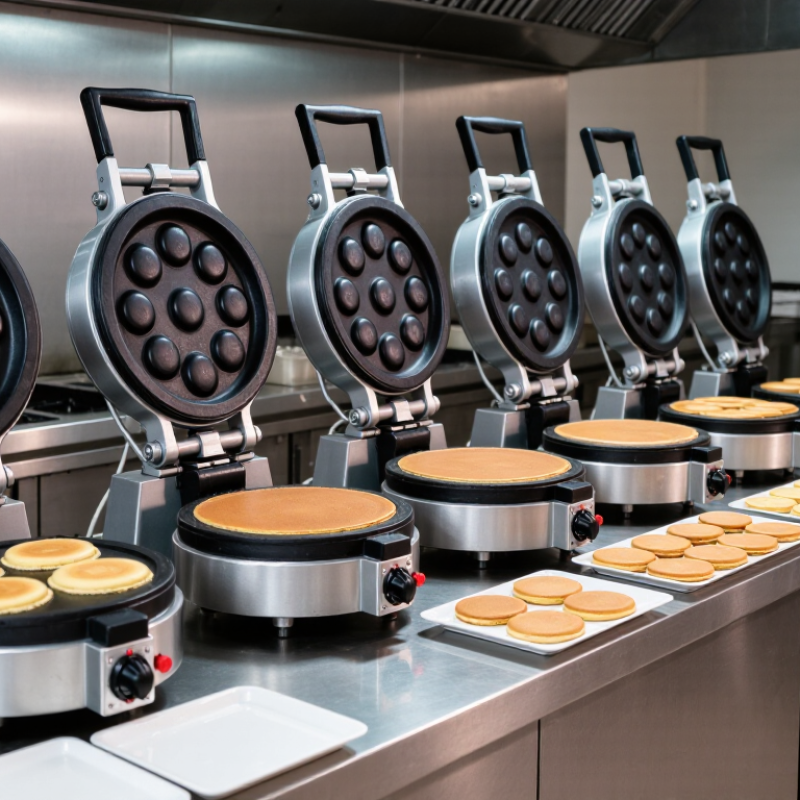
For commercial dorayaki, the strongest seven machine configurations rank by verified production, not brochure promises: 1) continuous dual-plate lines, 2) multi-cavity automatic units, 3) indexed rotary cookers, 4) programmable twin plates, 5) modular multi-plate units, 6) single-plate programmable cookers, and 7) manual single-cavity machines. Compare cakes per hour using the same batter, cake diameter, and cook time; then check whether the cakes brown evenly and release cleanly. A fast cycle is not useful if operators discard pale edges or misshapen shells. No shortcuts.
The National Restaurant Association’s 2024 Restaurant Operations Data Abstract reports median labor costs of 31.7% of sales for limited-service restaurants. That makes loading time, cleaning, and operator attention relevant to cost per cake, not just the purchase price.
Score controls for repeatable temperature settings, timers, and recovery after each batch. For compliance, request food-contact material documentation and cleaning instructions, then check local requirements; one certificate does not guarantee compliance everywhere.
The FDA Food Code 2022 sets cold holding at 41°F or below and hot holding at 135°F or above for applicable time/temperature control foods.
Build cost per cake from batter, filling, labor, energy, and rejected units. I would still test each finalist through a full service period: a neat ten-minute demo can hide slow recovery when plates are loaded continuously.
Rank the winner by saleable cakes per hour and measured cost, not rated maximum output.