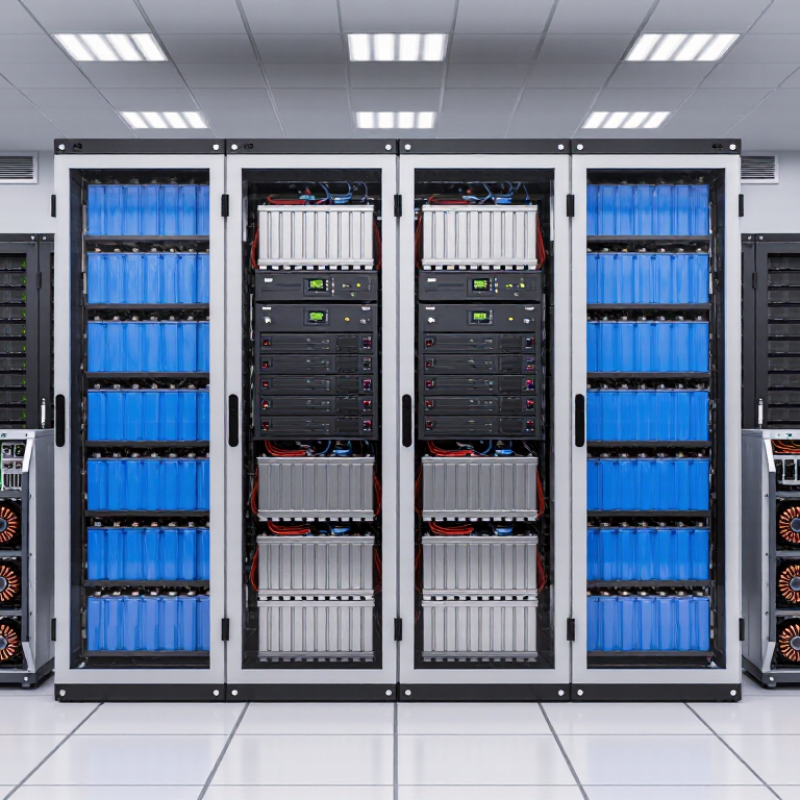
A Battery Server Rack is more than a cabinet filled with batteries. It is a managed energy system that supports servers when utility power fails or fluctuates. Inside, battery modules connect with a battery management system, power conversion equipment, monitoring sensors, and protective disconnects. Together, these components deliver stored direct current to an uninterruptible power supply. The UPS then provides stable power to servers, network switches, and storage devices. In a server room, this response happens within milliseconds. That speed protects active workloads from sudden voltage drops.
The demand is becoming harder to ignore. The International Energy Agency reported that data centers consumed about 240 terawatt-hours of electricity globally in 2022. Its Electricity 2024 analysis projects data center consumption could exceed 1,000 terawatt-hours by 2026. In the United States, Lawrence Berkeley National Laboratory estimated that data centers used 4.4% of national electricity in 2023, with their share potentially reaching 6.7% to 12% by 2028. These figures explain why reliable backup power matters. They also expose a weakness: battery capacity alone does not guarantee resilience. Thermal conditions, cell chemistry, maintenance quality, and load design can change real performance. Small details matter. A loose connection can create heat. Poor airflow can shorten battery life. The Uptime Institute’s outage research repeatedly links failures to power and cooling problems, not only equipment defects. This guide explains how a Battery Server Rack operates, where it fits in modern infrastructure, and which technical assumptions deserve closer review. No single design fits every facility.
What Is a Battery Server Rack and How Does It Work?
Battery Server Rack: Definition, Purpose, and Core Components
A battery server rack is a cabinet that stores electrical energy for servers and network equipment. It usually sits near the information technology load or inside a power room. During a grid failure, stored DC power moves through an inverter and supports the equipment. The transfer happens within milliseconds, helping prevent shutdowns and data loss. It is not simply a larger server cabinet. Its design combines electrical protection, monitoring, cooling, and service access.
The core components include battery modules, a battery management system, a DC bus, fuses, disconnects, sensors, and communication interfaces. The management system tracks voltage, temperature, state of charge, and cell balance. Some racks also connect with chargers, inverters, and backup generators. Lithium-ion systems offer high energy density, while other chemistries may suit different cost or safety requirements. The choice is rarely obvious.
Demand for dependable backup power is growing. The International Energy Agency reported that data centers consumed about 460 TWh of electricity worldwide in 2022. It expects this figure could exceed 1,000 TWh by 2026. In the United States, a 2024 Lawrence Berkeley National Laboratory report estimated data centers used 176 TWh in 2023. These figures explain why battery racks now support more than short outage protection. They can also help manage peak demand and stabilize power quality. Still, a rack can look perfect on paper and fail through poor ventilation, weak maintenance, or incorrect load calculations. Experienced operators verify real discharge performance, not only the nameplate rating.