| Privacy Button Lock | Provides temporary privacy by locking from inside the bedroom. | Discourages casual entry but is not designed as a high-security barrier. | Push-button or turn-button inside the room; normally operated with a lever or knob outside. | Usually includes an exterior emergency-release slot or pinhole. | Bedrooms, guest rooms, and interior residential doors. |
| Turn-Button Privacy Lock | Allows occupants to lock the door without carrying a key. | Creates a clear privacy boundary and helps prevent unintentional entry. | Thumb turn on the interior side; lever or knob on the exterior side. | Commonly released from outside with a small tool or coin, depending on the design. | Family bedrooms and rooms where convenient daily use is important. |
| Keyed Entry Lock | Can provide privacy when the door is locked with a key. | Offers stronger resistance to unauthorized entry than a basic passage or privacy lock. | Key operation from the outside and a thumb turn or key operation from inside. | Interior thumb turns allow quick exit; local building and fire-safety requirements should be followed. | Bedrooms requiring additional control over access. |
| Deadbolt | Provides firm door locking but is less convenient for frequent bedroom privacy use. | Uses a solid bolt that generally provides greater resistance to forced movement than a spring latch alone. | Turned with a key or interior thumb turn. | Single-cylinder versions typically allow rapid operation from inside; installation must not obstruct emergency escape. | Bedroom doors that also open to an exterior area or require stronger access control. |
| Keypad Lock | Allows residents to lock the room without using a physical key. | Access codes can be changed or shared selectively, reducing the need for copied keys. | PIN code, touchpad, or mechanical push-button entry, depending on the model. | May include an interior thumb turn, mechanical override, or emergency power contact. | Homes needing key-free access and convenient code management. |
| Smart Lock | Supports remote or automatic locking features when properly configured. | May provide access logs, temporary permissions, and notifications; cybersecurity and battery management are important. | Mobile app, PIN, fingerprint, key, or automatic locking, depending on the product. | Should include a reliable interior exit method and a backup access option. | Connected homes and households that need controlled, trackable access. |
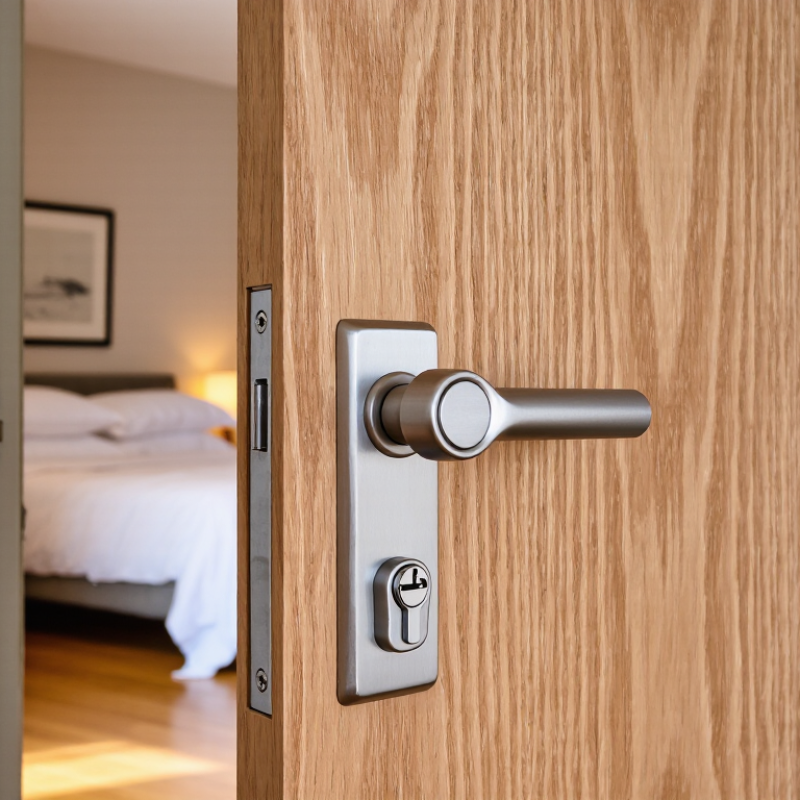
| Mortise Lock | Can combine a latch and locking mechanism within the door edge. | Its enclosed case and integrated construction can provide robust everyday door security when correctly installed. | Lever handle, key cylinder, thumb turn, or a combination of these controls. | Interior hardware should permit quick operation without a key where required for safe exit. | Solid interior doors and installations needing integrated hardware. |