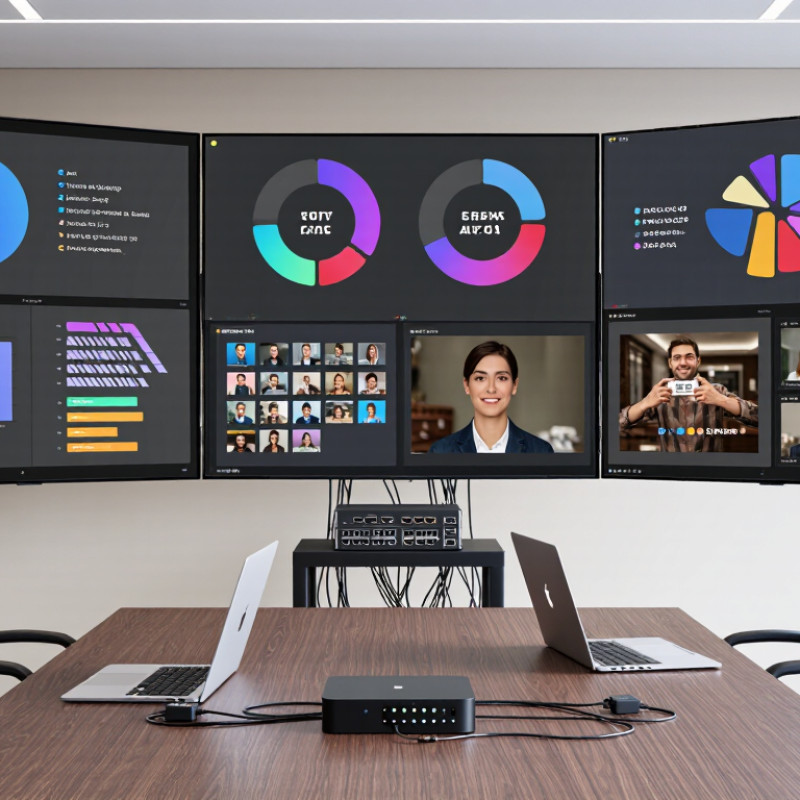
A 4x4 HDMI matrix sends any of four sources to any of four displays. Before choosing one, list the actual devices: a game console, a laptop, a streaming player, and the four screens. Check each screen’s resolution and refresh rate. A matrix that supports 4K does not necessarily support 4K at 120 Hz on every output.
Bandwidth matters. The HDMI Forum specifies up to 48 Gbps for HDMI 2.1, alongside support for 4K at 120 Hz. Treat that as a capability ceiling, not a guarantee that every matrix passes the same signal. Confirm the supported format, HDR, audio return needs, and HDCP version across the complete signal path. One older display can limit what all connected sources can deliver. Easy to overlook.
Control features shape daily use. For a meeting room, check whether the unit offers front-panel buttons, remote control, or network control, and whether it remembers routing after a restart. AVIXA’s 2024 Industry Outlook estimated global professional AV revenue at $325 billion in 2023, with a forecast of $402 billion by 2028. That growth reflects increasingly varied AV installations, but it does not make every setup alike. Measure cable runs, test the longest connection, and leave room for ventilation. I would still verify a real source-and-display combination before installation; specification sheets can hide practical mismatches.