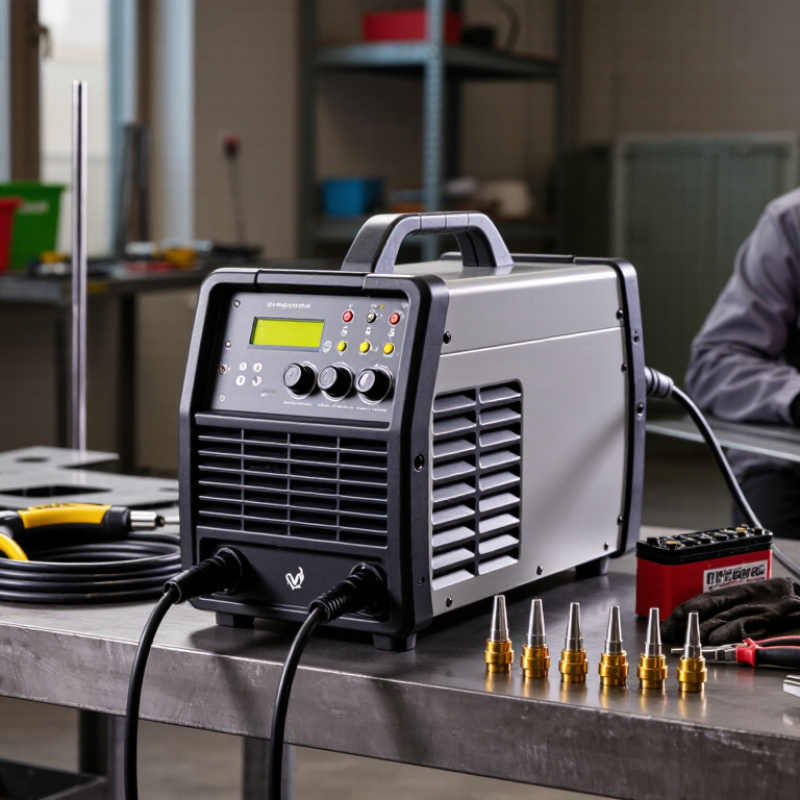
| Pulsed fiber laser welder | Typically tens to several hundred watts of average power; pulse energy and duration vary by system. | Delivers brief, controlled pulses that melt a small area and form a localized weld. | Small tabs, thin connectors, precision joints, and work where limiting heat spread is important. | Fine heat control; suitable for small welds; can reduce the heat-affected area when properly set up. | Check pulse energy, pulse duration, spot size, repeatability, and whether the system is configured for the specific material and thickness. |
| Continuous-wave fiber laser welder | Common industrial systems range from several hundred watts to multiple kilowatts. | Emits a continuous beam while the workpiece or welding head moves along the joint. | Longer seams and higher-throughput production, when the joint design and battery materials are suitable. | Fast welding over longer joints; well suited to automated production lines. | High power can cause excessive heat or damage thin cell components if poorly controlled. Evaluate fixturing, motion control, shielding, and process validation. |
| Handheld laser welding system | Many industrial handheld systems are rated around 1–3 kW, although configurations differ. | An operator guides a laser welding head along a joint; some systems use a wobble pattern to widen the weld area. | Larger battery enclosures, busbar joints, and accessible seams—not usually the first choice for tiny cell-tab welds. | Flexible for varied joint shapes and larger parts; can be quicker to set up than a dedicated automated line. | Confirm that the system is designed for the intended battery task. Include operator training, guarding, fume control, and appropriate laser safety measures. |
| Automated or fixture-based laser welding cell | Power is selected according to material, thickness, joint geometry, and production rate. | Uses controlled positioning, clamping, and programmed laser parameters to make repeatable welds. | High-volume cell, module, or pack production with consistent part locations. | Improves process consistency and supports inspection and traceability when properly integrated. | Assess cycle time, fixture design, extraction, interlocks, quality monitoring, and compatibility with the required production workflow. |
| Battery laser welder: key process factors | There is no universal power rating that suits every battery weld. | Focused laser light heats and melts the joined surfaces; the molten material solidifies to form the joint. | Joining compatible battery materials such as nickel, copper, or aluminum, subject to validated parameters and joint design. | Non-contact heat input and precise placement can support small or repeatable joints. | Material reflectivity, thickness, surface condition, fit-up, focus, shielding, and heat-sensitive nearby components all affect weld quality. |