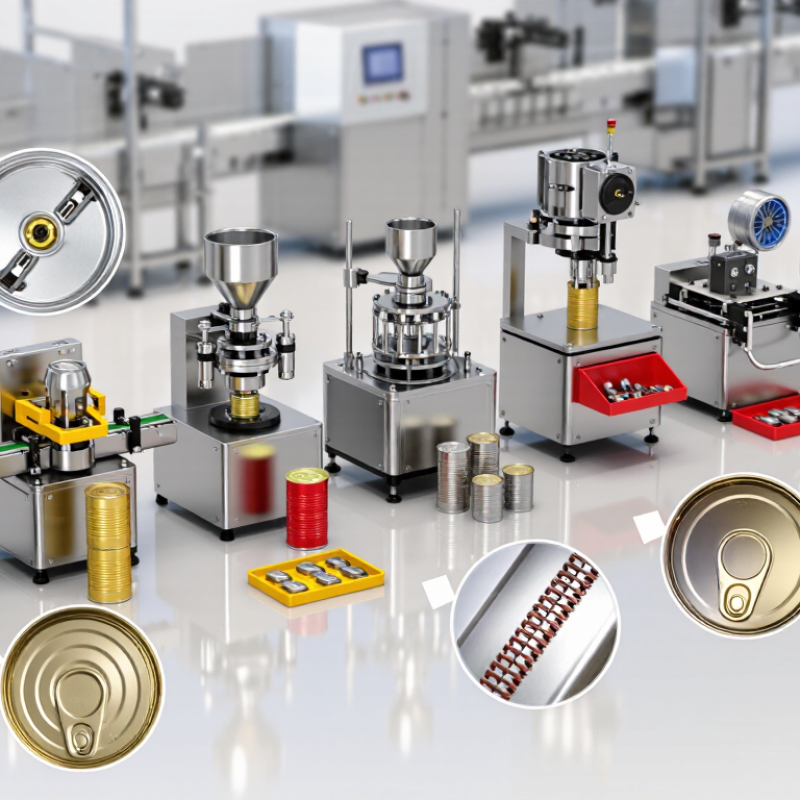
| Manual bench seamer | Hand-operated lever or crank; the operator positions and removes each can. | About 5–15 cans per minute, depending on the operator and can size. | Usually small and medium round cans; the supported diameter and height depend on the chuck and tooling. | Product trials, pilot runs, small workshops, and occasional production. | Low power requirements and simple operation; confirm that the supplied chuck and rolls match the can end and body specifications. |
| Semi-automatic pneumatic seamer | The operator loads each can; a pneumatic cycle performs the seam. | About 10–30 cans per minute, depending on loading time and machine cycle. | Round cans in a defined size range; change parts are generally needed for different diameters or end profiles. | Small food producers, beverage trials, and low-to-medium-volume packaging. | Check air-pressure and air-consumption requirements, guarding, changeover time, and whether a compressor is included. |
| Tabletop electric seamer | Motor-driven seaming cycle with manual can placement and removal. | About 10–30 cans per minute, depending on the model and operator. | Commonly used for small or medium round cans; available formats vary by tooling. | Specialty foods, sample production, small beverage batches, and packaging development. | Confirm local voltage and frequency, emergency-stop and guarding provisions, and compatibility with the intended can ends. |
| Automatic single-head seamer | Automatically feeds or indexes cans to one seaming head; the exact feed arrangement varies. | About 20–60 cans per minute for many configurations. | Round cans; size changes commonly require format parts and machine adjustments. | Growing production lines with steady demand and a limited number of can formats. | Assess infeed and discharge integration, actual sustained line speed, changeover needs, and access for cleaning and maintenance. |
| Automatic double-head seamer | Two seaming heads process cans in a coordinated automatic system. | Often about 40–100 cans per minute, subject to can dimensions and line configuration. | Round cans within the machine’s specified diameter and height range. | Medium-to-high-volume food and beverage lines requiring greater output than a single-head machine. | Check that upstream filling and downstream handling can match the rated speed; verify tooling, guarding, and service access. |
| Rotary multi-head seamer | Multiple seaming stations rotate continuously as cans move through the machine. | Typically suited to high-speed lines; output can range from around 100 to several hundred cans per minute, depending on the number of heads and product. | Production can formats specified for the rotary turret and change parts. | Large-scale canning operations with continuous, high-volume production. | Review complete-line capacity, format-change requirements, footprint, maintenance skills, and the availability of technical support in the destination market. |
| Vacuum or gas-flush seamer | Removes air and/or introduces a controlled gas before closing the can; may be semi-automatic or automatic. | Varies widely by configuration; compact systems commonly operate at lower rates than high-speed rotary seamers. | Sealed formats supported by the chamber, vacuum system, gas circuit, and seaming tooling. | Products where reduced oxygen or a controlled headspace is part of the packaging process. | Confirm the required vacuum or gas specification, compatible can and lid materials, product suitability, and the need for process validation. |
| Selection note: Output figures are indicative planning ranges, not guaranteed ratings. Actual performance depends on can dimensions, end design, product, operator or feeding method, and line layout. Always verify the machine’s tested seam performance and compatibility with the exact can body and end before purchase. |