| Coupling type | Confirm whether the product is a cam-and-groove coupling, a threaded fitting, a flange connection, or another coupling design. | EN 14420-7 addresses cam locking couplings. It does not apply to every type of discharge hose coupling. | Request the product drawing, coupling type, and the standard and edition used for the design. |
| Dimensional compatibility | Check nominal size, mating profile, connection dimensions, and the corresponding male and female components. | The standard provides requirements for cam locking coupling design and dimensions. A shared nominal size alone does not prove that two parts are compatible. | Ask for dimensioned drawings and confirmation of compatibility with the exact mating parts in use. |
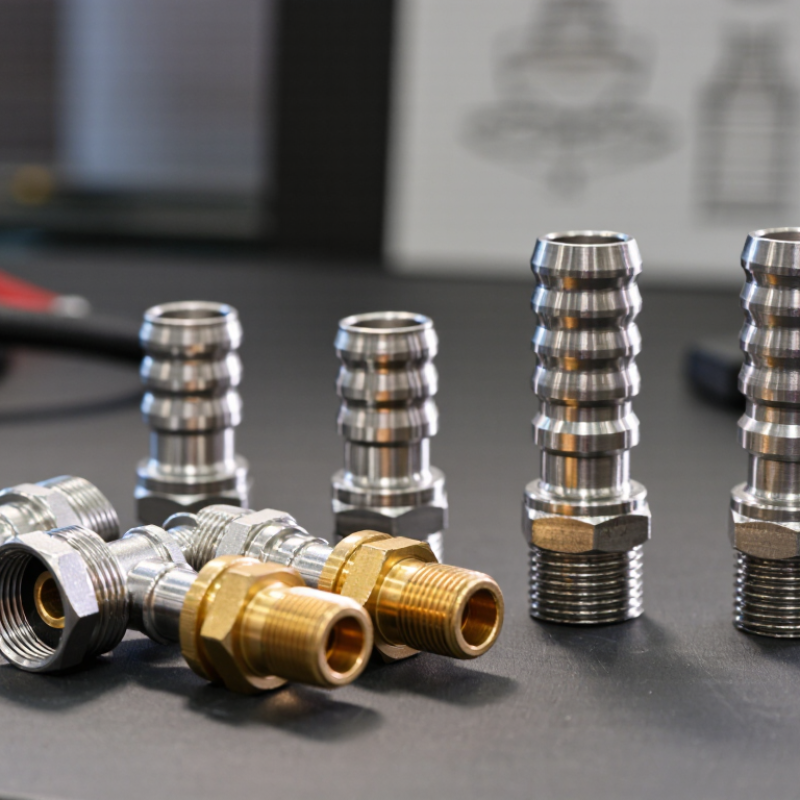
| Hose attachment | Verify the hose-tail or shank dimensions, hose inside diameter, clamp or ferrule arrangement, and intended assembly method. | EN 14420-7 concerns the cam locking coupling; assess the hose-side connection and complete hose assembly against their applicable requirements as well. | Request an assembly drawing and recommended installation instructions for the specified hose construction. |
| Materials and fluid suitability | Identify body, arm, pin, gasket, and other wetted materials; check chemical compatibility with the conveyed fluid. | Compliance with a coupling standard does not by itself establish suitability for every chemical, food, or operating environment. | Request material specifications and gasket options, then check them against the fluid, concentration, and service conditions. |
| Pressure and temperature limits | Obtain the rated working pressure and temperature range for the specific coupling material, size, seal, and assembled configuration. | Do not treat the standard reference as a universal pressure or temperature rating for every product or complete hose assembly. | Ask for product-specific ratings and test documentation; confirm the hose, coupling, and seal are all suitable for the same service conditions. |
| Locking and sealing | Check that the arms engage correctly, the connection is secured as intended, and the selected seal is suitable and properly seated. | The standard is relevant to cam locking coupling design, but correct assembly, inspection, and operating practice remain essential for safe service. | Request assembly and inspection guidance, including any applicable requirements for securing the arms in the intended application. |
| Testing and traceability | Assess whether the supplier can identify the supplied batch and provide relevant inspection or test records for the ordered configuration. | A claim of conformity should be supported by product-specific documentation; the standard reference alone is not proof that a particular shipment was tested or certified. | Ask for a declaration identifying the product and standard edition, plus applicable inspection records and batch identification. |
| Manufacturer comparison | Compare suppliers on documented dimensions, material options, product-specific ratings, quality controls, lead time, and technical support. | EN 14420-7 is a technical reference for applicable cam locking couplings, not a ranking or certification of manufacturers in China. | Use the same specification and document checklist for every quotation; evaluate evidence rather than relying only on a catalogue claim. |