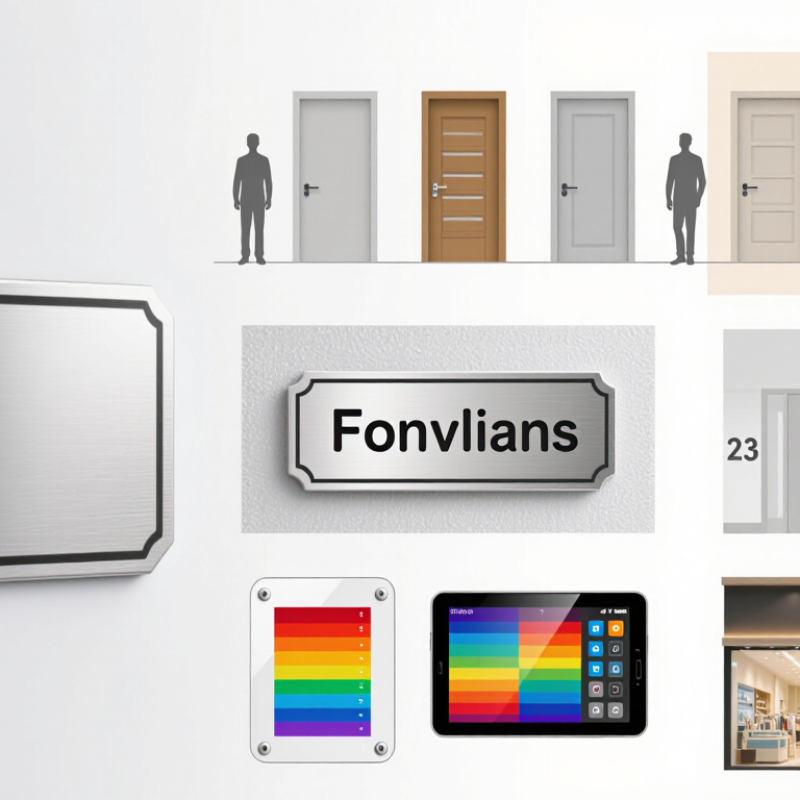
| Room Identification Signs Most widely used | Private offices, meeting rooms, classrooms, guest rooms, treatment rooms, and service areas. | Room name, department, room number, occupant name, or room function. | Aluminium, acrylic, PVC, wood veneer, engraved plastic, or laminated panels. | Adhesive tape, concealed screws, standoffs, or slide-in mounting rails. | Primarily indoor; selected metal and coated plastic versions can be used in sheltered outdoor areas. | Check legibility, replaceable inserts, surface finish, cleaning resistance, and compatibility with the door material. |
| Directional Door Signs Wayfinding | Corridors, entrances, elevators, stairwells, reception areas, and large public facilities. | Destination names, arrows, floor information, department locations, or route instructions. | Aluminium composite, acrylic, PVC, polycarbonate, or printed metal. | Wall-mounted beside the door, perpendicular flag mounting, ceiling suspension, or adhesive fixing. | Indoor and sheltered outdoor areas; weather-resistant finishes are recommended for exposed locations. | Use high contrast, consistent arrows, readable viewing distance, and a layout that matches the building wayfinding system. |
| Tactile and Braille Accessibility Signs Inclusive access | Accessible rooms, restrooms, elevators, staircases, exits, and public-service facilities. | Raised room identifiers, tactile symbols, Braille text, floor numbers, or accessibility information. | Engraved acrylic, rigid plastic, aluminium, photopolymer, or other durable tactile substrates. | Permanent adhesive, mechanical fasteners, or concealed screws near the latch side of the door or adjacent wall. | Indoor and controlled outdoor locations, depending on material and protective coating. | Confirm the destination country’s accessibility requirements, tactile contrast, Braille format, mounting height, and clear floor space. |
| Restroom and Facility Signs High traffic | Toilets, shower rooms, changing rooms, family facilities, nursing rooms, and staff facilities. | Facility name, gender-neutral or gender-specific symbols, accessibility symbols, and occupancy information. | Stainless steel, aluminium, acrylic, compact laminate, PVC, or ceramic-style panels. | Adhesive, screws, anti-tamper fasteners, or flush mounting. | Moisture-prone indoor areas and sheltered exterior locations. | Prioritize moisture resistance, vandal resistance, easy cleaning, slip-resistant edges, and universally recognizable symbols. |
| Fire Exit and Safety Signs Code sensitive | Emergency exits, fire doors, evacuation routes, fire equipment rooms, and restricted emergency access points. | Exit wording, directional arrows, fire door instructions, hazard warnings, or emergency symbols. | Photoluminescent plastic, aluminium, rigid PVC, or coated metal with high-visibility graphics. | Adhesive, screws, rivets, or framed mounting, depending on the surface and location. | Indoor and outdoor emergency routes when the selected material has suitable weather and temperature resistance. | Verify local fire and safety regulations, viewing distance, photoluminescence requirements, symbol standards, and installation position. |
| Door Number and Room Number Signs Property management | Hotels, hospitals, apartments, dormitories, offices, classrooms, and storage rooms. | Room numbers, floor numbers, building zones, or sequential identification codes. | Aluminium, acrylic, engraved plastic, wood-based panels, or printed laminate. | Adhesive, screws, slide-in holders, standoffs, or door-mounted clips. | Indoor environments; coated metal and UV-resistant plastics are suitable for exposed locations. | Consider numbering consistency, replacement convenience, contrast, viewing angle, and alignment across multiple floors. |
| Reserved, Occupancy, and Status Signs Changeable information | Meeting rooms, executive offices, hotel rooms, examination rooms, service counters, and shared workspaces. | Reserved status, available/occupied status, appointment information, or temporary instructions. | Aluminium, acrylic, polycarbonate, laminated card holders, or dry-erase surfaces. | Slide-in frame, rotating panel, magnetic fixing, rail system, or adhesive. | Indoor use, especially locations where information changes frequently. | Evaluate update speed, insert replacement cost, privacy of displayed information, moving-part durability, and cleaning method. |
| Nameplates and Department Signs Professional identification | Office doors, reception rooms, manager offices, laboratories, staff areas, and institutional buildings. | Person’s name, job title, department, room function, or organizational unit. | Brushed aluminium, acrylic, wood veneer, engraved plastic, or laminated composite. | Adhesive, screws, magnetic backing, standoffs, or interchangeable holders. | Mostly indoor; choose UV-stable finishes for bright entrances or semi-outdoor areas. | Check privacy needs, name-change frequency, insert system, finish consistency, and compatibility with corporate or architectural standards. |
| Security and Access-Control Signs Operational control | Restricted rooms, server rooms, electrical rooms, staff-only entrances, laboratories, and controlled-access zones. | Authorized personnel only, access instructions, visitor procedures, security warnings, or equipment-room identification. | Aluminium, stainless steel, rigid PVC, polycarbonate, or laminated safety-grade panels. | Screws, rivets, security fasteners, adhesive, or mounting integrated with access-control hardware. | Indoor, industrial, and sheltered outdoor environments, subject to material selection. | Use clear wording, strong contrast, tamper-resistant fixing, chemical resistance where needed, and alignment with site security procedures. |