China Best Explosion Proof Emergency Light Manufacturer?
Choosing the best China-based manufacturer of an Explosion Proof Emergency Light requires more than comparing price or brightness. In oil, gas, chemical, and mining sites, emergency lighting must remain dependable when normal power fails. It also needs a suitable protection concept, clear product documentation, and construction matched to the actual hazardous area. Small details matter: battery autonomy, operating temperature, cable entries, mounting position, and the visibility of safety markings.
The International Energy Agency’s Global Methane Tracker 2024 estimates that fossil-fuel operations emitted nearly 120 million tonnes of methane in 2023. This figure describes emissions, not explosions or emergency-light demand. Still, it reflects the scale of industrial environments where careful hazard controls matter. For buyers, a useful comparison should examine applicable IEC 60079 documentation, independent test evidence, quality controls, and after-sales support—not just a certificate image. There is no shortcut here. A polished catalogue can still leave questions about real operating performance. Ask how each model was tested, whether its battery runtime was verified, and how production consistency is monitored. The sections ahead assess Chinese manufacturers through these practical checks, while recognizing that the “best” choice depends on site conditions and project requirements.
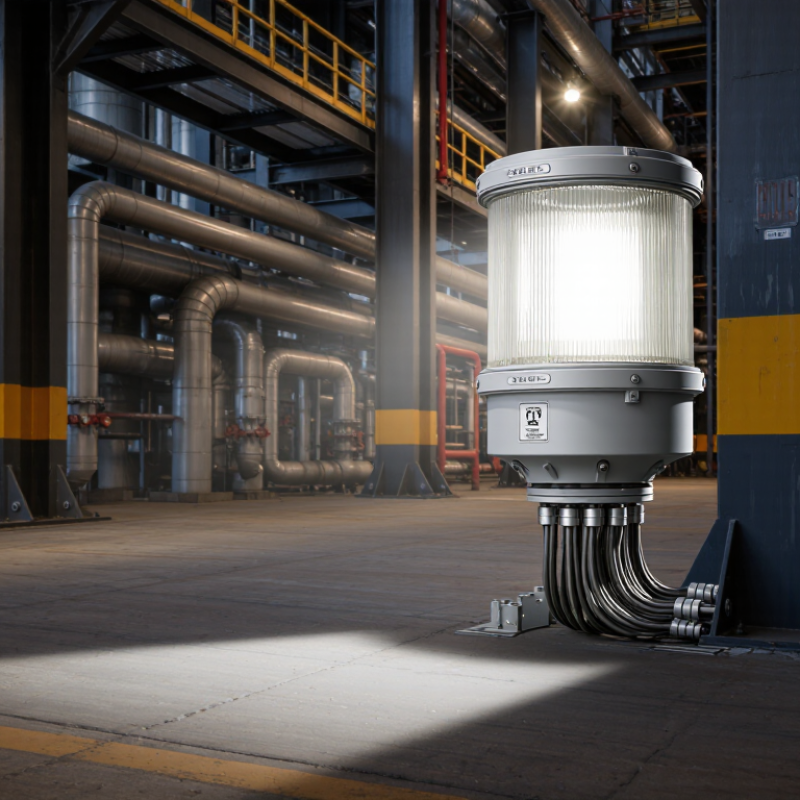
What Is an Explosion-Proof Emergency Light?
What Is an Explosion-Proof Emergency Light?
An explosion-proof emergency light provides illumination during a power failure in areas where flammable gas, vapor, or combustible dust may be present. Its enclosure is designed to contain an internal ignition and prevent flames from reaching the surrounding atmosphere. The emergency circuit uses a battery or backup supply, so escape routes and work areas remain visible when normal power stops. Not just a backup bulb.
The risk is real. The U.S. Chemical Safety Board’s 2006 Combustible Dust Hazard Study recorded 281 combustible-dust incidents in the United States from 1980 to 2005, causing 119 deaths and 718 injuries. This figure is not specific to lighting, but it shows why ignition control matters. A common specification mistake is treating “explosion-proof” and “weatherproof” as interchangeable. They are not.
Choose a light according to the site’s gas or dust classification, temperature limits, required emergency runtime, and mounting location. Check the certification and markings against applicable IEC 60079 standards and local requirements. Also confirm battery performance and illumination coverage; a compliant fixture in the wrong position can still leave a stairwell or exit route dim. Appearance alone tells you little. Verify the details.
Emergency Egress Lighting: OSHA Illumination Levels
OSHA specifies emergency egress illumination of at least 1.0 foot-candle (about 10.8 lux) on average initially, with a 0.1 foot-candle (about 1.1 lux) minimum. At the end of 90 minutes, the levels must be at least 0.6 foot-candle (about 6.5 lux) on average and 0.06 foot-candle (about 0.65 lux) minimum. These are U.S. workplace egress-lighting requirements, not explosion-protection ratings; hazardous-location suitability must be assessed separately.
Source: OSHA 29 CFR 1910.37(b)(6).
Where Are Explosion-Proof Emergency Lights Used?
Explosion-proof emergency lights are used where flammable gases, vapors, or combustible dust may be present. Common settings include refineries, chemical plants, fuel handling areas, paint rooms, and grain-processing facilities. They provide visibility if normal power fails, helping workers find exit routes, stairs, and safety equipment. Visibility can collapse fast.
In a processing area, an emergency light may need to illuminate a narrow walkway beside pipes or a doorway near a mixing room. In a grain facility, settled dust and airborne particles can affect equipment selection and maintenance. Dust changes everything. The exact risks vary by room, task, and materials handled, so a fixture suitable for one zone may not suit another. Check the area classification, temperature range, ingress protection, and required emergency runtime against the site’s engineering specifications and applicable standards.
Installation matters as much as the fixture. Keep signs and escape paths visible, avoid placing lights behind machinery, and test backup operation on a documented schedule. A label alone does not prove suitability for every hazardous location. Confirm ratings with qualified electrical and safety personnel, and revisit the layout when processes change. A missed corner is easy to overlook—and worth checking.
How to Evaluate Chinese Explosion-Proof Emergency Light Manufacturers?
Evaluating a Chinese explosion-proof emergency light manufacturer starts with evidence, not polished catalog photos. Ask for current certificates and test reports for the exact model, then check that protection markings match your site conditions. A warehouse with combustible dust differs from a solvent-processing area. Confirm ambient temperature limits, ingress protection, emergency duration, and battery type. Small details matter. A certificate for a similar product is not enough.
Tips: Request sample labels, wiring diagrams, and battery test data. Ask how each unit is checked before shipment. Compare the stated emergency runtime with a timed test. Keep answers in writing.
Review production controls as well as product documents. Ask how the manufacturer tracks components, handles failed tests, and verifies battery charging after assembly. If possible, inspect a sample under realistic conditions, including a power-loss test and a check of indicator lights. A specification sheet can look complete and still leave gaps. I would pause if answers stay vague, even when the price is attractive. The process may feel slower, but traceable evidence makes comparison more reliable.
