7 Best LED Tunnel Lights for Global Buyers?
Tunnel lighting is not simply a brightness contest. It is a safety system that must guide drivers through changing daylight, dust, moisture, and maintenance conditions. For global buyers, choosing a reliable Led Tunnel Light requires more than checking wattage or advertised lumen output.
The International Energy Agency and the United Nations Environment Programme have reported that lighting uses roughly 15% of global electricity. Their analysis also shows why efficient lighting upgrades can reduce energy demand when products are properly designed and controlled. The U.S. Department of Energy’s solid-state lighting research indicates that modern LED luminaires can achieve efficiencies above 100 lumens per watt, although real performance depends on optics, temperature, drivers, and installation quality. Numbers can mislead.
PIARC tunnel guidance highlights adaptive lighting, visual comfort, emergency reliability, and regular maintenance as practical priorities. These points shape our review of the 7 Best LED Tunnel Lights for Global Buyers? Each option should be examined through beam distribution, ingress protection, surge resistance, color consistency, dimming control, service life, and available certifications. A tunnel operator may notice poor design as glare, dark zones, or rapid driver failure—not as a specification-sheet error.
Field conditions matter.
A product tested in a clean laboratory may perform differently beside vehicle exhaust and standing water. This guide therefore balances published data with realistic purchasing concerns, including installation access, warranty support, replacement availability, and regional electrical requirements. No shortlist is perfect. Buyers should still verify photometric files, thermal test results, and local compliance before ordering large quantities.
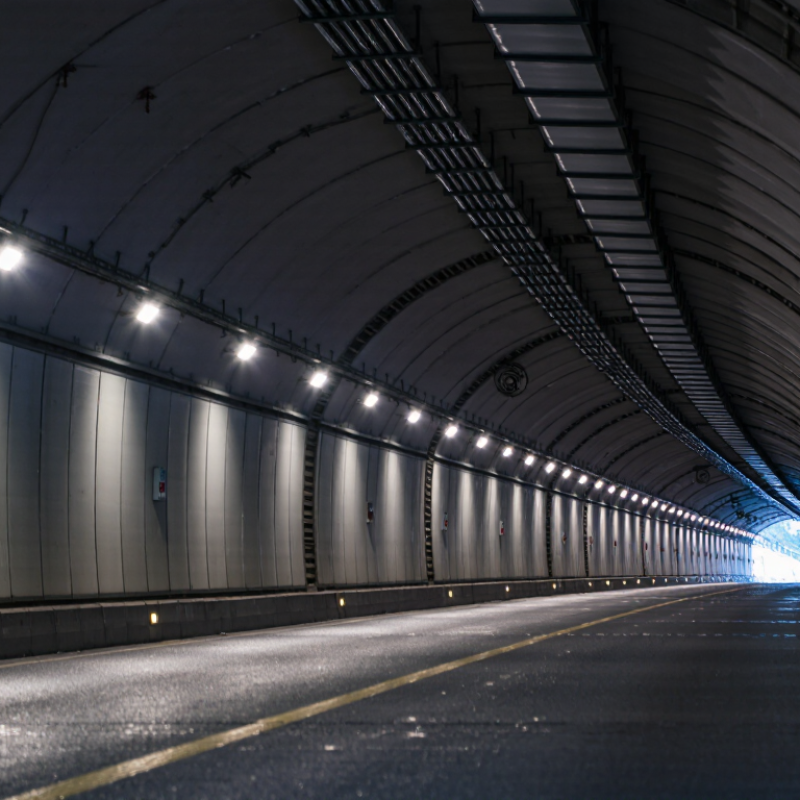
What Makes an LED Tunnel Light Suitable for Global Projects?
Choosing among the seven best LED tunnel lights requires more than comparing lumen ratings. A suitable light must deliver stable visibility through dust, humidity, vibration, and temperature changes. IP66 protection is a practical starting point, while strong impact resistance supports safer operation near traffic. Photometric testing should confirm uniform illumination, controlled glare, and adequate contrast at tunnel entrances and exits.
Global projects also face different power systems, road standards, and maintenance conditions. Check the input voltage range, surge protection, emergency compatibility, and dimming interface before approval. A reliable fixture should maintain consistent color temperature and low flicker, especially where drivers move from daylight into darkness. High-efficiency LEDs reduce energy use, but thermal design matters more than attractive wattage claims. Heat trapped inside a poorly designed housing can shorten service life.
Do not guess.
Request independent test reports, aging data, and installation references from similar climates. A pilot section can reveal glare, shadows, wiring problems, or uncomfortable transitions that drawings miss. Engineers should also examine mounting access, replacement time, and spare-part availability across regions. Some specifications look impressive but lack field evidence. That is a warning sign. No single tunnel light suits every project; local testing may expose weaknesses and require a revised design. Reliable suppliers should explain limitations clearly, support compliance documentation, and provide a realistic warranty with measurable conditions.
7 Best LED Tunnel Lights for Global Buyers
What makes an LED tunnel light suitable for global projects? The chart compares seven practical selection criteria using commonly accepted engineering benchmarks for tunnel lighting systems.
The benchmark values represent typical project requirements: high ingress protection, impact resistance, efficient light output, long service life, wide operating temperature, suitable color rendering, and compatibility with dimming or control systems.
How to Compare the Seven Best LED Tunnel Light Types
How to Compare the Seven Best LED Tunnel Light Types
Comparing tunnel lights starts with the road geometry, not the product label. In project inspections, I compare seven common types: symmetric beam, asymmetric beam, counter-beam, longitudinal beam, wide-beam, low-glare, and smart dimmable lights. Symmetric models suit straight sections with balanced illumination. Asymmetric and counter-beam designs can improve visibility near entrances, where daylight changes quickly. Longitudinal beams often reduce wasted light on tunnel walls.
The numbers matter. Check luminous output, beam angle, uniformity, glare rating, and color temperature. A 4000K light usually gives a clear, neutral appearance. Measure spacing with the mounting height, lane width, and pavement reflectance in mind. A wide-beam fitting may cover more pavement, but it can create unwanted brightness on walls.
Low-glare optics feel safer for drivers, especially on long night journeys. They should not sacrifice useful road luminance.
Smart dimmable lights can respond to outdoor brightness, traffic flow, or scheduled operating periods. This may reduce energy use, but controls need careful commissioning.
I once reviewed a tunnel where excellent fixtures performed poorly because sensors faced dirty walls. Small details matter. Ask for photometric files, thermal test data, surge protection, ingress protection, and maintenance records. Compare actual measurements, not only catalogue promises. No chart replaces a nighttime site test.
What Should Global Buyers Check Before Placing an Order?
Before placing an order for LED tunnel lights, global buyers should verify performance beyond the advertised wattage. Request an independent photometric report, including beam angle, lumen maintenance, and uniformity data. A bright lamp can still create dark gaps on a curved tunnel wall. Check the input voltage range, power factor, surge protection, and operating temperature. These details matter when equipment faces cold nights, dust, humidity, or unstable electricity.
Look for clear IP and impact ratings suited to the installation area. Confirm the housing material, corrosion resistance, cable entry design, and emergency lighting compatibility. Ask for test reports from recognized laboratories, not only factory declarations. Local regulations may also require specific electrical safety, electromagnetic compatibility, or road-infrastructure approvals. Requirements differ between countries. Do not assume one certificate works everywhere.
Request a sample before ordering hundreds of units. Inspect its connector, mounting brackets, lens, and thermal behavior after several hours. Measure light output if possible. A neat datasheet can still hide unclear testing conditions. I would also compare the warranty terms, spare-part availability, delivery schedule, and replacement process in writing. One weak point remains easy to miss: installation quality. Even reliable lights may fail early when ventilation is blocked or cable glands are poorly sealed. Suppliers should provide drawings, wiring instructions, and realistic maintenance guidance, although some documents may need better translation or clarification.
