Best Medical Air Purifier for Allergies in 2026?
In 2026, the quest for the best medical air purifier for allergies continues. Dr. Emily Hart, a leading expert in respiratory health, emphasizes, “A quality air purifier can significantly ease allergy symptoms.” Her words resonate as millions struggle with allergens in the air.
Choosing a medical air purifier involves several factors. Effectiveness, filter types, and noise levels matter. Many options promise relief, but not all deliver. Consumers often face confusion. Complicated specifications leave them wondering what truly works.
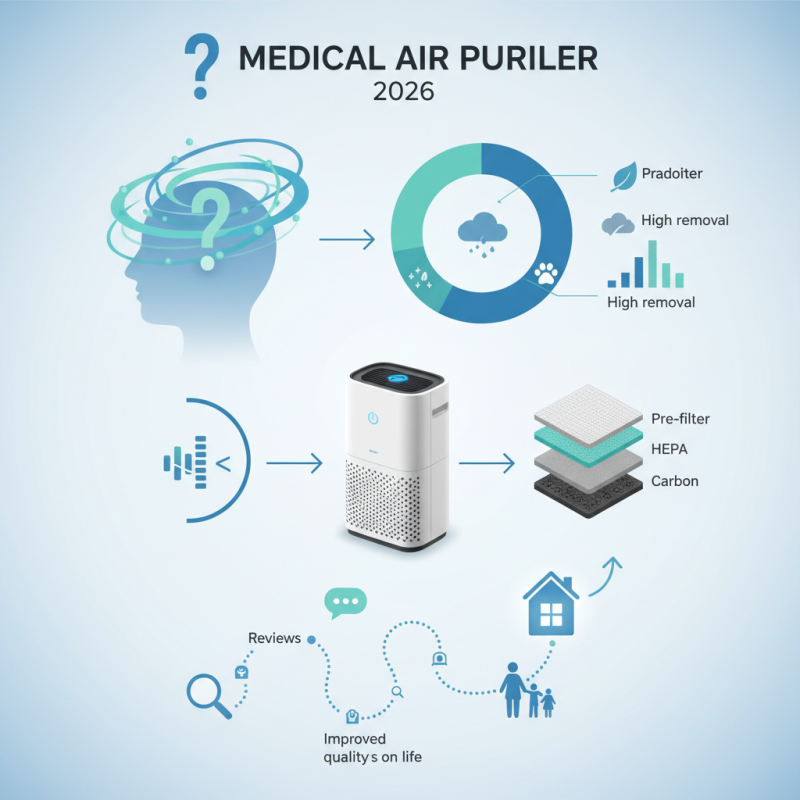
Allergies can severely impact daily life. Families must consider their unique needs. A purifier’s ability to remove dust, pollen, and pet dander is crucial. Investing in the right device may lead to a better quality of life. However, it's vital to learn from reviews and expert opinions. The journey toward cleaner air requires diligence and thoughtful decision-making.
Best Medical Air Purifier Features for Allergy Sufferers in 2026
When choosing the best medical air purifier for allergies in 2026, several features stand out. Look for HEPA filters; they capture 99.97% of allergens. This includes dust, pollen, and pet dander. High Clean Air Delivery Rate (CADR) is essential too. A higher CADR ensures particles are removed quickly. Noise levels matter, especially at night. A whisper-quiet model helps you sleep better.
Tips: Check the filter replacement frequency. A good purifier should have easy access to filters. Some models may require frequent changes, which can be inconvenient. Also, consider purifier size. A larger room necessitates a more powerful unit. Not all purifiers are suitable for every space.
Look for additional features like air quality indicators. Some devices show real-time air quality status. This provides you with valuable information. However, don't rely solely on these indicators. Always maintain a clean home. Dusting and vacuuming regularly still matter. Lastly, ensure no one in your household suffers from electrohypersensitivity before getting an electronic device. Not all designs are user-friendly; some may even annoy rather than help.
Top Recommended Medical Air Purifiers for Allergies in 2026
Allergies affect millions worldwide, making the search for effective air purifiers vital. Studies show that over 50 million people suffer from allergies in the U.S. alone. Many turn to medical-grade air purifiers to manage symptoms. These devices can significantly reduce airborne allergens such as dust, pollen, and pet dander.
In 2026, the focus will be on purifiers that use HEPA filters. Research indicates that HEPA filters can capture 99.97% of particles as small as 0.3 microns. This is crucial since many allergens fall within this size range. Users often report noticeable improvements in air quality when using these purifiers regularly. However, not all purifiers perform the same. Some may have lower filter efficiency or higher noise levels.
Another concern is maintenance. Quality is key, but filters need regular changing to be effective. If neglected, a purifier can become less efficient and even circulate dust. Opting for models with filter change indicators can help alleviate this problem. Yet, it requires commitment from users to follow through. People often underestimate the importance of maintenance, impacting the air quality they seek to improve.
Top Recommended Medical Air Purifiers for Allergies in 2026
This chart displays the effectiveness of different medical air purifiers recommended for allergies in 2026, measured by their Clean Air Delivery Rate (CADR) for pollen, smoke, and dust. Higher CADR values indicate better performance in allergy relief.
Comparison of Filtration Technologies for Allergies in Medical Air Purifiers
When considering medical air purifiers for allergies, the filtration technology plays a crucial role. HEPA (High-Efficiency Particulate Air) filters capture at least 99.97% of particles as small as 0.3 microns. This includes pollen, pet dander, and dust mites—major triggers for allergy sufferers. A study from the American Academy of Allergy, Asthma, and Immunology indicates that effective filtration leads to a significant reduction in allergy symptoms for many individuals.
Another technology gaining attention is Activated Carbon. This medium is effective at reducing odors and volatile organic compounds. It works well alongside HEPA filters, targeting different types of pollutants. However, the efficiency can vary significantly based on how well the carbon is treated and the volume of air passing through. Some reports show that purifiers using both HEPA and Activated Carbon can reduce overall allergens by up to 50% in homes with significant contamination.
UV-C light is another method used in air purification. While it targets bacteria and viruses, its effectiveness against allergens isn’t as strong as HEPA filters. Some manufacturers claim UV-C contributes to cleaner air, but data supporting allergy relief is less conclusive. Users should critically assess claims about the technology and weigh its benefits against core needs for allergy management. Understanding these technologies helps consumers choose the right medical air purifier tailored to their specific allergy issues.
Best Medical Air Purifier for Allergies in 2026
| Feature | HEPA Filter | Activated Carbon | UV-C Light | Ionizer |
| Particle Removal Efficiency | 99.97% for particles ≥0.3 microns | Removes odors and chemicals | Destroys bacteria and viruses | Reduces particulate matter |
| Filter Lifespan | 12 months | 6 months | 12 months | 12 months |
| Noise Level | 25-50 dB | 20-45 dB | 30-55 dB | 15-40 dB |
| Energy Consumption | 50 Watts | 40 Watts | 60 Watts | 30 Watts |
| Ideal Room Size | Up to 500 sq ft | Up to 300 sq ft | Up to 400 sq ft | Up to 350 sq ft |
User Reviews and Effectiveness of Allergy Air Purifiers in 2026
Allergy sufferers often find relief with air purifiers. In 2026, user reviews highlight their effectiveness. Many users report fewer allergy symptoms. However, not all air purifiers are equal. Some do a better job than others.
User feedback often emphasizes the importance of HEPA filters. These filters trap small particles that trigger allergies. Many users note a marked difference in air quality with HEPA-equipped models. But there are complaints too. Some say their machines are noisy or hard to maintain.
When choosing an air purifier, consider the space size. A unit too small for a room may not work well. Regular filter changes are crucial for optimal performance. Users have shared tips on maintaining their devices. Keep them clean, and they will serve you better. Experiment with different settings to find the best balance between noise and efficiency.
Future Trends in Air Purification Technology for Allergy Relief
Innovations in air purification technology are set to revolutionize allergy relief by 2026. The latest reports indicate that around 30% of the global population suffers from allergies. As a result, the demand for effective air purifiers has surged. Emerging technologies strive to enhance filtration efficiency and reduce allergens in indoor environments.
One significant trend is the integration of advanced sensors. These sensors can detect allergens in real-time, adjusting purification levels based on the air quality. Research shows that smart air purifiers can eliminate up to 99.97% of airborne particles, including dust and pollen. Visual indicators, such as colored lights, provide immediate feedback on air quality, promoting user awareness.
Moreover, biotechnology is making strides in air purification. The introduction of biocompatible materials can improve the absorption rate of harmful pollutants, offering a sustainable solution for allergy sufferers. However, challenges remain. The cost of these advanced technologies can be prohibitive for some households. Balancing effectiveness with accessibility is essential for widespread adoption. Ensuring affordability while maintaining high purification standards is a complex issue that requires ongoing innovation.