10 Best Microfluidic Chips for Global Buyers
Key Types of Microfluidic Chips for Different Laboratory Needs
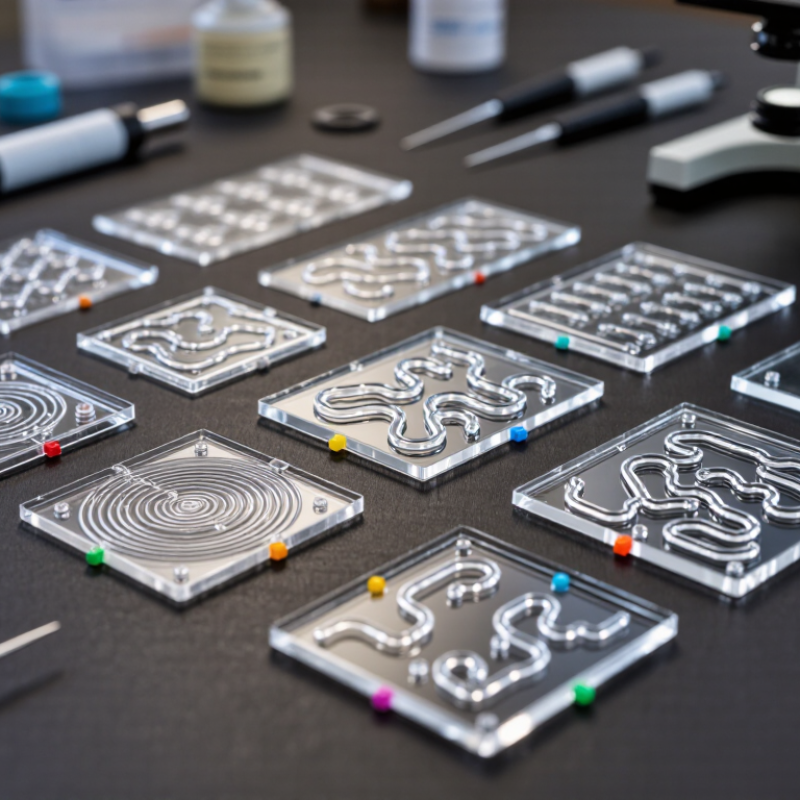
Microfluidic chips vary by flow control, channel design, and biological purpose. Choosing the right type starts with the experiment, not the product label. Small volumes matter. Digital microfluidic chips move droplets through electrical control. They suit reagent mixing, sample preparation, and automated screening. Continuous-flow chips provide stable streams for chemical reactions, dilution studies, and particle separation.
Droplet chips create uniform reaction compartments inside oil phases. Researchers often use them for single-cell analysis, enzyme testing, and digital assays. Paper-based chips support low-cost diagnostics and field sampling, especially where laboratory infrastructure is limited. However, humidity can affect paper performance. That limitation deserves attention. Organ-on-chip platforms recreate controlled tissue environments with living cells, flow, and mechanical stimulation. They can support toxicity studies and disease-model research, but cell handling requires careful validation.
Gradient-generation chips produce changing concentrations across parallel channels. They help test drug responses, cell migration, and material behavior with fewer manual steps. Cell-culture chips usually include transparent areas for microscopy and ports for media exchange. In practice, port leakage and bubble formation remain common problems. I have seen promising designs fail because the tubing connection was overlooked. Buyers should verify channel materials, pressure tolerance, sterility options, optical clarity, and compatibility with existing pumps. A technically advanced chip may still be unsuitable if staff cannot operate it consistently.