Top 10 Best Precision Gearing Solutions for Your Applications?
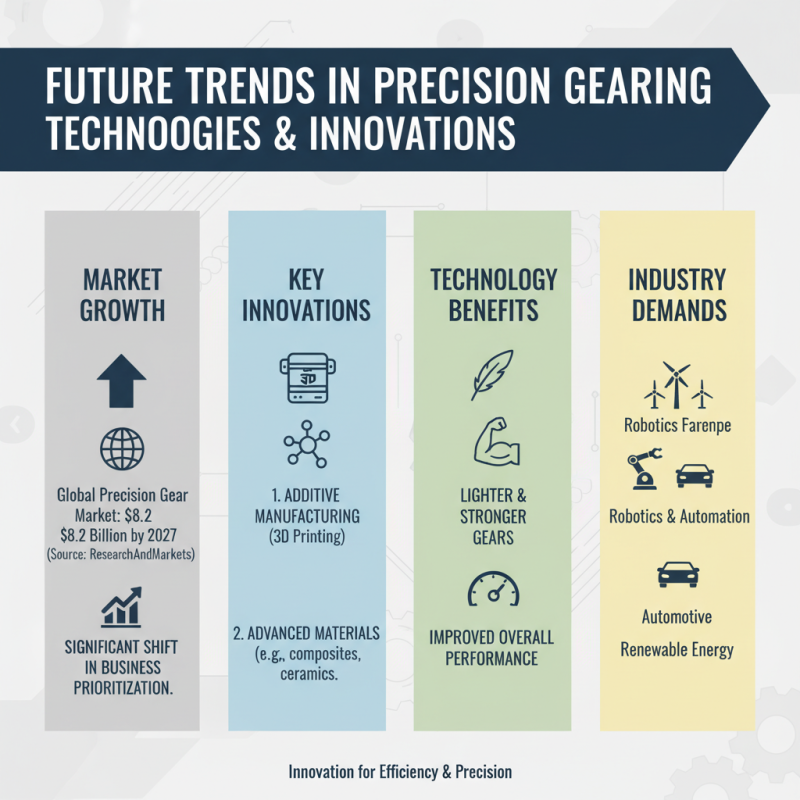
Precision gearing is a critical component in a wide range of applications, from robotics to aerospace. According to a recent report from Market Research Future, the global precision gearing market is expected to reach $8.2 billion by 2025, growing at a CAGR of 6.3%. This growth highlights the increasing demand for high-performance gear systems that enhance efficiency and reliability.
Dr. Emily Carter, a leading expert in precision engineering, emphasizes the importance of selecting the right gearing solution. She states, "Precision gearing is the backbone of modern machinery, influencing performance and durability." The need for specialized gear systems is more important than ever as industries strive for innovation and sustainability.
While many options exist, finding the optimum solution can be challenging. Factors such as load capacity, backlash, and material choice must be carefully evaluated. Each application has unique demands that require thoughtful consideration. Businesses must act decisively while being aware of potential pitfalls in their decisions.

Overview of Precision Gearing Solutions and Their Importance
Precision gearing solutions are vital in various industries, from aerospace to robotics. These gears ensure accurate motion transfer and control. According to a report by MarketsandMarkets, the precision gear market is projected to reach $6.89 billion by 2025, growing at a CAGR of 8.3%. This growth highlights the increasing dependence on precision systems in modern applications.
The importance of selecting the right gearing solution cannot be overstated. Precision gears play a critical role in enhancing efficiency and reliability. For example, in CNC machinery, the accuracy of these gears can determine the quality of the final product. Furthermore, data from the American Gear Manufacturers Association indicates that even a 1% increase in gear efficiency can lead to significant cost savings over time.
However, the journey to find the best gearing solution is not without challenges. Many engineers face difficulties in balancing precision with cost-effectiveness. Some solutions may offer high precision but at a prohibitive cost, while others may compromise performance for affordability. Therefore, assessing the specific needs and limitations of each application is crucial. It’s a complex decision-making process that requires careful consideration of various factors.
Key Features to Consider in Precision Gearing Systems
When choosing precision gearing solutions, several key features stand out. First, gear accuracy is critical. Many industries require systems with precision tolerance of less than 5 microns. According to a report by the Precision Gearing Association, about 70% of gear failures come from poor manufacturing processes. Selecting gears designed with high accuracy can minimize these risks dramatically.
Additionally, material selection plays a significant role in performance. Common materials include steel and plastics, each with unique properties. Steel gears offer strength and durability, while plastic gears provide lower weight and noise reduction. A study revealed that systems using high-quality materials can enhance efficiency by up to 30%. However, some industries might struggle to manage costs associated with premium materials.
Another crucial aspect is load capacity. Different applications demand various load levels. Many precision gearing systems today can withstand loads ranging from 1 Nm to over 300 Nm. Understanding the load requirement is essential for longevity. Insufficient load capacity can lead to premature failures, reducing overall productivity. In some cases, users overlook this factor, leading to costly downtime and repairs.
Top 10 Best Precision Gearing Solutions for Your Applications
Top 10 Precision Gearing Solutions for Various Applications
Precision gearing solutions are crucial in various applications, from robotics to automotive engineering. A well-designed gear system ensures efficiency and reliability. Many industries rely on precision gears for smooth operation. These gears must handle different loads and speeds. They also need to minimize backlash and wear.
Choosing the right precision gear can be daunting. It's essential to evaluate factors like material strength and lubrication. Some gears are better suited for high-torque applications. Others are ideal for high-speed scenarios. Users often overlook these specifics, which can lead to performance issues. A miscalculation can affect the entire system.
In real-world applications, trial and error is common. A gear may perform well in theory but fail under pressure. This highlights the importance of testing and prototyping. Engineers frequently revisit their designs based on practical feedback. The goal is to create precision gearing solutions that exceed expectations. Effective collaboration among specialists can drive innovation in this field.
Top 10 Precision Gearing Solutions for Various Applications
| No. |
Gearing Solution |
Application Area |
Efficiency (%) |
Torque Capacity (Nm) |
Weight (kg) |
| 1 |
Harmonic Drive |
Robotics |
90 |
250 |
10 |
| 2 |
Planetary Gearbox |
Automotive |
92 |
300 |
15 |
| 3 |
Bevel Gear |
Industrial Machinery |
88 |
200 |
20 |
| 4 |
Worm Gear |
Conveyor Systems |
85 |
150 |
12 |
| 5 |
Spur Gear |
Electric Motors |
90 |
100 |
8 |
| 6 |
Rack and Pinion |
Automobile Steering |
87 |
120 |
10 |
| 7 |
Cycloidal Drive |
Packaging Machinery |
95 |
200 |
14 |
| 8 |
Epicyclic Gearbox |
Aerospace |
90 |
350 |
18 |
| 9 |
Gear Coupling |
Pump Systems |
88 |
180 |
16 |
| 10 |
Face Gear |
Elevator Systems |
89 |
220 |
10 |
Comparative Analysis of Leading Precision Gearing Brands
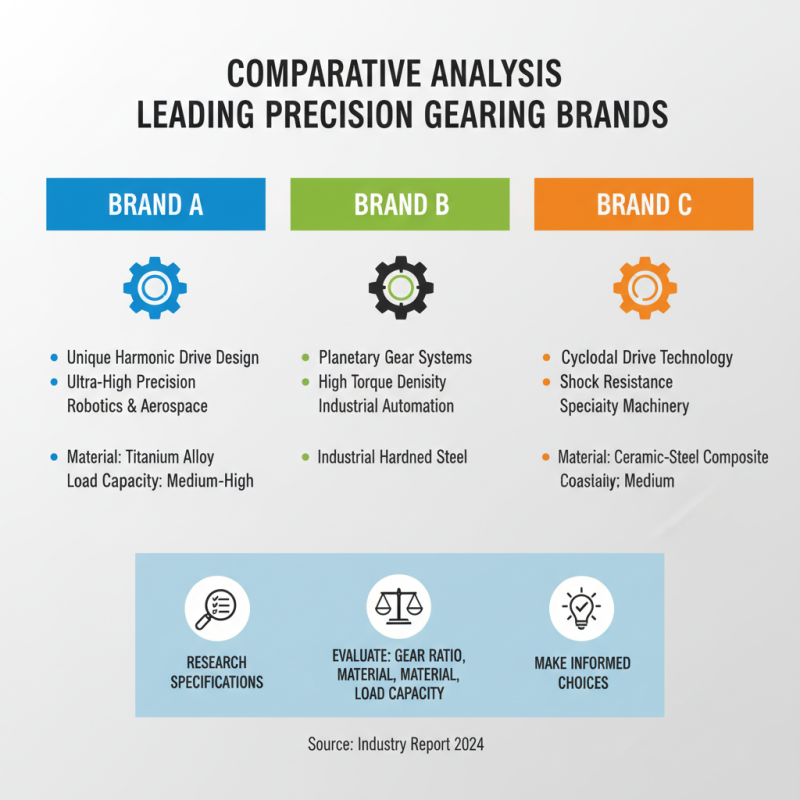
When selecting precision gearing solutions, a comparative analysis of brands can be insightful. Many brands offer unique designs and technologies. Researching their specifications helps in making informed choices. Pay attention to factors like gear ratio, material, and load capacity.
One key advantage of precision gears is their enhanced accuracy in motion transfer. This precision minimizes backlash, leading to smoother operation. It's crucial to consider application-specific needs. Some applications require higher torque, while others need compact designs. Matching the gear type to these requirements ensures optimal performance.
Tips: Evaluate the operational environment for suitable materials. For example, corrosion resistance may be vital for outdoor applications. Longevity also hinges on proper lubrication. Regular inspections can prevent unexpected failures. Consider these elements while reviewing various products.
As you explore options, reflect on common challenges. Misalignment and excessive wear can hinder performance. Identifying these issues early can save time and resources. Investing in quality solutions pays off. Your application deserves the best.