Request Quote

Request a quote from Nidec Drive Technology America Corporation.

This quote form is intended for customers and partners in North America seeking information about Nidec Drive Technology America Corporation’s Precision Gearing Technologies. For inquiries related to the Nidec motor group division or from outside this region, please visit the global Nidec Group website to find the appropriate regional or product-specific contact.

Subscribe to Nidec Newsletter

Subscribe to our email newsletter to stay current with our precision gearing solutions, featured products, company updates, and industry news.

7 Best PTFE Elgiloy Lip Seals for Industrial Buyers

Choosing a reliable Ptfe Elgiloy Lip Seal requires more than comparing catalog prices. Shaft speed, temperature, pressure, lubricant compatibility, and installation quality can change results dramatically. A seal that performs well on a clean hydraulic pump may fail quickly in abrasive slurry. Small details matter.

Grand View Research reported that the global PTFE market reached approximately USD 3.3 billion in 2023, with continued growth expected through 2030. MarketsandMarkets also identifies chemical resistance and high-temperature stability as major PTFE demand drivers. These trends support PTFE’s industrial value, but they do not guarantee seal performance. Buyers still need application-specific evidence.

Rotating-equipment authority Heinz P. Bloch wrote, “The objective of a maintenance program is to provide the highest possible reliability at the lowest possible cost.” That principle fits lip-seal selection closely. Elgiloy springs can offer strong corrosion resistance, while PTFE lips can reduce friction and tolerate demanding chemicals. However, neither material solves poor shaft finish, incorrect interference, or misalignment. The phrase “best” is imperfect.

This guide evaluates seven Ptfe Elgiloy Lip Seal options using practical buyer criteria. These include temperature range, pressure capability, shaft speed, leakage control, material traceability, and replacement availability. ISO 6194 provides a useful reference for rotary shaft lip seals, while manufacturer test data remains essential. Look for clear test conditions, not vague claims. A seal installed beside a hot gearbox deserves that level of scrutiny.

7 Best PTFE Elgiloy Lip Seals for Industrial Buyers

PTFE and Elgiloy Lip Seals: Materials, Structure, and Industrial Functions

PTFE and Elgiloy Lip Seals: Materials, Structure, and Industrial Functions

PTFE provides a low-friction sealing jacket for demanding industrial equipment. Its chemical resistance helps protect against oils, solvents, steam, and process fluids. However, PTFE can deform under heavy pressure or poor installation. That limitation deserves attention.

Elgiloy, a cobalt-based alloy, usually works as the energizing spring inside the seal. It supplies continuous radial force when temperature changes or shaft movement reduce contact pressure. Its corrosion resistance and fatigue strength suit pumps, valves, compressors, and rotating equipment. The combination is practical, not magical.

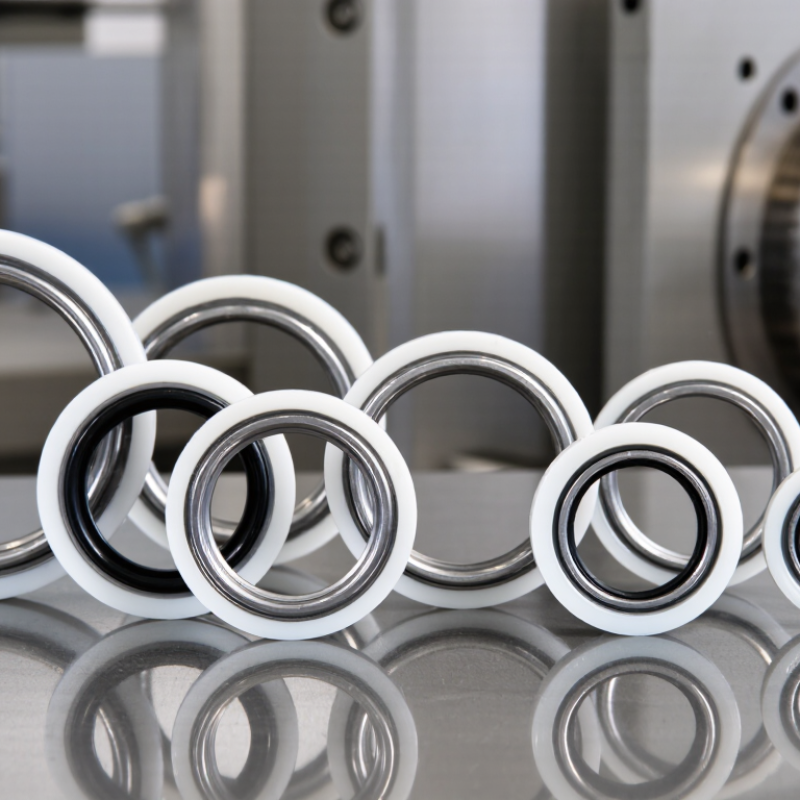
The seal structure normally includes a precision-formed PTFE lip, a spring energizer, and a supporting case or gland. Lip geometry controls friction, leakage, and pressure response. Different designs support rotary shafts, reciprocating rods, vacuum service, or high-temperature applications. Buyers should check shaft finish, hardness, runout, pressure, speed, and media compatibility before choosing among seven seal configurations. Installation experience shows that a clean groove and a protected shaft edge matter greatly. Even a premium material can fail against a scratched surface. Testing under real operating cycles is more reliable than relying on a catalog temperature range. Some designs perform well initially but lose stability after repeated thermal cycling. That is where careful inspection becomes valuable.

Key Performance Criteria for Selecting PTFE Elgiloy Lip Seals

Selecting PTFE Elgiloy lip seals starts with the operating environment, not the catalog photograph. Confirm the actual temperature range, pressure spikes, shaft speed, and fluid exposure. Continuous heat can change PTFE behavior. Short pressure surges matter too. Record the highest temperature, not only the normal reading.

Material compatibility deserves careful testing. PTFE usually handles many aggressive fluids, while the cobalt-chromium alloy energizer supports strength and spring recovery. Still, additives, solvents, and cleaning chemicals may alter performance. Check published compatibility data against the real fluid concentration and temperature. Do not assume similar fluids behave identically. Small differences matter.

Shaft condition is equally important. Measure surface roughness, hardness, runout, and lead. A polished shaft can still have damaging spiral marks. Seal geometry must match the groove, interference, and pressure direction. During installation, protect the lip from keyways and sharp edges. I have seen good seals fail after one careless fitting. Testing should include leakage, friction, wear, and thermal cycling. Ask for traceable material certificates and dimensional inspection records. A practical trial under representative load is stronger than a paper specification. Yet, no test perfectly reproduces years of service. Leave room for review.

Seven Leading PTFE Elgiloy Lip Seal Options for Industrial Applications

For industrial buyers, seven leading PTFE Elgiloy lip seal options cover different motion, pressure, and temperature demands. The practical shortlist includes a standard rotary profile for pumps, a spring-energized profile for low-pressure startup, a high-temperature profile for thermal cycling, a low-friction profile for continuous shafts, a scraper-lip profile for dusty environments, a static-dynamic hybrid for mixed movement, and a custom profile for unusual grooves. Each option combines PTFE’s chemical resistance with Elgiloy’s corrosion-resistant spring action.

A perfect seal is an attractive myth. Selection depends on shaft finish, speed, media, and installation quality. Grand View Research valued the global industrial seals market at about USD 12.9 billion in 2023 and projects continued growth through 2030. That trend reflects expanding equipment maintenance, not permission to overspecify every seal. A 2024 MarketsandMarkets analysis also identifies chemical resistance and operating temperature as major drivers in advanced sealing materials.

For a hot chemical pump, I would examine the high-temperature or spring-energized option first. For abrasive powder, the scraper-lip design deserves closer attention. PTFE can creep under sustained load, so groove support and energizer force require verification. This detail is often missed. Buyers should request leakage testing, friction data, and media-compatibility evidence under real operating conditions. Laboratory data can mislead when shaft runout, dry starts, or poor surface finishing appear in service. Some recommendations will remain uncertain until field testing confirms them.

7 Best PTFE Elgiloy Lip Seal Options for Industrial Applications

The chart compares representative engineering ranges for seven PTFE lip-seal configurations using Elgiloy spring energizers. Values are typical selection references rather than guaranteed ratings; actual performance depends on pressure, temperature, shaft finish, speed, media compatibility, and installation conditions.

Application Matching by Temperature, Pressure, Media, and Shaft Speed

Selecting the seven best PTFE lip-seal designs requires application matching, not catalog ranking. Temperature is the first filter. Standard PTFE compounds may handle continuous service near 200°C, while special grades can approach 260°C. Spring material matters too. Cobalt-chromium alloys resist relaxation better in hot, corrosive environments. Still, published limits are not guarantees.

Pressure and shaft speed must be evaluated together. A seal rated for 20 MPa at low speed may fail at 15 m/s. As a practical screening method, separate applications below 10 MPa, 10–20 MPa, and above 20 MPa. Verify extrusion gaps, shaft finish, and pressure direction through testing. ISO 6194-1 provides useful guidance for rotary-shaft seal dimensions and performance checks. The U.S. Department of Energy reports that compressed-air leaks can waste 20–30% of compressor output, showing why small sealing losses deserve attention.

Media compatibility changes the choice again. Filled PTFE usually suits oils, fuels, solvents, and many chemical fluids, but hot steam can expose weaknesses in fillers and spring protection. Check concentration, pressure cycling, and dry-running risk. Shaft speed below 5 m/s is generally forgiving; 15–25 m/s demands careful heat control and surface finishing. A polished shaft is not automatically safe. Misalignment, interrupted lubrication, and installation damage often decide service life. My imperfect rule is simple: choose by the harshest operating combination, then validate the least obvious failure mode.

7 Best PTFE Elgiloy Lip Seals for Industrial Buyers - Application Matching by Temperature, Pressure, Media, and Shaft Speed
Option Recommended PTFE Lip Compound Elgiloy Spring Configuration Indicative Temperature Range Indicative Pressure Capability Recommended Shaft Speed Suitable Media Best Application Match
1. General Chemical-Service Seal Virgin PTFE with a low-friction finish Corrosion-resistant helical or U-shaped energizer -60 to 200 °C Up to 0.35 MPa continuous; lower pressure is preferred at high speed Up to 5 m/s surface speed
Approximately 1,900 rpm on a 50 mm shaft
Water, dilute acids, dilute alkalis, solvents, hydraulic fluids, and many corrosive chemicals Chemical pumps, mixers, valves, and low-to-moderate pressure rotating shafts
2. High-Temperature Process Seal Carbon-filled PTFE, typically 10–20% carbon Elgiloy spring selected for elevated-temperature fatigue resistance -50 to 260 °C Up to 0.50 MPa continuous when properly supported Up to 3 m/s surface speed
Approximately 1,150 rpm on a 50 mm shaft
Hot oils, thermal fluids, hydrocarbons, steam exposure, and many non-oxidizing process chemicals High-temperature pumps, thermal-oil systems, and process equipment with moderate shaft speed
3. Abrasion-Resistant Seal Glass-filled PTFE, typically 15–25% glass fiber Elgiloy energizer with a robust lip-support geometry -50 to 200 °C Up to 0.70 MPa continuous at reduced speed Up to 2 m/s surface speed
Approximately 760 rpm on a 50 mm shaft
Water containing fine particles, mineral oils, dilute slurries, and mildly abrasive process fluids Equipment exposed to contamination, particle ingress, or moderate abrasive wear
4. Dry-Running and Low-Lubrication Seal Carbon-graphite-filled PTFE, typically 15–25% filler Elgiloy energizer with controlled lip loading -60 to 200 °C Up to 0.10 MPa continuous without reliable lubrication Up to 1.5 m/s surface speed
Approximately 570 rpm on a 50 mm shaft
Dry gases, intermittent-contact applications, low-viscosity fluids, and lightly lubricated systems Fans, blowers, actuators, and equipment where start-up or intermittent dry running is expected
5. High-Pressure Low-Speed Seal Glass-filled or carbon-filled PTFE with anti-extrusion support Elgiloy energizer combined with a back-up ring or pressure-support feature -40 to 200 °C Up to 1.0 MPa continuous at low speed; verify extrusion gap and hardware design Up to 0.5 m/s surface speed
Approximately 190 rpm on a 50 mm shaft
Hydraulic oil, water-glycol fluids, lubricating oils, and selected process liquids Low-speed hydraulic shafts, pressure-retaining rotary equipment, and heavily loaded applications
6. Food, Pharmaceutical, and High-Purity Service Seal Virgin PTFE with a smooth, cleanable lip surface Elgiloy energizer selected for corrosion resistance and low particle generation -60 to 150 °C Up to 0.25 MPa continuous Up to 2.5 m/s surface speed
Approximately 950 rpm on a 50 mm shaft
Water, cleaning solutions, alcohol-based fluids, food oils, and compatible sanitary process media Sanitary pumps, filling equipment, mixers, and high-cleanliness processing systems
7. Cryogenic and Wide-Temperature-Service Seal Virgin PTFE formulated for low-temperature flexibility Elgiloy energizer for corrosion resistance and spring recovery over a broad temperature range -196 to 150 °C Up to 0.20 MPa continuous; pressure and speed should be reduced at cryogenic temperature Up to 1 m/s surface speed
Approximately 380 rpm on a 50 mm shaft
Liquid nitrogen, oxygen-compatible service when properly qualified, cryogenic gases, and low-temperature hydrocarbons Cryogenic valves, low-temperature rotating equipment, and systems with large thermal cycling
The temperature, pressure, and speed figures are general engineering ranges for preliminary selection rather than guaranteed ratings. Actual capability depends on shaft finish, hardness, runout, seal geometry, pressure direction, extrusion gap, lubrication, installation, thermal expansion, and the exact PTFE formulation. Confirm compatibility with the fluid, cleaning agents, and regulatory requirements before specifying a seal.

Installation, Maintenance, and Service-Life Considerations for Buyers

Selecting PTFE lip seals with corrosion-resistant alloy springs requires more than matching bore and shaft dimensions. Installation quality often determines service life. Clean the housing, shaft, and groove before handling the seal. Even a small metal chip can cut the sealing lip during startup. Use a lead-in sleeve or a smooth chamfer over keyways and threads. Never force the lip across sharp edges.

The sealing lip should face the pressure side unless the equipment design specifies otherwise. Apply a compatible installation lubricant, but avoid grease that attacks the PTFE compound or contaminates the process fluid. Check shaft runout, surface finish, and hardness with recorded measurements. Guesswork creates expensive repeat failures.

I have seen correctly sized seals fail within hours because the shaft had a worn contact track.

Maintenance teams should inspect for leakage, heat marks, spring displacement, and abrasive deposits during planned shutdowns. Rising leakage is useful evidence, not an automatic reason to tighten the assembly. Review pressure, speed, temperature, chemical exposure, and dry-running events together.

PTFE tolerates many fluids, but compound selection still matters. Service life improves when the shaft finish remains stable and the seal runs within its pressure limits.

Some failures remain difficult to diagnose, especially when intermittent vibration appears only at operating temperature. Record those conditions before replacing parts.