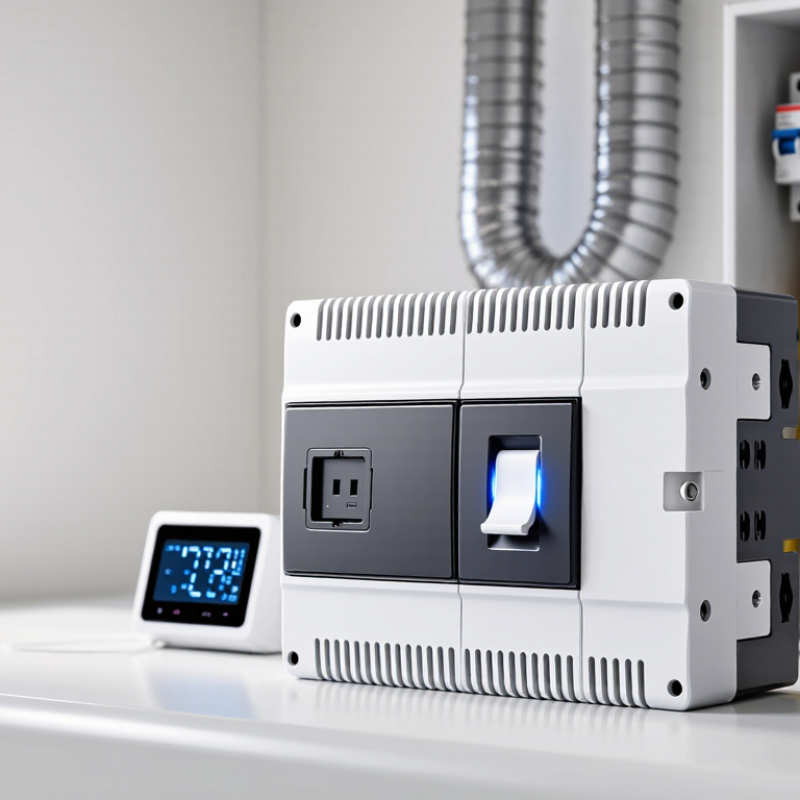
| Wi-Fi Smart MCB | 1P or 2P; commonly 6–63 A; 230 V AC; 50 Hz; typically 4.5–6 kA breaking capacity | 2.4 GHz Wi-Fi
Cloud or local mobile application | Remote ON/OFF control, schedules, power-status notifications, basic energy monitoring on selected models | Overload and short-circuit protection; some models include over-voltage, under-voltage, or leakage protection | DIN-rail consumer distribution boards; usually requires a stable neutral connection for electronic control circuits | Apartments, small offices, rental properties, lighting circuits, and individual appliance circuits | Requires reliable Wi-Fi coverage; check cloud dependence, data security, neutral-wire requirement, and manual override design |
| Zigbee Smart MCB | 1P, 2P, 3P, or 4P; commonly 6–63 A; 230/400 V AC; 50 Hz | Zigbee mesh
Requires a compatible gateway or hub | Remote switching, automation scenes, schedules, fault alerts, and integration with sensors and building-control systems | Overload and short-circuit protection; optional residual-current or voltage-protection functions depending on product design | DIN-rail residential or light-commercial panels with a nearby Zigbee gateway | Smart homes, multi-room automation, energy-saving projects, and installations with many connected circuits | More reliable than a single wireless link in larger networks, but gateway compatibility, mesh coverage, and commissioning must be verified |
| NB-IoT or 4G Smart Breaker | 1P, 2P, 3P, or 4P; commonly 10–63 A; 230/400 V AC; 50 Hz | NB-IoT4G LTE
Cellular network connection | Remote control, meter reading, event reporting, outage notifications, centralized asset monitoring, and scheduled operation | Overload and short-circuit protection; some products add over-voltage, under-voltage, leakage, temperature, or phase-loss monitoring | Remote or distributed DIN-rail panels where local internet or Ethernet is unavailable | Temporary facilities, outdoor cabinets, distributed assets, agricultural sites, and remote energy-management projects | Evaluate network coverage, SIM or data-service costs, operating-temperature range, cybersecurity, and fallback operation during communication loss |
| RS-485 Modbus Smart Breaker | 1P, 2P, 3P, or 4P; commonly 6–125 A; 230/400 V AC; 50 Hz; breaking capacity often 6–10 kA | RS-485Modbus RTU
Wired control or building-management network | Remote status, measurement collection, alarm reporting, addressable control, and integration with PLC, SCADA, or energy-management systems | Overload and short-circuit protection; metering and alarm functions depend on the integrated measurement module | DIN-rail commercial, industrial, and electrical distribution panels | Factories, commercial buildings, data rooms, energy-monitoring systems, and projects requiring stable wired communication | Check communication wiring topology, baud rate, register map, isolation, maximum bus length, and compatibility with the supervisory system |
| Smart RCBO with Residual-Current Protection | 1P+N or 2P; commonly 6–63 A; 230 V AC; typical residual-current sensitivity of 30 mA for personal protection | Wi-FiZigbeeRS-485
Varies by model | Remote switching, leakage-current alerts, energy monitoring, fault history, and automatic trip-status reporting | Overload, short-circuit, and residual-current protection; selected versions include over-voltage or under-voltage protection | Final circuits in residential and light-commercial distribution boards | Bathrooms, kitchens, outdoor sockets, water heaters, EV auxiliary circuits, and circuits requiring additional shock protection | Confirm residual-current type, trip characteristics, neutral switching, test-button access, selectivity, and compatibility with the connected load |
| Smart MCCB with Remote Trip or Motor Operator | 3P or 4P; commonly 63–630 A; 230/400 V AC; 50 Hz; breaking capacity varies widely by frame and product class | RS-485Ethernet gatewayDry contact | Remote open/close operation, trip indication, current and voltage monitoring, demand management, and event logging | Adjustable overload and short-circuit protection; optional ground-fault, under-voltage, and shunt-trip functions | Main distribution boards, switchboards, and industrial control cabinets | Factories, commercial buildings, photovoltaic distribution, backup-power systems, and large HVAC installations | Verify short-circuit withstand, coordination with upstream and downstream devices, motor-operator duty cycle, control voltage, and maintenance access |
| Smart Metering Breaker with Integrated Energy Measurement | 1P, 2P, 3P, or 4P; commonly 10–100 A; 230/400 V AC; 50 Hz | Wi-FiRS-4854G
Depending on the communication module | Voltage, current, active power, power factor, energy consumption, demand limits, and historical data reporting | Basic overcurrent protection may be integrated; external MCB, MCCB, or RCBO protection may still be required | Sub-metering panels, tenant distribution boards, and energy-management cabinets | Commercial sub-metering, rental properties, solar self-consumption monitoring, and load-management projects | Check measurement accuracy, current-sampling method, tariff support, data retention, calibration requirements, and whether protective functions are separate |
| Solar and Energy-Storage Smart Breaker | AC versions commonly 2P, 3P, or 4P at 230/400 V AC; DC versions require voltage and polarity ratings specifically designed for photovoltaic or battery circuits | RS-485EthernetWireless gateway | Remote isolation, load shedding, inverter coordination, power-flow monitoring, and abnormal-condition alerts | AC or DC overcurrent and short-circuit protection; selected products support reverse-current, over-voltage, or temperature monitoring | PV combiner boxes, inverter AC panels, battery cabinets, and energy-storage distribution systems | Rooftop solar, microgrids, battery energy storage, backup power, and demand-response systems | AC and DC breakers are not interchangeable; confirm DC arc-extinguishing design, system voltage, fault current, isolation requirements, and inverter compatibility |