How to Choose the Best Strain Wave Gear for Your Needs?
Choosing the right strain wave gear can be a complex task. Industry expert Dr. Emily Shaw, a leading engineer at WaveTech, states, "Selecting the ideal strain wave gear depends on your specific application." This reflects the intricacies involved in making the right choice.
Strain wave gears are essential in precision motion control. They offer high torque density and compact design. When selecting a strain wave gear, it's crucial to consider load capacity, speed, and backlash. Each application may demand unique specifications. Not every strain wave gear will fit your needs.
Investing time in your selection is vital. Examining your requirements thoroughly will lead to better outcomes. Ask yourself important questions. What are your performance needs? How critical is weight and size? Reflecting on these aspects will help you pick the best strain wave gear.
Understanding Strain Wave Gear: Basic Principles and Functionality
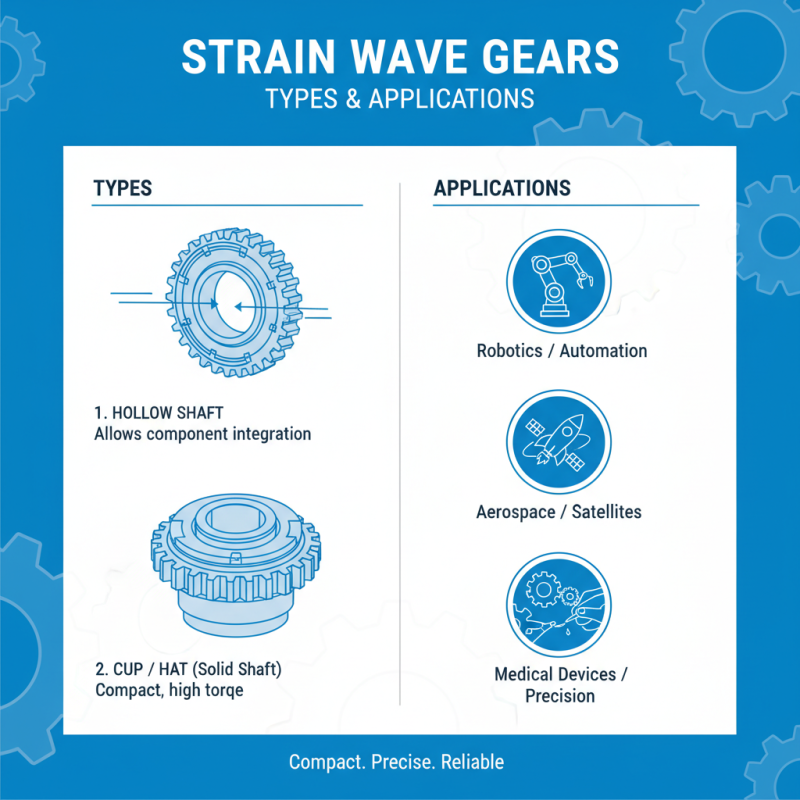
Strain wave gear, often known as harmonic drive, operates on a unique principle. It utilizes a flexible spline and a circular spline to create motion. This design enables high reduction ratios in a compact size. The gear's efficiency can reach up to 90%, which makes it ideal for precision applications. However, this efficiency can sometimes vary under load. Understanding its functionality is crucial for effective application.
When choosing a strain wave gear, consider factors like torque, backlash, and weight. Each factor influences the gear's performance in real-world scenarios. A low backlash is essential for accurate positioning in robotics. On the other hand, excessive weight might hinder mobility. Reflecting on these details during selection ensures that the strain wave gear meets your specific requirements.
It's also important to remember that not all strain wave gears are created equal. Some may have design flaws that affect longevity and durability. Conducting thorough research and consulting experts can help identify reliable options. Engage closely with the technical specifications and user experiences available in the market. This can provide insight into potential challenges and benefits associated with different models.
Key Factors to Consider When Choosing a Strain Wave Gear
When selecting a strain wave gear, several crucial factors come into play. First, assess your application requirements. Are you dealing with high torque needs or precision motion? Understanding these specifications helps in identifying the right product. If your project involves varying loads, a gear with a wider range of torque capacity is essential. Strain wave gears can be sensitive to load fluctuations, affecting performance.
Material choices also matter significantly. The construction materials can impact durability and efficiency. Metals used in gear production should withstand wear and heat. However, don't overlook potential trade-offs in weight and cost. Sometimes, the most affordable option may not be the most effective in the long run. Check the manufacturer's details on load ratings and operational life to gauge reliability.
Lastly, consider the gear's backlash. Backlash affects precision, especially in applications like robotics. Even a minimal amount can impact accuracy. It’s wise to spend time evaluating alternatives and their specifications carefully. Spending a little more time upfront can prevent costly mistakes later in the project. Balancing performance and cost while reflecting on your specific needs is key to making the best decision.
Comparing Performance Metrics: Torque, Speed, and Efficiency
When selecting the best strain wave gear, understanding notable performance metrics is crucial. Torque is a primary consideration. Typically, strain wave gears can provide high torque levels with minimal backlash. A well-documented report from the International Journal of Advanced Manufacturing Technology emphasizes that these gears can achieve torque values up to 80 Nm in compact designs. Such torque capabilities can enhance the operational efficiency of robotic systems and precision machinery.
Speed is another vital metric. Strain wave gears are known for their high-speed capabilities. In applications like robotics, they often operate at speeds exceeding 200 rpm. This attribute is especially important for applications requiring rapid response times. However, as speed increases, potential challenges like heat generation can arise. Engineers must assess the balance between speed and durability when making their selection.
Efficiency cannot be overlooked. Strain wave gears are typically 90% efficient, which is beneficial for energy conservation. Yet, the efficiency can be affected by load conditions and application specifics. Data from the Society of Mechanical Engineers suggests that when subjected to varying loads, efficiency can drop to as low as 70%. This makes it necessary to evaluate whether the selected gear will perform efficiently under specific operational conditions.
How to Choose the Best Strain Wave Gear for Your Needs?
| Model |
Torque (Nm) |
Speed (rpm) |
Efficiency (%) |
| Model A |
50 |
3000 |
90 |
| Model B |
75 |
2500 |
92 |
| Model C |
100 |
2000 |
88 |
| Model D |
30 |
3500 |
89 |
| Model E |
60 |
2800 |
91 |
Maintenance and Durability: Ensuring Longevity of Your Strain Wave Gear
When selecting a strain wave gear, its maintenance and durability are critical for longevity. Strain wave gears, often used in robotics and aerospace, must withstand various stressors. Some studies indicate that over 70% of gear failures occur due to inadequate maintenance. Therefore, regular inspections and proper lubrication are essential.
Choosing high-quality materials can enhance durability. Metal fatigue often leads to failure, especially in high-load applications. Research shows that using alloy steel can increase the lifespan of strain wave gears by up to 40%. Another key factor is the manufacturing process. Precision in machining directly affects the gear's performance, minimizing wear.
Also, understanding the application environment matters. Temperature fluctuations and exposure to contaminants can impact gear life. A study revealed that 60% of gears in aggressive environments need more frequent maintenance. With the right strategy, however, you can significantly extend the operational life of your gear. Regular assessments and proactive measures can prevent costly downtimes.