| Thermal Transmittance | Window U-value around 1.0–1.8 W/m²·K, depending on glazing, frame size, spacer, and climate. | ISO 10077-1/2, EN 14351-1, or NFRC 100. | A lower U-value means less heat flows through the complete window, improving indoor comfort and energy efficiency. | Request the tested or calculated whole-window U-value, not only the aluminum frame U-value. |
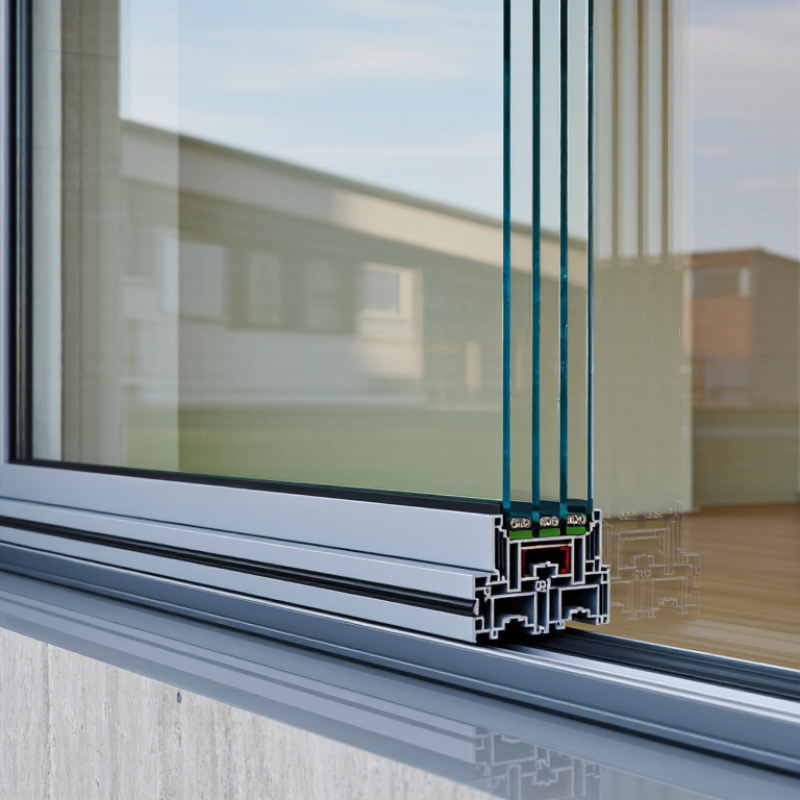
| Thermal Break Design | Continuous polyamide insulating strips, commonly 14–34 mm or more, selected according to structural and thermal requirements. | System design review and thermal calculations under applicable regional standards. | A properly designed thermal barrier reduces conductive heat transfer and limits interior surface condensation risk. | Check strip continuity, material compatibility, mechanical crimping, and insulation around corners and drainage zones. |
| Glazing Performance | Double or triple insulating glass with low-emissivity coating, inert-gas fill where specified, and a suitable warm-edge spacer. | EN 1279 series, ISO 20492, or ASTM E2190 for insulating glass units. | The glass area is often the largest part of a window; glazing selection strongly affects heat loss, solar gain, and condensation. | Confirm glass thickness, cavity width, coating position, gas-fill requirement, spacer type, and visible light transmittance. |
| Air Tightness | High-performance systems commonly target Class 3 or Class 4 under EN 12207, with Class 4 representing the highest classification. | EN 1026 and EN 12207; ASTM E283 may also be used. | Low air leakage reduces drafts, dust entry, energy loss, and the risk of moisture entering the frame system. | Ask for complete-window test results, including sash-to-frame seals, corners, hardware, and opening configuration. |
| Water Tightness | A practical target is at least Class 7A under EN 12208 for many exposed applications; higher classes may be appropriate for tall buildings or severe weather. | EN 1027 and EN 12208; ASTM E547 or ASTM E331 may also apply. | Adequate resistance helps prevent rain penetration at seals, joints, drainage paths, and pressure zones. | Review pressure level, test duration, drainage design, weep-hole protection, and the exact window configuration tested. |
| Wind Load Resistance | The required rating must be calculated from building height, exposure, location, opening size, and local wind code; many standard projects specify approximately 1.5–2.5 kPa design pressure. | EN 12210, EN 12211, ASTM E330, or the applicable national building code. | Correct structural performance limits deflection, glass stress, hardware damage, and long-term seal failure. | Verify mullion and transom calculations, maximum sash size, glass thickness, anchor spacing, and deflection limits. |
| Acoustic Insulation | Approximately 35–45 dB airborne sound reduction may be achievable with suitable laminated or asymmetric insulating glass and airtight seals. | ISO 10140 and ISO 717-1; ASTM E90 may also be used. | Higher sound insulation improves comfort near roads, airports, railways, and dense urban areas. | Specify the tested Rw or STC value for the complete window, including frame, glass, seals, and hardware. |
| Condensation Control | Aim for a high frame temperature factor and a low-temperature-factor design appropriate to the indoor humidity and local climate. | ISO 10077-2, ISO 13788, and local condensation assessment methods. | Warm interior surfaces reduce visible condensation, mold risk, and deterioration of adjacent finishes. | Check frame corners, glass edges, spacers, hardware zones, installation joints, and expected indoor relative humidity. |
| Frame Material and Finish | Aluminum profiles should use suitable alloy and temper, accurate extrusion tolerances, and a durable powder-coat or anodized finish. | AAMA 2603/2604/2605, Qualicoat, ISO 7599, or project-specific coating requirements. | Material and coating quality affect corrosion resistance, color stability, dimensional accuracy, and service life. | Confirm alloy, coating thickness, pretreatment, color tolerance, surface warranty, and coastal-environment suitability. |
| Seals and Gaskets | Multi-level EPDM or equivalent high-quality seals with continuous corners, correct compression, and UV-resistant formulation. | Product-system testing under the relevant air, water, wind, and durability standards. | Seals are essential for maintaining airtightness, watertightness, thermal performance, and acoustic insulation. | Inspect gasket joints, corner vulcanization or welding, compression settings, replacement availability, and compatibility with glazing. |
| Hardware Durability | Hardware should be sized for sash weight and tested for repeated operating cycles; corrosion-resistant components are recommended for humid or coastal conditions. | EN 1191, EN 12400, EN 13126 series, or applicable regional hardware standards. | Reliable hardware keeps the sash aligned and maintains seal compression throughout the product life. | Review cycle testing, load capacity, locking-point layout, corrosion grade, adjustment range, and spare-part availability. |
| Fabrication and Assembly Quality | Accurate corner joints, controlled drainage, consistent glazing blocks, correct sealant application, and documented quality inspections. | Factory quality procedures and complete-window performance testing. | Even a well-designed profile can perform poorly if cutting, crimping, sealing, glazing, or drainage is inconsistent. | Request inspection records, production drawings, sample approval, batch traceability, and pre-shipment checks. |
| Installation Performance | A continuous installation seal with correct structural fixing, drainage, insulation, and internal air-sealing layers. | Project installation specifications, ASTM E2112, EN монтаж requirements where applicable, and local building codes. | Poor installation can reduce air, water, thermal, and acoustic performance regardless of the window’s factory rating. | Define opening tolerances, fixing points, sill drainage, perimeter membranes, sealants, insulation, and site inspection procedures. |
| Documentation and Verification | Project-specific test reports, calculations, drawings, material certificates, installation instructions, and maintenance guidance. | Third-party laboratory testing and standards applicable to the destination market. | Independent evidence makes performance claims measurable and helps ensure that the tested product matches the supplied configuration. | Check report dates, specimen dimensions, opening type, glass build-up, test pressure, laboratory accreditation, and scope of application. |