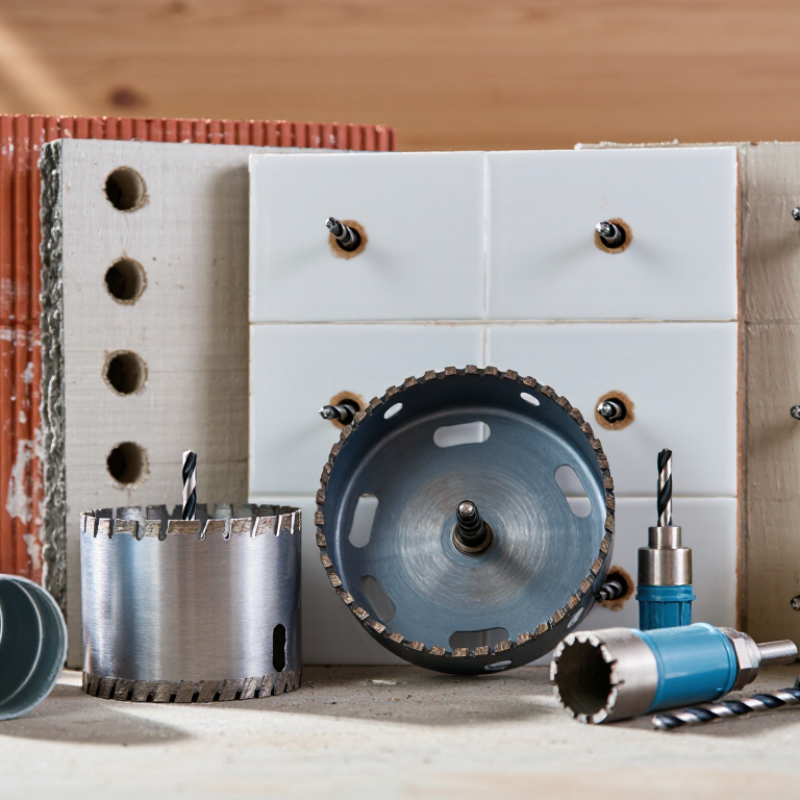
| Bi-metal hole saw | Drywall, plasterboard, wood, plastic, and thin sheet metal | High-speed steel cutting edge welded to a tougher steel body | Electrical boxes, cable routes, pipe penetrations, and ventilation openings | Versatile, impact-resistant, and suitable for many general-purpose wall jobs | Not the preferred choice for repeated cutting through hard masonry or reinforced concrete |
| Carbide-grit hole saw | Brick, concrete block, cement board, and abrasive masonry | Carbide particles bonded to the rim for abrasive cutting | Wall anchors, conduit, plumbing penetrations, and small masonry openings | Good wear resistance and effective cutting on many masonry surfaces | Usually slower than toothed saws and may produce substantial dust |
| Diamond-grit hole saw | Tile, porcelain tile, glass, stone, and very hard non-metallic surfaces | Diamond abrasive particles attached to the cutting rim | Bathroom plumbing, shower fittings, tile outlets, and stone installations | Creates relatively clean round holes in hard, brittle surfaces | Requires controlled pressure; wet cutting is commonly used to reduce heat and dust |
| Carbide-tipped hole saw | Brick, block, lightweight concrete, and some layered wall assemblies | Individual carbide teeth or tips provide a more aggressive cutting action | Larger service holes and repeated masonry penetrations | Cuts faster than many abrasive-rim designs and can offer good service life | Tooth damage is possible if the tool is tilted, overloaded, or used on unsuitable materials |
| Adjustable wall hole cutter | Drywall, wood panels, ceiling boards, and other relatively soft materials | Movable cutting arms allow a range of hole diameters | Downlights, speakers, vents, and non-standard openings | One tool can cover several diameters and reduce the number of accessories required | Needs careful setup and is generally unsuitable for hard masonry or high-impact drilling |
| Deep-cut wall hole saw | Multi-layer drywall, wood framing, insulation-backed panels, and thick wall sections | Extended cup depth accommodates thicker materials | Long cable routes, pipe sleeves, and openings through layered walls | Reduces the need to cut from both sides of the wall | Longer bodies can be less stable and may require a drill with adequate torque |
| Arbor and pilot-drill system | Most wall materials, when matched with the correct hole saw cup | Pilot drill starts the hole while the arbor transfers rotation to the cup | Accurate positioning for electrical, plumbing, HVAC, and general installation work | Improves alignment and allows cups to be changed for different hole sizes | A worn pilot bit or loose arbor can cause wandering, vibration, and uneven cutting |