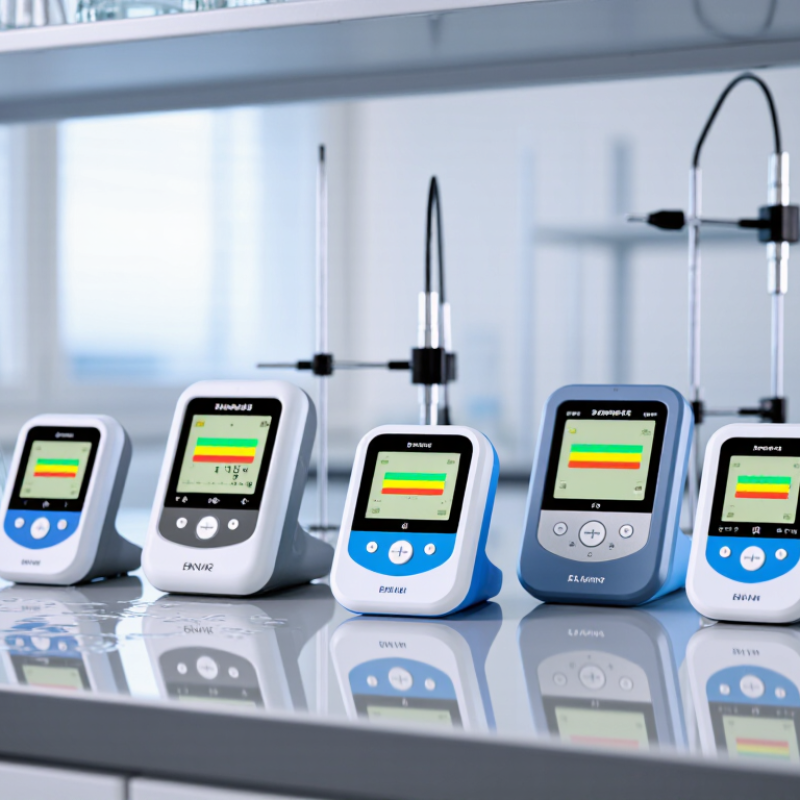
| 1 | Digital pH Monitor | Acidity and alkalinity | pH 0.00–14.00 | Approximately ±0.01–0.02 pH | Drinking water, aquariums, pools, hydroponics | At least two-point calibration using pH 4.01, 7.00, or 10.01 buffers | Fast, inexpensive, and essential for many water-treatment decisions |
| 2 | Conductivity and TDS Monitor | Electrical conductivity and estimated dissolved solids | 0–2,000 µS/cm; some meters extend to 20,000 µS/cm | Approximately ±1% of reading | Reverse-osmosis systems, hydroponics, boiler feedwater | Use a certified conductivity standard near the expected sample value | Quick indication of ionic content and water-treatment performance |
| 3 | Dissolved Oxygen Monitor | Oxygen dissolved in water | 0–20 mg/L; approximately 0–200% saturation | Approximately ±0.5 mg/L or ±5% of reading | Aquaculture, wastewater treatment, rivers, and lakes | Air-saturation calibration, with periodic zero-point checks when supported | Helps assess aquatic life support and biological treatment activity |
| 4 | Turbidity Monitor | Suspended particles and water cloudiness | 0–1,000 NTU; low-range models may focus on 0–100 NTU | Approximately ±2% of reading or ±0.3 NTU at low levels | Drinking-water checks, surface water, filtration monitoring | Use certified turbidity standards and keep the optical cell clean | Provides a direct indicator of filtration quality and particulate contamination |
| 5 | Free Chlorine Monitor | Residual disinfectant concentration | 0–5 mg/L as Cl2; some instruments measure higher levels | Approximately ±0.05 mg/L or ±5% of reading | Drinking water, swimming pools, and distribution systems | Verify with a validated colorimetric reference method or chlorine standard | Monitors disinfection effectiveness and helps detect excessive residual levels |
| 6 | ORP Monitor | Oxidation-reduction potential | Approximately −1,000 to +1,000 mV | Approximately ±5 mV | Disinfection control, wastewater, aquaculture, and process water | Check against a certified ORP reference solution and clean the electrode regularly | Tracks the water’s overall oxidizing or reducing tendency |
| 7 | Temperature-Compensated Multi-Parameter Monitor | Temperature plus selected pH, conductivity, TDS, or salinity values | Temperature: typically 0–50°C; other parameters depend on the probe | Temperature approximately ±0.2°C; sensor-dependent for other readings | Field surveys, water treatment, aquariums, and laboratories | Calibrate each sensor separately according to its measurement method | Reduces testing time by combining several important measurements in one device |