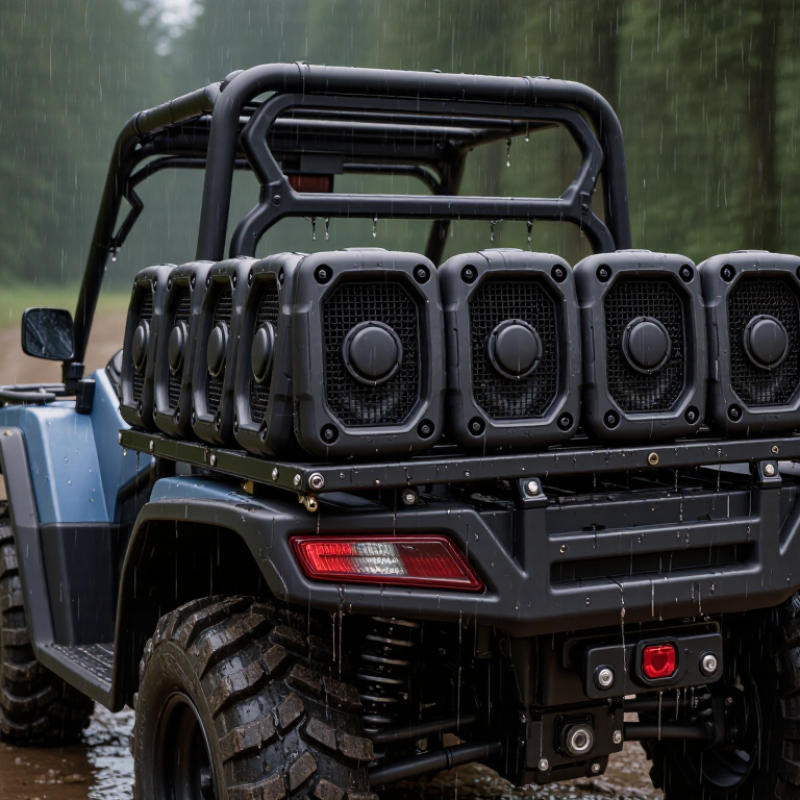
Choosing among the 10 best waterproof ATV sound bars means checking installation details before sound quality. ATV frames vary widely. A bar that fits one model may block another’s controls, headlights, or storage space.
Measure the roll-cage width, tube diameter, and available height first. Measure twice. Most universal clamps support common cage tubes, but not every clamp grips angled bars securely. Rubber inserts can reduce vibration and protect painted metal. Check the sound bar’s length against the cage, leaving room for cable movement and steering clearance.
Confirm the vehicle’s electrical system before connecting anything. Many ATVs use a 12-volt battery, but wiring layouts differ. Use a fused connection near the battery and keep cables away from hot surfaces, suspension parts, and sharp edges. Waterproof does not mean pressure-wash proof. Look for a tested water-resistance rating, sealed ports, and a covered charging socket. I have seen poorly routed wires collect water beneath the seat, causing avoidable problems.
Bluetooth controls may work differently across riding environments. Gloves, mud, and engine noise can affect usability. Test pairing, volume access, and automatic restart before tightening every clamp. Some models need an extra mounting plate or longer bolts. That is inconvenient, but forcing a mismatched bracket is worse. Recheck the hardware after the first rough ride, because vibration can loosen connections even when the initial installation feels solid.