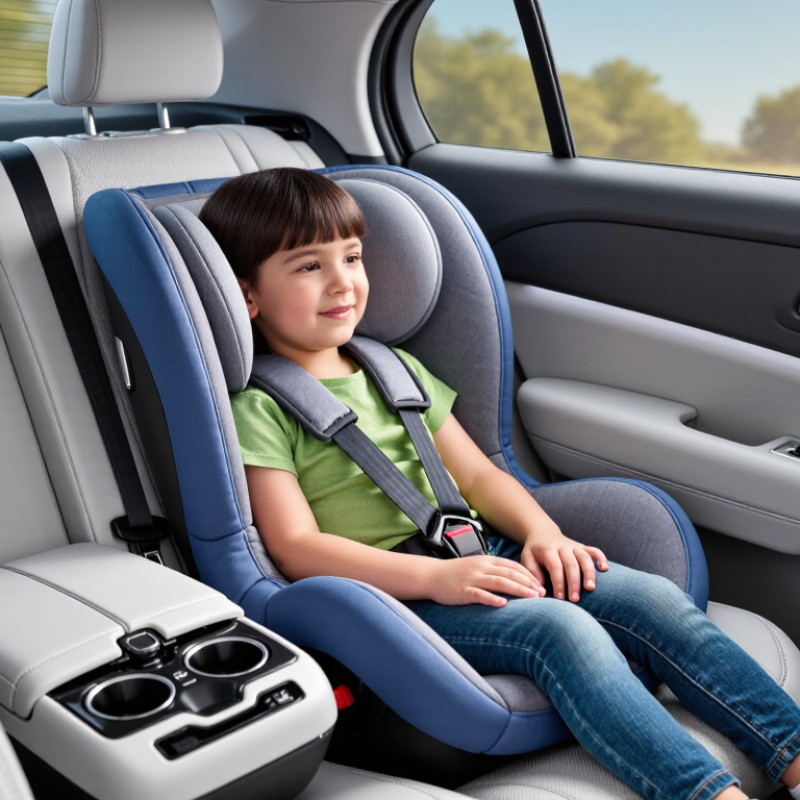
| What a booster seat does | A booster raises and positions a child so the vehicle’s lap-and-shoulder belt fits correctly. | The belt should lie on the child—not across the booster’s arm or guide in a way that conflicts with its instructions. |
| Who may need one | Children who have outgrown their forward-facing child seat with a harness but are not yet large enough for the vehicle seat belt to fit properly on its own. | Check the child seat’s height and weight limits before moving to a booster; limits vary by seat. |
| Typical age and height guidance | Many children need a booster until the seat belt fits without one—often around 4 ft 9 in (about 145 cm), commonly between ages 8 and 12. | Age and height are general guides, not a substitute for checking belt fit or local requirements. |
| Lap-belt position | The lap belt should sit low and snug across the hips and upper thighs. | It should not ride up across the stomach. |
| Shoulder-belt position | The shoulder belt should cross the middle of the chest and shoulder. | It should not rest on the neck or face, or slip off the shoulder. |
| Signs the adult seat belt fits | The child can sit with their back against the vehicle seat, knees bent at the seat edge, and feet supported, while keeping the correct belt positions. | The child should be able to maintain this position for the entire trip without slouching or moving the belt out of place. |
| Required belt type | Booster seats are designed to be used with a lap-and-shoulder belt. | Do not use a booster with a lap-only belt. Follow the booster’s instructions and the vehicle manual. |
| Backless or high-back booster | Both types can position a child; the appropriate choice depends on the child, vehicle seating position, and product instructions. | A backless booster needs adequate vehicle head support. Check the booster instructions and vehicle manual for head-restraint requirements. |
| Where children should sit | The rear seat is the safest place for children under 13 when available. | Use a seating position with a compatible lap-and-shoulder belt and follow the vehicle manual. |
| When to stop using a booster | Stop when the vehicle belt fits correctly on every ride and the child can maintain that fit for the whole trip. | Check belt fit in each vehicle; a child may still need a booster in a different car. |