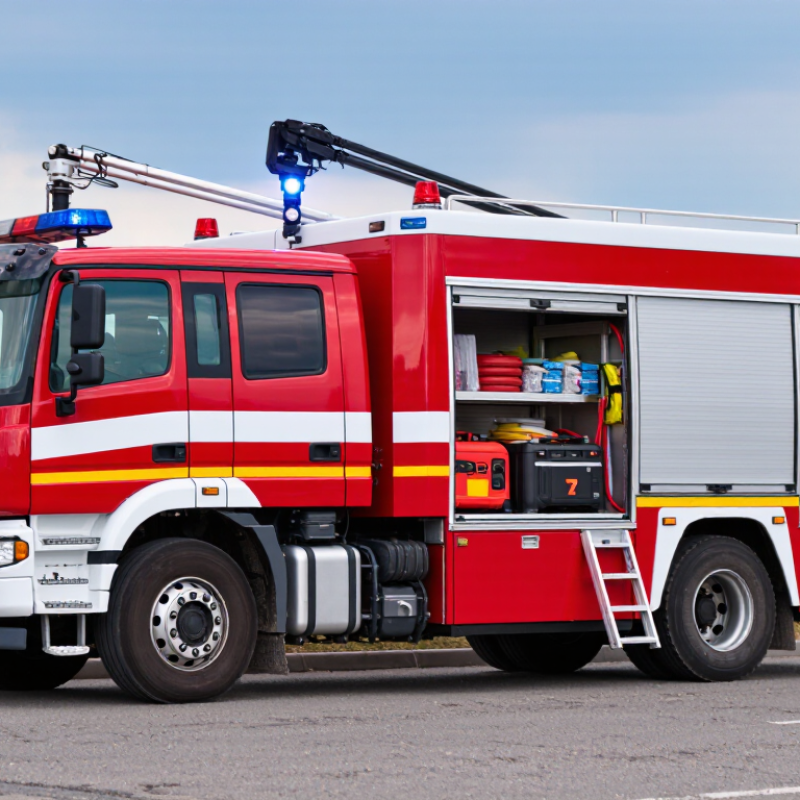
| Fire and Rescue | Firefighting Support | Carries firefighting equipment such as hoses, portable pumps, extinguishers, water tanks, breathing apparatus, and hand tools. The vehicle can transport personnel and equipment to the incident area. | Configurable
Water capacity and pump specification depend on the vehicle body and mission design. |
| Fire and Rescue | Urban Search and Rescue | Provides space for rescue tools, cutting equipment, lifting devices, ropes, lighting systems, protective clothing, and temporary scene-support supplies. | Suitable
Best used with trained rescue teams and dedicated equipment. |
| Medical Response | Emergency Medical Transport | A properly equipped conversion can carry medical personnel, stretchers, first-aid supplies, oxygen equipment, monitoring devices, and patients requiring urgent transport. | Conversion-based
Medical layouts and equipment must comply with applicable local regulations. |
| Medical Response | On-Site First Aid | Can be configured as a mobile treatment or first-aid unit for basic assessment, wound care, casualty triage, oxygen support, and preparation for hospital transfer. | Configurable
It is not a substitute for a hospital or advanced clinical facility. |
| Traffic Incidents | Road Crash Response | Transports rescue crews and equipment for vehicle stabilization, casualty access, traffic-scene lighting, debris removal, and initial hazard control. | Suitable
Response teams should coordinate with police, medical services, and road authorities. |
| Hazardous Conditions | Hazardous-Material Support | May carry chemical protective clothing, detection instruments, containment materials, absorbents, decontamination supplies, and warning equipment. | Specialized
Actual hazardous-material capability depends on certified equipment and crew training. |
| Disaster Relief | Flood and Storm Response | Supports evacuation, delivery of emergency supplies, portable lighting, water removal, communications, and transport of personnel during floods, storms, or severe weather events. | Mission-dependent
Ground clearance, traction, and payload must match local terrain and weather conditions. |
| Disaster Relief | Earthquake and Structural Emergency Support | Carries generators, lighting towers, power tools, shoring materials, lifting equipment, emergency shelters, and supplies for temporary field operations. | Suitable
Structural rescue requires specialist assessment and properly trained personnel. |
| Command and Control | Mobile Incident Command | Can be fitted with radios, satellite or cellular communication systems, workstations, mapping tools, display screens, and power systems for coordinating emergency teams. | Configurable
Communication coverage depends on local networks and installed systems. |
| Logistics | Emergency Equipment Delivery | Transports rescue personnel, fuel, food, water, medical supplies, temporary barriers, spare equipment, and other resources between the depot and incident site. | General-purpose
Payload must remain within the approved vehicle limits. |
| Public Safety | Perimeter and Evacuation Support | Supports cordon setup, evacuation operations, public-address announcements, warning-light deployment, temporary shelter logistics, and controlled access to hazardous areas. | Suitable
Public-safety procedures must follow the incident command plan. |
| Power and Lighting | Emergency Power Supply | A utility configuration can include a generator, batteries, power distribution equipment, floodlights, and cable management for temporary lighting and essential field operations. | Optional
Electrical systems require appropriate protection, grounding, and operator training. |