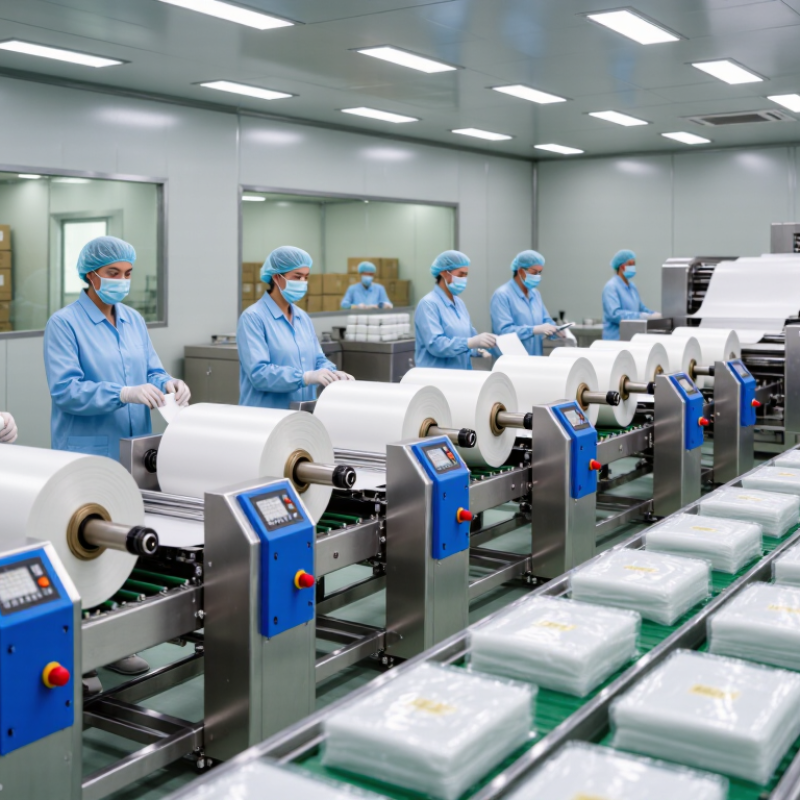
| Spunlace nonwoven | Entangled fibers bonded with high-pressure water jets; commonly made from viscose, polyester, or blends. | Personal-care wipes, baby wipes, facial wipes, cleansing wipes, household wipes | Soft hand feel, good absorbency, and a fabric-like texture. Performance depends on fiber blend, basis weight, and web structure. | Skin cleansing and general-purpose wet wipes | Confirm fiber percentages, basis weight in g/m², sheet dimensions, tensile strength, and whether the fabric is flushable-certified if relevant. |
| Viscose and polyester blend | Regenerated cellulose viscose combined with synthetic polyester fibers in a nonwoven web. | Baby wipes, makeup-removal wipes, personal-care wipes | Viscose contributes absorbency and softness; polyester can add strength and durability. The balance changes the feel and performance. | Everyday cleansing and cosmetic applications | Request the exact blend ratio and test samples with the intended lotion, since liquid formulation can affect the wipe’s feel and strength. |
| 100% viscose nonwoven | Nonwoven made from regenerated cellulose fibers, often produced using spunlace bonding. | Facial wipes, cosmetic pads and wipes, selected personal-care wipes | Absorbent and soft; cellulose-based fibers can be suitable for products targeting reduced synthetic-fiber content. | Facial cleansing and cosmetic use | Ask for fiber-content documentation, wet and dry strength data, and any environmental or compostability claims with supporting evidence. |
| 100% polyester nonwoven | Nonwoven web made from polyester fibers, commonly bonded by spunlace or other processes. | Cleaning wipes, surface wipes, durable utility wipes | Generally durable and lint-resistant compared with many cellulose-rich constructions; absorbency depends on fabric design and finish. | Household, commercial, and selected industrial cleaning | Check abrasion and linting performance, liquid pickup, chemical compatibility, and suitability for the intended surface. |
| Airlaid nonwoven | Cellulose fibers formed into a web using air; may include binders or other fibers, depending on the specification. | Thicker household wipes, food-service wipes, utility wipes | Can provide bulk and absorbency. Strength, softness, and linting vary with the web design and binder system. | Spill cleanup and general-purpose wiping | Verify composition, binder information, absorbency, linting, and wet-strength requirements for the intended use. |
| Needlepunch nonwoven | Fibers mechanically entangled by barbed needles; commonly used for heavier, more durable fabrics. | Heavy-duty cleaning or industrial wiping materials | Often thicker and more robust than lightweight wipe substrates; may have a coarser texture and is not the standard choice for soft skin wipes. | Industrial and heavy-duty surface cleaning | Confirm whether the material is intended for wet-wipe converting and test softness, lint, absorbency, and sheet consistency. |
| Flushable-oriented substrate | Often cellulose-based or otherwise designed to disperse under specified test conditions; construction varies by supplier. | Toilet wipes and dispersible personal-care wipes | Dispersibility depends on the complete wipe construction, including fibers, bonding, and any additives. “Flushable” should not be inferred from fiber content alone. | Products intended for disposal via a toilet, where permitted | Request applicable dispersibility test reports and clear disposal instructions; check requirements in each target market. |
| Biodegradable or compostable-positioned substrate | May use cellulose-based fibers or other materials; biodegradability and compostability depend on the full product and test conditions. | Selected personal-care and household wipes | Environmental claims require evidence and are not guaranteed by a “natural” or cellulose-based fiber description alone. | Products with verified end-of-life claims | Ask which standard and test conditions support the claim, whether the claim covers the finished wipe, and whether certification applies to the target market. |
| Baby wipes | Usually a soft nonwoven substrate, commonly spunlace, with a water-based lotion; formulation varies. | Unscented, fragranced, and specialty baby-care wipes | Designed for gentle cleansing; substrate softness, lotion, preservation, and packaging all influence product performance. | Baby and toddler care | Review ingredient lists, microbiological controls, preservative approach, packaging integrity, and applicable product regulations. |
| Disinfecting and surface wipes | Nonwoven substrate paired with a formulated liquid; substrate choice depends on the active ingredients and intended surface. | Household, institutional, and selected commercial surface wipes | Compatibility and efficacy depend on the complete formulation and labeled contact time, not just the fabric. | Hard-surface cleaning or disinfection, according to product labeling | Check active-ingredient compatibility, efficacy data, required regulatory authorization, directions for use, and substrate stability. |