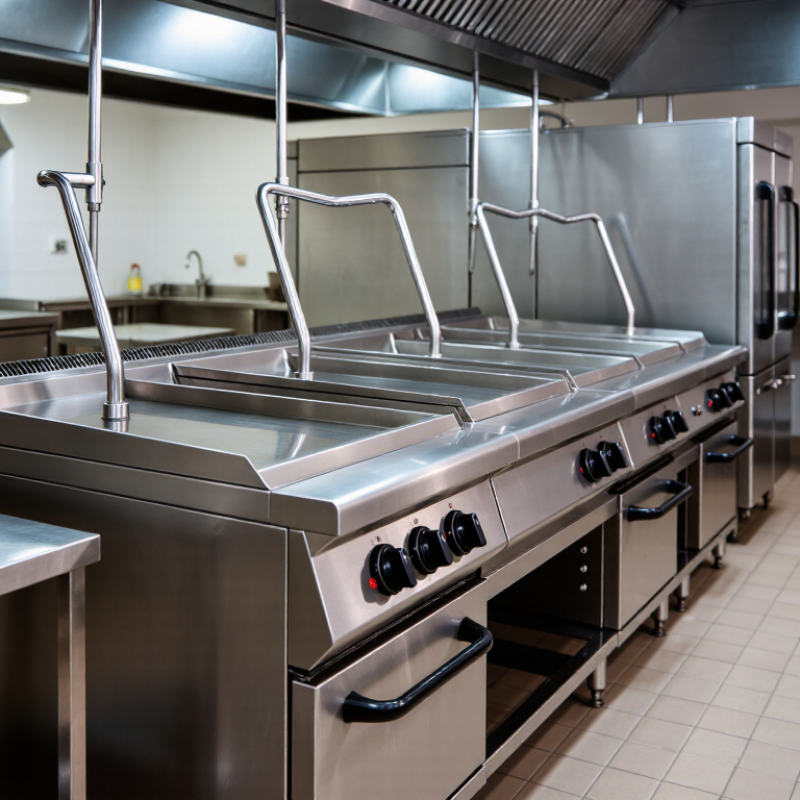
| Definition | A freestanding bratt pan is a floor-mounted commercial cooking appliance with a broad, heated pan and a tilting mechanism. | It combines functions commonly associated with a griddle, shallow fryer, braising pan, and large cooking pot. |
| Common cooking methods | Frying, searing, sautéing, braising, simmering, and boiling, depending on the model and its controls. | Operators can brown ingredients in the pan, add liquid, and continue cooking in the same vessel. |
| Heating options | Commercial models are commonly heated by gas or electricity; availability depends on the installation and model. | Choose a compatible supply and have connections installed to applicable local requirements. |
| Pan construction | The cooking surface is typically made from stainless steel or another heat-conductive metal construction specified by the manufacturer. | A wide, shallow pan provides room to stir and turn food; follow the care instructions for the specific surface. |
| Capacity and size | Commercial capacities vary widely, with many models offered in sizes from several dozen litres to well over 100 litres. | Select capacity based on batch size, menu, kitchen space, and the usable cooking area stated in the product specifications. |
| Tilting and discharge | A manual or powered tilting system raises the pan to help empty its contents. | Tilt slowly into suitable receiving containers, keeping hands clear and following the operating instructions. |
| Temperature control | Controls and available temperature ranges differ by model and heat source. | Use the appliance controls and a food thermometer where appropriate; do not assume every model has the same temperature range. |
| Typical kitchen applications | Often used in hotels, institutional kitchens, catering operations, and other high-volume food-service settings. | Suitable for batch cooking dishes such as stews, sauces, vegetables, and seared or braised foods. |
| Basic operating sequence | Inspect the appliance, preheat as needed, add ingredients, cook using the selected method, and switch off after use. | Use suitable utensils, avoid overfilling, and follow the operating and safety instructions supplied with the equipment. |
| Cleaning and maintenance | Cleaning procedures depend on the pan surface and appliance design; electrical or gas components require appropriate care. | Switch off and allow the pan to cool as directed, remove food residue, clean with approved products, and keep controls and connections dry. |
| Selection considerations | Key factors include capacity, pan dimensions, heating type, tilting mechanism, controls, installation needs, and service access. | Confirm the kitchen’s available space, utilities, ventilation needs, and local safety requirements before purchasing. |