Request Quote

Request a quote from Nidec Drive Technology America Corporation.

This quote form is intended for customers and partners in North America seeking information about Nidec Drive Technology America Corporation’s Precision Gearing Technologies. For inquiries related to the Nidec motor group division or from outside this region, please visit the global Nidec Group website to find the appropriate regional or product-specific contact.

Subscribe to Nidec Newsletter

Subscribe to our email newsletter to stay current with our precision gearing solutions, featured products, company updates, and industry news.

China Best Industrial Filling Machine Manufacturers

China’s filling equipment sector serves beverage, food, pharmaceutical, cosmetic, and chemical producers. For buyers comparing China Best Industrial Filling Machine Manufacturers, the key question is not simply who offers the lowest price. It is whether a machine can deliver accurate fills, steady output, and dependable support on a real production line.

Market reports help explain the demand. Grand View Research estimated the global filling machines market at about US$6.1 billion in 2023, with continued growth projected through 2030. Its figures depend on the product categories and regions included, so they should be treated as an industry estimate, not a purchasing forecast. Still, the direction is clear: manufacturers need flexible equipment for different containers, product viscosities, and production volumes. A small dosing error can mean rejected bottles; a slow changeover can leave a line idle.

When evaluating a Chinese supplier, look beyond catalog specifications. Ask for filling-accuracy test results, materials and component details, cleaning procedures, spare-parts lead times, and video or on-site acceptance testing. Check whether the machine handles your actual bottle shape and product, not just a sample shown in a sales presentation. Good documentation matters. So does after-sales response. A low quote may omit both. Even a well-built Industrial Filling Machine can underperform if installation, operator training, or maintenance planning is weak. A shortlist is useful, but it can hide differences in service quality. Verify the details before deciding.

China Best Industrial Filling Machine Manufacturers

What Industrial Filling Machines Are and How They Work

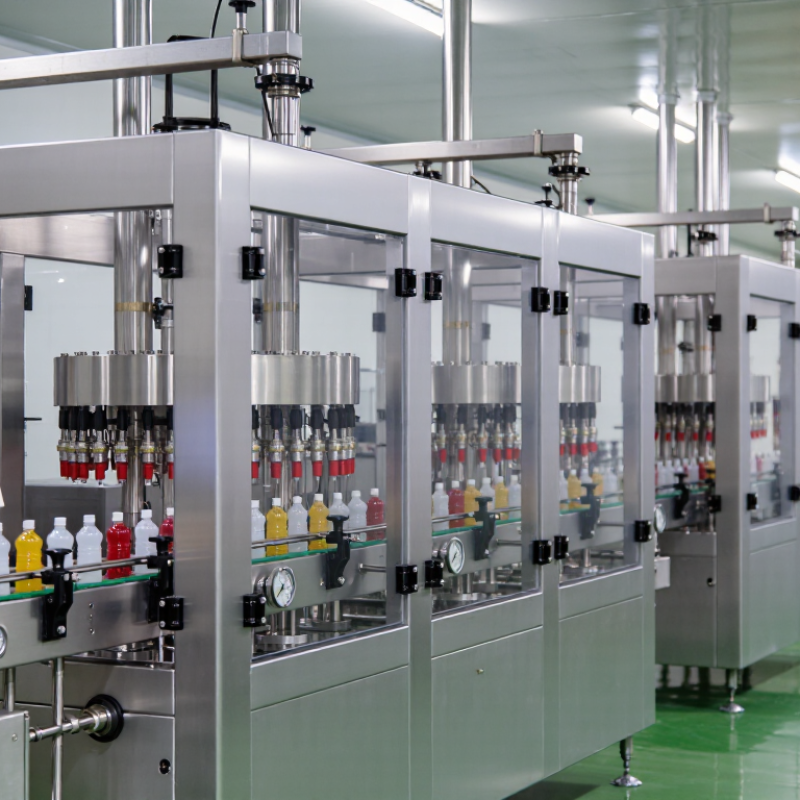
Industrial filling machines dispense controlled amounts of liquid, paste, or other flowable products into containers. A typical line includes a supply tank, pump or gravity feed, filling nozzles, and a conveyor. Sensors detect each container and signal the control system to begin filling. The machine then stops flow by time, measured volume, or weight. Small details matter. A narrow nozzle can reduce splashing, while a suitable pump helps handle thicker products.

During operation, containers move beneath the nozzles, pause, and receive a preset dose. The conveyor carries them onward for capping or inspection. Different products need different settings: a thin liquid may fill quickly, while a viscous one may need a slower pump and longer settling time. Operators should check fill accuracy across several containers, not just one. No setting is perfect on the first trial; product temperature and container shape can affect results.

Tips: Keep nozzles clean and check seals for wear. Calibrate the fill volume using the actual product, then inspect a short test run. Record adjustments. It is easy to overlook foam or dripping, but both can cause uneven fills and messy equipment.

Main Types of Industrial Filling Machines Made in China

Chinese industrial filling lines commonly use gravity, piston, pump, and overflow systems. Gravity fillers suit thin liquids, such as water or juice. Piston fillers handle thicker products, including sauces and creams. Pump fillers offer flexible control, while overflow systems help maintain a consistent fill level in clear bottles. Rotary machines suit higher-volume production; linear machines are often easier to adapt for smaller batches.

Grand View Research valued the global packaging machinery market at USD 45.5 billion in 2022. Its 2023 report forecast 4.7% annual growth through 2030. This broad category includes more than filling equipment, so the figure indicates market momentum, not filler sales alone. When comparing Chinese-made machines, check fill accuracy, changeover time, and the material of product-contact parts. A neat specification sheet can still mislead. A foaming liquid may drip, or leave residue around the nozzle.

Tip: Request a test with your actual product and containers. Watch several cycles, then inspect fill levels, seals, and cleanup time. A water-only demo may miss the small problems.

Key Applications Across Packaging Industries

China Best Industrial Filling Machine Manufacturers

Key Applications Across Packaging Industries

Filling machines serve very different packaging needs across food, beverage, personal care, and household product industries. A beverage line may fill hundreds of lightweight bottles quickly, while a sauce line needs careful control to limit splashing and preserve portion accuracy. Thick creams and lotions often require pumps or piston fillers that handle changing viscosity without leaving excessive product on container walls. Small details matter.

Equipment selection depends on more than the product itself. Container shape, opening size, target fill volume, and expected production speed all affect nozzle design and line setup. For example, a narrow-neck bottle may need a longer nozzle, while foaming liquids benefit from slower filling or bottom-up dispensing. Food and cosmetic operations also consider cleanability, material compatibility, and changeover time between batches. These factors should be checked against actual production conditions, not just a supplier’s specification sheet.

In practice, a line that looks efficient on paper may need adjustment after operators test real containers and product batches. Minor dripping or inconsistent fills can create waste and slow packing. That lesson is easy to overlook. Comparing sample runs, maintenance access, and controls helps manufacturers choose filling equipment suited to daily production, rather than an idealized setup.

China Best Industrial Filling Machine Manufacturers – Key Applications Across Packaging Industries

Representative package sizes for products commonly handled by industrial filling lines. Values are examples, not market averages; actual sizes vary by product and packaging specification.

Filling equipment is used across food and beverage, personal care, household chemicals, and pharmaceutical packaging. Machine selection depends on factors such as product viscosity, container type, fill volume, and hygiene requirements.

How to Evaluate Chinese Filling Machine Manufacturers

Evaluating Chinese filling machine manufacturers starts with your product, not the showroom. Match the machine’s tested range to liquid viscosity, container shape, target speed, and changeover frequency. Ask for a factory acceptance test using your bottles and product, or a safe, viscosity-matched substitute. Record fill-weight variation, output over a full shift, rejects, cleaning time, and restart behavior. A quick demo proves little.

Check documented quality and engineering controls. Request risk assessments, electrical diagrams, material certificates for product-contact parts, calibration records, and spare-parts lead times. Verify whether quoted throughput includes cap feeding, labeling, and operator pauses.

The International Federation of Robotics’ World Robotics 2024 report recorded 4.28 million industrial robots operating worldwide in 2023, 10% more than in 2022. This shows automation is expanding, but it does not validate an individual filler.

Ask how sensors, PLCs, and recipe controls are tested. No audit is perfect.

Visit the production floor remotely or in person. Compare component serial numbers with the bill of materials, and inspect welds, guards, and washdown areas. Ask for references using similar containers and materials; confirm service response times in writing. Review warranty exclusions, software access, manuals, and commissioning scope before comparing prices.

Still, a polished demo can mislead. Request a witnessed endurance run. A vendor’s hesitation may be useful evidence.

Notable Manufacturers and Industry Trends in China

China’s industrial filling-machine sector is moving toward flexible production and better process monitoring. Many manufacturers now offer modular lines that can handle different container sizes with fewer mechanical changes. Digital controls help operators track fill levels, line speed, and stoppages in real time. Small details matter.

Demand is also growing for hygienic designs, quick cleaning, and lower energy use. Stainless-steel contact surfaces, tool-free access panels, and clearly marked adjustment points can reduce routine maintenance time. Yet efficiency claims may look cleaner on paper than on a wet production floor. Actual output depends on the container, product viscosity, and operator workflow.

Buyers comparing manufacturers should examine more than quoted speed. Ask how performance was tested, and request sample runs using the intended containers and product. A line rated at 120 bottles per minute may run slower when frequent changeovers or manual packing are involved. Check spare-part availability, control-system documentation, and technician training before installation. Not always obvious. Factory acceptance tests and written service terms can reveal gaps that a polished demonstration misses. Many suppliers are improving customization, but specifications still need careful verification.

China Best Industrial Filling Machine Manufacturers - Notable Manufacturers and Industry Trends in China

Category Filling Technology or Capability Typical Products or Applications What Buyers Should Evaluate Relevant Industry Trend
Machine Types and Selection Factors
Liquid filling systems Common methods include gravity, piston, pump, and flow-meter filling. The suitable method depends on product viscosity, foaming, particulates, and required dosing control. Water, beverages, oils, sauces, detergents, and other liquid products. Confirm product-contact materials, cleanability, changeover requirements, dosing method, and compatibility with the container and closure. Producers increasingly seek flexible equipment that can handle multiple container formats and product recipes with less manual adjustment.
Powder filling systems Auger fillers are commonly used for controlled dosing of free-flowing and some cohesive powders. Dust extraction may be needed for dusty products. Food ingredients, powdered chemicals, and selected pharmaceutical or personal-care powders. Assess powder flow characteristics, dust containment, dosing repeatability, cleaning access, and any applicable hygiene or containment requirements. Demand for cleaner, more contained powder handling is encouraging greater integration of extraction and enclosure features.
Viscous-product filling systems Piston and positive-displacement pump systems are often used where products are thicker or contain suspended ingredients. Past es, creams, gels, syrups, and some products with particulates. Test the actual product at operating temperature; evaluate nozzle design, drip control, product recovery, and the effect of particulates on dosing. More applications require quick product changeovers and components designed for straightforward cleaning.
Level and volumetric filling Level filling targets a consistent visible fill height; volumetric systems dispense a defined volume. They address different packaging and dosing priorities. Level filling is useful when a uniform appearance matters; volumetric filling is used when a target dispensed volume is required. Define whether the priority is visual fill consistency, delivered volume, or product mass, and validate the method with the actual container and product. Buyers increasingly specify measurable acceptance criteria and request trials using their own product and packaging.
Automatic and semi-automatic lines Systems range from operator-loaded machines to integrated lines with conveying, filling, capping, and inspection equipment. Small-batch production through higher-throughput packaging operations. Check required line speed, upstream and downstream interfaces, changeover time, operator access, and the scope of installation support. Modular line layouts help manufacturers scale capacity or add packaging functions as production needs change.
Supplier Evaluation and Industry Trends
Application engineering Effective equipment selection starts with product, container, closure, output, and cleaning requirements rather than a machine category alone. All filling applications, especially those involving unusual viscosities, foaming, particulates, or frequent product changes. Request a documented application review and, where practical, a test using representative product and containers. Customization remains important because filling performance depends on the interaction between the product, dosing system, and package.
Controls and data connectivity Programmable controls can manage machine settings, alarms, and recipes. Data connectivity depends on the selected controls and plant systems. Production lines that need repeatable settings, process visibility, or integration with other equipment. Clarify recipe management, alarm records, communication protocols, user access, and which data can be exported or integrated. Digital monitoring and connected production equipment are becoming more common, although capabilities vary by machine configuration.
Hygienic design and cleaning Design details may include accessible product-contact parts, cleanable surfaces, and procedures suited to the product and facility. Food, beverage, pharmaceutical, and personal-care production, subject to applicable product and site requirements. Review material specifications, cleaning procedures, seals, dead spaces, and whether the machine meets the facility’s required standards. Hygiene and cleanability are key design considerations in sectors where product safety and changeover control are important.
Energy and material efficiency Equipment layout and operating settings can affect product loss, compressed-air use, energy consumption, and packaging waste. Plants seeking to reduce operating costs and improve resource efficiency. Ask for clearly defined operating data and compare systems under equivalent product, container, and production conditions. Manufacturers are paying greater attention to resource use and waste reduction across packaging operations.
Service and lifecycle support Support can include commissioning, operator training, spare parts, troubleshooting, and maintenance documentation. Any operation where uptime, safe operation, and long-term maintainability are priorities. Confirm service response arrangements, spare-parts availability, documentation language, warranty terms, and training scope before purchase. After-sales service and dependable access to parts are increasingly important considerations in equipment sourcing.

Note: Filling performance and suitability vary with product properties, container design, operating conditions, and machine configuration. Validate specifications through application testing and review relevant local regulatory and facility requirements before purchase.