Request Quote

Request a quote from Nidec Drive Technology America Corporation.

This quote form is intended for customers and partners in North America seeking information about Nidec Drive Technology America Corporation’s Precision Gearing Technologies. For inquiries related to the Nidec motor group division or from outside this region, please visit the global Nidec Group website to find the appropriate regional or product-specific contact.

Subscribe to Nidec Newsletter

Subscribe to our email newsletter to stay current with our precision gearing solutions, featured products, company updates, and industry news.

China Best Roll Crusher Manufacturer and Supplier

Reliable crushing equipment supports consistent production in mining, quarrying, and building-materials operations. The U.S. Geological Survey’s Mineral Commodity Summaries 2025 estimates that the United States produced about 1.5 billion tons of crushed stone in 2024. That scale makes equipment uptime, product sizing, and maintenance access practical concerns—not brochure details. A Roll Crusher can suit applications requiring controlled reduction, especially when operators need a more even output from compatible feed materials.

Industry context matters, too. The International Energy Agency has reported that cement production contributes roughly 7% of global carbon dioxide emissions. More efficient processing cannot solve that challenge alone, but reducing avoidable re-crushing, downtime, and material waste can support better plant performance. Details count. Roll diameter, tooth profile, gap adjustment, feed consistency, and wear-part availability all influence results. A specification sheet is only a starting point.

For buyers comparing China-based manufacturers and suppliers, the best choice depends on the material and operating conditions. Ask for verifiable capacity data, drawings, wear-life assumptions, and references from comparable installations. Check how the supplier handles commissioning and replacement parts. One concern remains: published figures may reflect ideal feed conditions, not a difficult site. That deserves scrutiny. This introduction examines the factors behind selecting a dependable Roll Crusher supplier, while recognizing that no machine suits every plant.

China Best Roll Crusher Manufacturer and Supplier

What Is a Roll Crusher and How Does It Work?

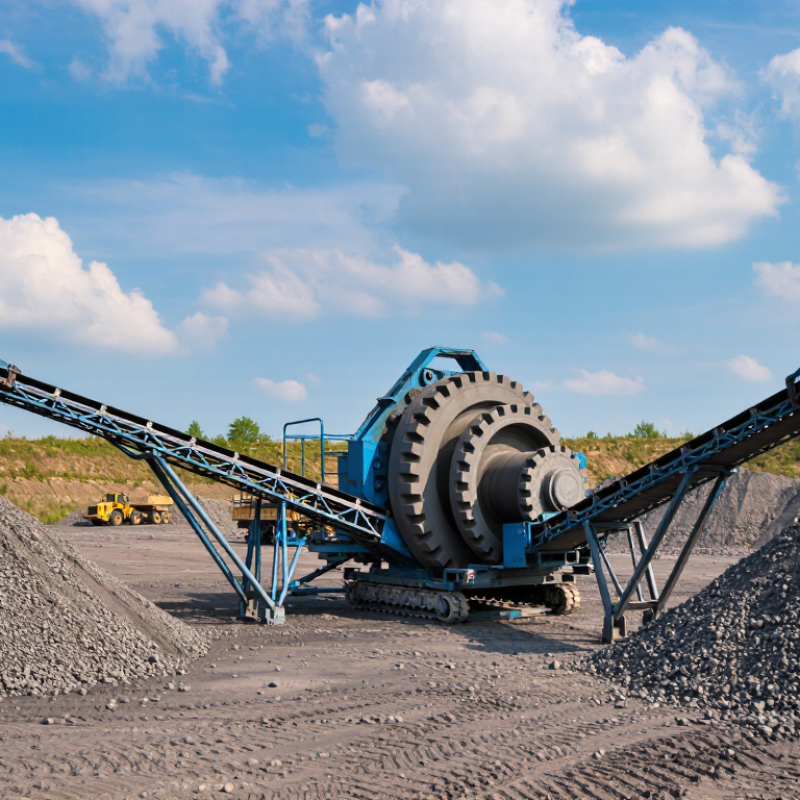
A roll crusher reduces material between two rotating cylindrical rolls. The rolls turn toward each other, drawing feed into the narrow gap. Compression breaks the material; some designs also use tooth action to grip larger pieces. The crushed product then falls below the rolls. The principle is simple. Yet the result depends on the feed, roll surface, and gap setting.

Operators adjust the gap to influence product size, but a smaller gap does not guarantee a perfectly uniform product. Hardness, moisture, and particle shape all matter. In practice, the textbook picture is tidier than a real plant. Wet or sticky feed may build up on the rolls, while uneven feeding can cause inconsistent output. A practical assessment should check the target size, capacity, feed properties, and wear-part access. Regular inspection of roll surfaces and bearings can help identify wear or abnormal vibration early. There is no single setting that suits every material, so test runs and measured product samples are useful before settling on operating conditions.

China Best Roll Crusher Manufacturer and Supplier — What Is a Roll Crusher and How Does It Work?

How the adjustable roll gap influences crushing: a narrower gap generally produces a finer product. The settings below are illustrative examples, not measured performance data or guaranteed product sizes.

A roll crusher draws material between rotating rolls and reduces it by compression. Actual product size depends on the feed material, roll design, and operating conditions; it is not necessarily equal to the roll gap.

Main Types and Key Components of Roll Crushers

China Best Roll Crusher Manufacturer and Supplier
Main Types and Key Components of Roll Crushers

Roll crushers reduce material by drawing it between rotating rolls. A single-roll design works against a fixed breaker plate, while double-roll models compress feed between two rolls. Smooth rolls suit many friable materials and produce a more controlled product. Toothed rolls grip larger, tougher feed. The choice depends on material size, moisture, hardness, and the required output. There is no universal setting.

The rolls are the working surfaces, mounted on shafts and supported by bearings. A motor and drive system turn them at a set speed. The frame holds the assembly steady, while an adjustable gap sets the approximate product size. Some designs use springs or hydraulic systems to allow movement when uncrushable material enters. Small parts matter. Worn bearings can cause heat and vibration; damaged teeth may leave oversized pieces.

In operation, feed consistency affects performance as much as the machine itself. Uneven chunks can create an irregular load, and sticky material may build up on the rolls. That detail is easy to overlook. Operators should check roll wear, bearing temperature, and gap settings during routine inspections. Measurements from actual feed and product samples help guide adjustments, though real material rarely behaves exactly like a specification sheet.

Materials and Industries Served by Roll Crushers

Roll crushers are often selected when a process needs controlled sizing and a relatively even product. They commonly handle coal, limestone, gypsum, clay, salt, and some friable ores. In cement plants, they may prepare limestone before grinding. Mining operations use them for suitable mineral feeds, while power stations may process coal. Chemical and fertilizer facilities can also use rolls for certain dry, crushable materials. Each feed behaves differently. Hard, abrasive pieces can accelerate roll wear, while damp, sticky material may build up between the rolls.

The right application depends on feed size, moisture, hardness, and the required product range. Operators should check these conditions before choosing roll spacing and surface type. Dust matters. So does maintenance access. A crusher that performs well on dry limestone may struggle with wet clay, even when the materials look similar on paper. That gap between specification and plant reality deserves attention. Sample testing and clear operating limits help reduce surprises, though they cannot remove every process variable. Regular checks for uneven wear and changes in product size help keep the crusher suited to the material being processed.

How to Evaluate Roll Crusher Manufacturers in China

China Best Roll Crusher Manufacturer and Supplier

How to Evaluate Roll Crusher Manufacturers in China

Evaluate a roll crusher supplier against your actual material, not a catalogue headline. World Mining Data 2024 reports global mineral production of about 18.3 billion tonnes in 2022, reflecting the scale and demanding conditions of mineral processing. That figure is broad context, not a crusher-performance benchmark. Request test results using representative feed, including its hardness, moisture, and top size. Compare stated throughput, discharge size, power draw, and wear-part life under the same conditions. Ask for the test method and operating hours behind each figure. Numbers without test conditions are weak evidence.

Check engineering details on the machine itself. Inspect roll alignment, bearing protection, adjustment access, guards, and the quality of welds and machined surfaces. Ask for drawings, material specifications, inspection records, and a clear list of included components. Confirm service response times and availability of wear parts for your location. A factory video helps, but it cannot replace a witnessed test or a detailed acceptance plan. Even a careful checklist can miss how sticky feed behaves after several hours.

Tips: Send a small, representative sample and request a written test report. Compare like with like. Ask what the quoted capacity assumes.

China Best Roll Crusher Manufacturer and Supplier - How to Evaluate Roll Crusher Manufacturers in China

Evaluation Dimension What to Check How to Compare Suppliers Evidence to Request
Application and crusher configuration Confirm whether the proposed design is a single-roll or double-roll crusher and whether smooth or toothed rolls suit the material and intended crushing stage. Compare proposals against the same material, feed condition, required product, and process position. Written process recommendation and a configuration drawing.
Feed and product specifications Check the stated maximum feed size, required product-size range, and the method used to describe product sizing. Roll setting alone does not guarantee a particular product-size distribution. Ensure each supplier uses the same feed-size distribution and product-sizing basis in its proposal. A technical datasheet and clearly stated sizing assumptions.
Capacity and operating conditions Check capacity against the actual material, feed size, moisture, bulk density, roll setting, and operating arrangement. Capacity is application-dependent. Compare capacity figures only when the stated test conditions and material assumptions are equivalent. A capacity calculation or test report with its conditions disclosed.
Rolls and wear components Review roll dimensions, surface profile, material specifications, wear-part design, and replacement procedure for the intended feed material. Compare component specifications and maintenance requirements rather than relying on general durability claims. Materials list, component drawings, and recommended inspection and replacement guidance.
Drive and adjustment system Check motor and gearbox specifications, roll-speed arrangement, gap adjustment, and overload or tramp-material protection where applicable. Verify that the proposed drive and protection features match the duty and operating environment. Drive datasheets, electrical details, and a description of adjustment and protection functions.
Manufacturing and quality control Review inspection and testing procedures for fabrication, machining, assembly, and the completed machine. Look for documented, traceable checks relevant to the equipment being supplied. Inspection and test plan, sample quality records, and applicable certificates for verification.
Safety and compliance Check guarding, emergency-stop provisions, operating instructions, and the regulatory requirements applicable at the installation site. Assess compliance against the destination market’s requirements; do not assume that a certificate applies to every model or shipment. Risk and safety documentation plus certificates whose scope and validity can be confirmed.
Service and spare parts Confirm the availability of operating manuals, recommended spare parts, troubleshooting support, and service response arrangements. Compare the written service scope, parts lead times, and support channels for the installation location. Spare-parts list, service terms, manual samples, and a documented support contact process.
Commercial and delivery terms Review scope of supply, exclusions, packing, delivery schedule, payment terms, warranty conditions, and commissioning responsibilities. Compare offers on the same scope and delivery basis, and clarify any assumptions before placing an order. Itemized quotation, written warranty terms, and a delivery and commissioning schedule.
Reference checks and verification Confirm relevant experience with comparable materials and operating conditions, and verify supplied documents independently where practical. Give greater weight to verifiable, application-relevant evidence than to unsubstantiated performance claims. References that can be contacted with permission, inspection records, or an agreed acceptance-test procedure.

Note: Request comparable, application-specific proposals. Actual performance depends on the feed material, operating conditions, crusher configuration, and installation.

How to Choose a Reliable Chinese Roll Crusher Supplier

China Best Roll Crusher Manufacturer and Supplier
How to Choose a Reliable Chinese Roll Crusher Supplier

A dependable supplier should discuss your material before quoting a machine. Ask about feed size, moisture, abrasiveness, required capacity, and product-size range. The USGS Mineral Commodity Summaries 2025 estimates U.S. crushed-stone production at about 1.5 billion metric tons in 2024. That scale underscores why steady output and wear management matter in aggregate operations. A brochure is not proof.

Request a test using representative feed, then review the measured throughput, product grading, power draw, and roll wear. Ask how the supplier defines capacity; feed conditions can change the result. Inspect drawings for roll diameter, bearing arrangements, gap adjustment, and maintenance access. Ask for material specifications and hardness records for the rolls. Ask for records.

Check whether the quotation identifies included parts, commissioning support, spare-part lead times, and warranty terms. Request references from operations handling similar materials, and verify them directly where possible. Review packing details for transport and storage, too. I would treat one successful test cautiously: a short run may not reveal wear or feed fluctuations. Reliable suppliers explain limits, provide traceable test documents, and answer technical questions plainly. If key details remain vague, pause before ordering.