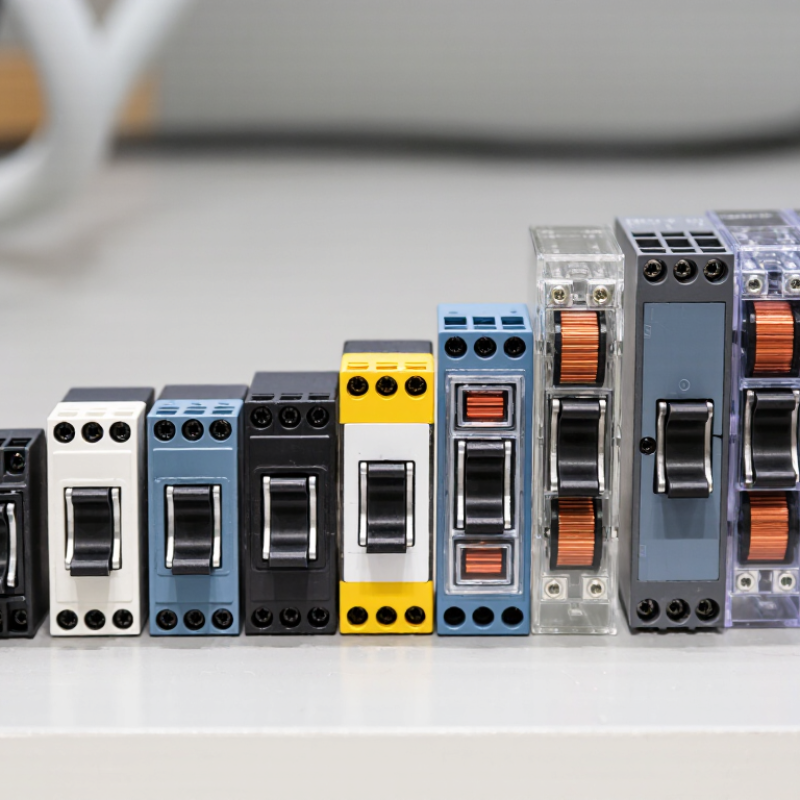
| What is a control relay? A control relay is an electrically operated switching device. A control signal energizes its coil or electronic input, causing one or more contacts to change state. Relays are used to switch control circuits, isolate signals, and coordinate equipment; the appropriate type depends on the circuit, load, operating environment, and safety requirements. |
| 1 | Industrial machinery | Switches control signals between sensors, push buttons, controllers, and machine actuators. | Electromechanical or interface relay | Interlocking machine sequences and switching solenoids or contactor coils. |
| 2 | Motor control systems | Provides a control-circuit switching step for motor starters and related control logic. | Auxiliary or interface relay | Enabling, sequencing, and status signaling in pump, fan, and conveyor controls. Motor power is generally switched by a suitably rated contactor or motor starter. |
| 3 | Building automation | Interfaces controller outputs with electrically operated building equipment. | Interface relay | Switching control signals for lighting circuits, dampers, and other building-control loads, subject to device ratings and local codes. |
| 4 | Heating, ventilation, and air conditioning | Switches commands within equipment-control circuits. | Electromechanical or solid-state relay | Controlling fan stages, valve actuators, and heating elements where the relay is rated for the load and switching duty. |
| 5 | Water and wastewater systems | Relays level, pressure, and equipment-status signals to control logic. | Interface or auxiliary relay | Coordinating pump start/stop commands, alarms, and control-panel signals. |
| 6 | Process automation | Separates or repeats signals between control-system outputs and field circuits. | Interface relay | Signal switching in manufacturing and process-control panels, including for valves and indicator circuits. |
| 7 | Elevators and lifting equipment | Supports equipment-control logic by switching designated control and status circuits. | Auxiliary or safety relay | Interlocking control signals. Safety-related designs must use components and architectures appropriate to the applicable safety standards. |
| 8 | Railway and transit systems | Switches signals in specialized control circuits where reliability and defined operating behavior are important. | Railway-rated or safety relay | Use in approved signaling and control applications; selection and installation follow railway-specific requirements. |
| 9 | Renewable-energy systems | Switches control or monitoring signals within power-conversion and auxiliary circuits. | Electromechanical or solid-state relay | Control and status functions in solar or energy-storage equipment. High-voltage power switching requires devices specifically designed and rated for that purpose. |
| 10 | Fire and security systems | Provides an interface between a control panel and compatible auxiliary equipment. | Interface relay | Switching approved auxiliary signals, such as ventilation or access-control interfaces, in accordance with system design and applicable regulations. |
| Note: These are representative control-relay applications, not a ranking of manufacturers or products. Relay selection should account for coil or input requirements, contact ratings, load type, switching frequency, environmental conditions, and applicable safety standards. |