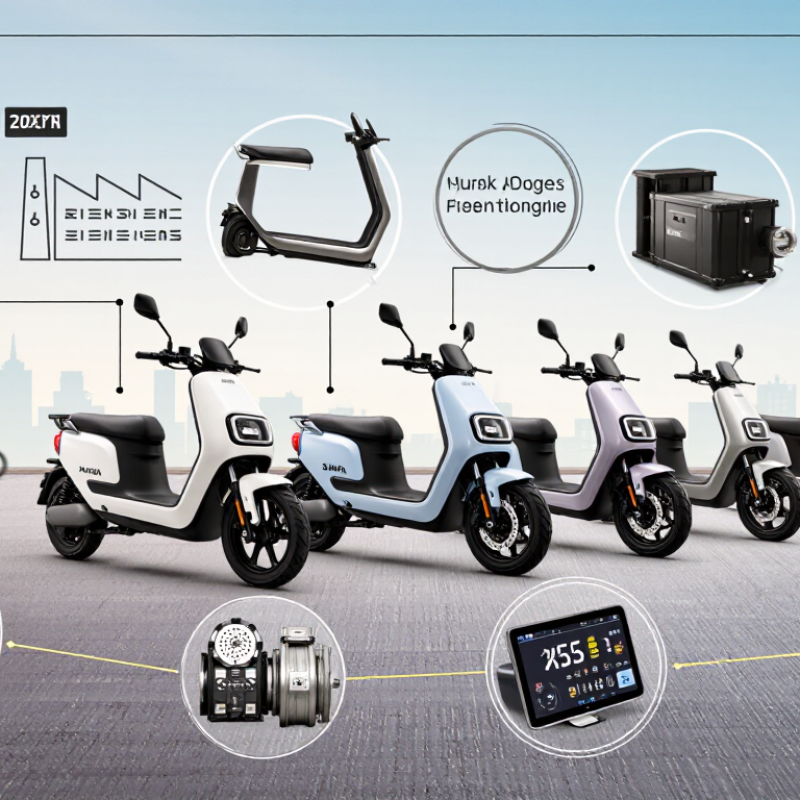
| Primary Product Focus | Connected electric scooters and urban mobility vehicles | Mass-market electric bicycles, scooters, and commuter models | Broad electric two-wheeler portfolio for daily transportation | Electric scooters, motorcycles, and practical commuting vehicles |
| Typical Vehicle Classes | Electric mopedsScootersLight motorcycles | E-bikesMopedsScooters | E-bikesElectric bicyclesScooters | ScootersMopedsElectric motorcycles |
| Battery Technologies | Removable lithium-ion battery systems are commonly emphasized, with battery-management protection | Product lines may include lithium-ion and lead-acid configurations, depending on model and market | Lithium-ion and lead-acid options are used across different product segments and price levels | Rechargeable lithium-ion systems are widely used in newer export-oriented models |
| Smart Technology | Strong focus on mobile applications, vehicle status monitoring, location services, and remote diagnostics | Smart functions are available on selected models, while value-focused models prioritize basic controls | Connected functions vary by product line, with practical instrumentation and anti-theft features common | Selected models offer digital displays, remote functions, and electronic security systems |
| Connectivity and Data Services | Cloud-connected features and over-the-air software support are key technology differentiators | Connectivity is generally concentrated in higher-specification or urban smart-mobility models | Digital functions are typically integrated according to local regulations and target-market requirements | Connected services are used selectively to support security, monitoring, and fleet applications |
| Manufacturing Strength | Strong integration of vehicle electronics, battery systems, software, and connected services | High-volume production and a wide range of configurations support multiple price segments | Large-scale two-wheeler manufacturing, component integration, and broad model coverage | Flexible production of electric scooters and motorcycles for different international specifications |
| Export Orientation | Internationally oriented, with products adapted for urban markets outside China | Exports cover multiple regions through distributors, dealers, and local partners | Export programs serve diverse markets, including regions in Europe, Asia, and other developing markets | Focused on overseas distribution, private-label opportunities, and market-specific vehicle versions |
| Market Adaptation | Emphasis on software localization, connected services, and compliance with destination-market rules | Offers varied battery, power, equipment, and styling specifications for different customer groups | Adapts vehicle configuration, battery chemistry, lighting, braking, and documentation to local needs | Provides model customization for regulatory, performance, branding, and distribution requirements |
| Typical Customer Segments | Urban commuters, technology-oriented riders, delivery operators, and mobility fleets | Daily commuters, price-sensitive consumers, dealers, and regional distributors | Household users, commuters, commercial riders, and buyers seeking practical transportation | Urban riders, motorcycle users transitioning to electric mobility, fleets, and importers |
| Key Competitive Advantage | Combination of connected-vehicle technology, recognizable product design, and international positioning | Broad product coverage, competitive pricing, and high-volume manufacturing capability | Established electric two-wheeler manufacturing experience and extensive market coverage | Export flexibility, practical vehicle engineering, and a broad range of electric mobility formats |