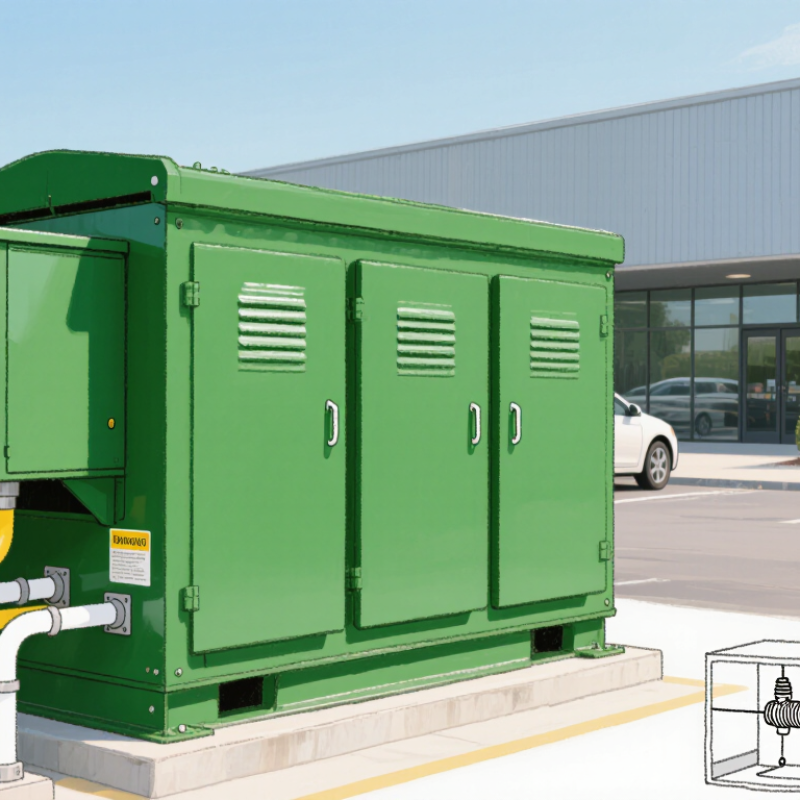
| Equipment definition | A three-phase pad-mounted transformer is a ground-level, enclosed distribution transformer designed to connect to underground electrical circuits. | Used where a compact, accessible outdoor transformer installation is preferred over an overhead pole-mounted arrangement. |
| Phase configuration | Three-phase equipment serves three-phase distribution systems; winding connections and vector relationships depend on the system design. | Specify the required primary and secondary connections to match the utility supply and the facility’s loads. |
| Liquid-immersed construction | The core and windings are immersed in an insulating liquid that provides electrical insulation and transfers heat to the tank and cooling surfaces. | Confirm the specified liquid type, environmental requirements, containment provisions, and applicable installation rules. |
| Voltage and capacity | Primary voltage, secondary voltage, and kVA rating are project-specific; no single rating applies to all pad-mounted units. | Select ratings using the available system voltage, load demand, growth allowance, and coordination requirements. |
| Feed arrangement | Common arrangements include radial feed and loop feed, with the internal compartment layout and switching provisions varying by design. | Match the feed arrangement and cable termination provisions to the distribution network and operating plan. |
| Enclosure and access | The enclosure separates high-voltage and low-voltage compartments and is intended for outdoor installation; specific access and security features vary. | Check enclosure construction, access clearances, ventilation, site exposure, and applicable local electrical and environmental requirements. |
| Protection and switching | Depending on the design, protective and switching components may include fuses, a load-break switch, or other specified devices. | Verify the protection scheme, ratings, coordination, and operating sequence against the project documents. |
| Typical applications | Common applications include commercial and industrial sites, campuses, residential developments, and other underground distribution networks. | Suitability depends on load characteristics, utility requirements, site conditions, and the approved electrical design. |
| Standards and certification | A standard’s scope and a product’s certification are separate matters. UL 1562 should not be presented as the applicable standard for a liquid-immersed unit without verification. | Request documentation identifying the exact model, construction, applicable standard, and certification or listing scope. |
| Installation and maintenance | Installation and maintenance requirements depend on the equipment design, site, and governing codes and instructions. | Use qualified personnel and follow the equipment documentation, utility requirements, and applicable regulations. |