| Stainless Steel Grades | 304, 316 and 316L | Grade selection depends on the fluid, temperature and exposure to corrosive substances. 316 and 316L contain molybdenum and are often selected for improved resistance to chloride environments compared with 304; suitability should be confirmed for the specific service conditions. |
| Weaving Methods | Plain weave, twill weave and Dutch weave | Plain weave is commonly used for general screening. Twill weave can accommodate finer wires in some specifications. Dutch weaves use different wire diameters and a dense structure to provide fine filtration; the resulting opening and flow characteristics depend on the design. |
| Mesh Count and Opening | Specified by mesh count, wire diameter and nominal aperture | For square plain weave, a nominal opening in millimetres can be estimated as 25.4 divided by mesh count per inch, minus wire diameter in millimetres. For example, 100 mesh with 0.10 mm wire gives an estimated opening of 0.154 mm. Confirm the required aperture and tolerances with the supplier. |
| Wire Diameter | Selected to match mesh count, strength and filtration requirements | Wire diameter affects aperture, open area, rigidity and pressure resistance. The available combinations are constrained by the weave and mesh specification, so buyers should request a technical drawing or specification sheet for the selected construction. |
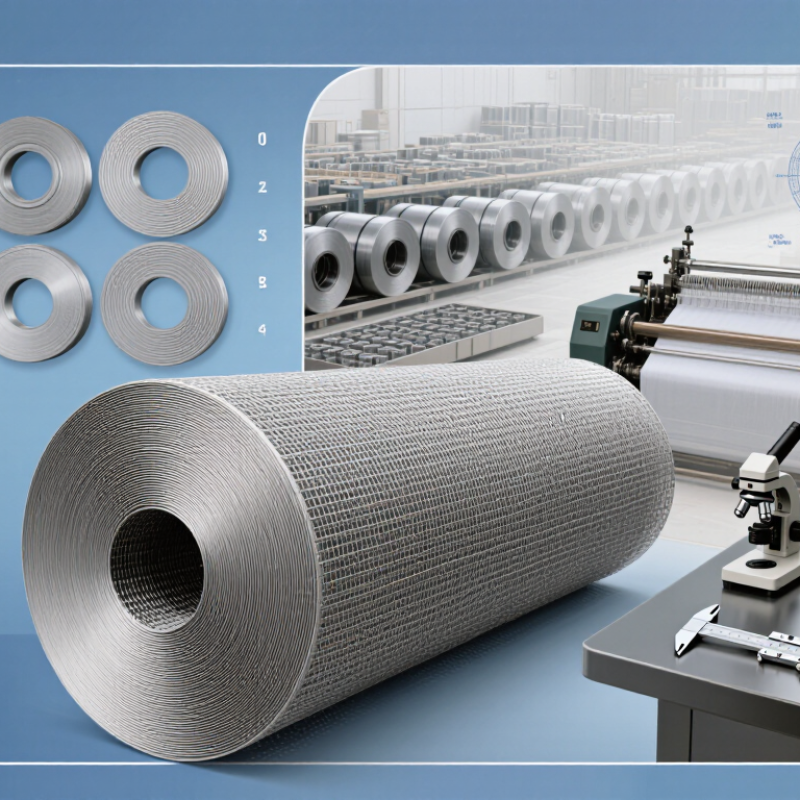
| Manufacturing Steps | Wire drawing, weaving, cutting and finishing | Typical production begins with stainless steel wire preparation, followed by weaving to the specified pattern. The cloth may then be slit or cut, with edges finished or formed to the order. The exact route depends on whether the product is supplied as roll goods, a disc, a screen or a fabricated filter part. |
| Customization | Material, weave, dimensions, edge treatment and component shape | Common order details include grade, mesh count, wire diameter, aperture, roll or cut-piece dimensions, and whether the mesh needs a frame, rim or other support. Provide drawings, operating conditions and target filtration requirements when requesting a quotation. |
| Quality Checks | Visual inspection, dimensional checks and material documentation | Inspection may cover mesh count, wire diameter, width, length, weave condition and visible defects. Buyers can specify required inspection records, material certificates or sampling methods in the purchase agreement; testing and documentation availability varies by supplier and order. |
| Common Applications | Liquid and gas filtration, screening and separation | Stainless steel woven mesh is used in applications such as process filtration, strainers, screens and separation equipment. The appropriate grade and mesh construction depend on the media, operating temperature, cleaning method and required flow rate. |
| Quotation Information | Technical specification, quantity and delivery requirements | A clear inquiry should state the stainless steel grade, weave, mesh count or aperture, wire diameter, dimensions, quantity, finishing requirements and intended use. Confirm tolerances, packaging, lead time and inspection requirements before placing an order. |