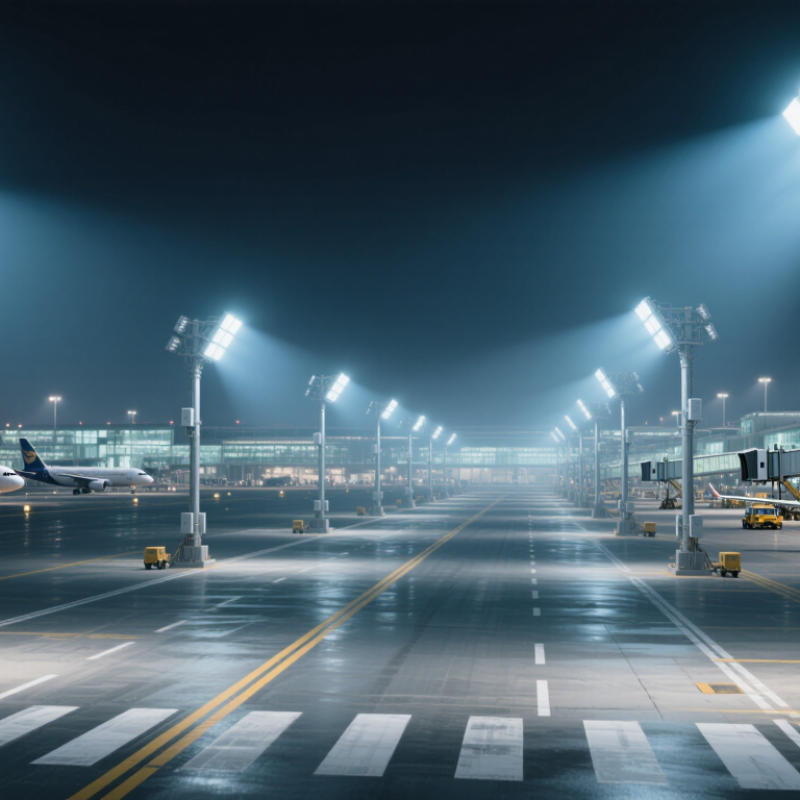
| Apron and Aircraft Stand Flood Light | 120–150 lm/W | CRI ≥ 70
CRI ≥ 80 where color recognition is important | 4000–5000 K | ≥ 100,000 hours | High masts, typically 20–40 m | Asymmetric optics, low glare, precise spill-light control, dimming and remote monitoring | High efficacy reduces energy use during long operating hours, while controlled optics help limit glare for pilots, ground crews, and nearby roads. |
| Aircraft Maintenance and Hangar Perimeter | 110–140 lm/W | CRI ≥ 80 | 4000–5000 K | ≥ 100,000 hours | Building façades, poles, and service yards | Wide distribution, uniform illumination, adjustable brackets, occupancy or scheduling controls | CRI 80 or higher improves recognition of aircraft finishes, equipment, warning markings, and maintenance details. |
| Taxiway Service and Operations Area | 100–135 lm/W | CRI ≥ 70 | 4000 K | ≥ 80,000 hours | Low and medium-height poles beside service routes | Shielded optics, uniformity, narrow or medium beam options, photocell and central control compatibility | A balanced specification provides efficient visibility for service vehicles while reducing unnecessary light trespass toward aircraft movement areas. |
| Runway and Airfield Maintenance Compound | 120–145 lm/W | CRI ≥ 70 | 4000–5000 K | ≥ 100,000 hours | Equipment yards, workshops, and maintenance access roads | Robust housing, impact resistance, surge protection, broad uniform distribution | High efficacy and long L70 reduce relamping frequency in areas where access equipment and nighttime work can be disruptive. |
| Terminal Roadway and Curbside Area | 110–140 lm/W | CRI ≥ 80 | 3000–4000 K | ≥ 100,000 hours | Roadside poles, canopies, and drop-off zones | Low-glare optics, good facial and signage visibility, adaptive dimming, warm-to-neutral CCT | CRI 80 and a 3000–4000 K range can support comfortable passenger areas while maintaining clear visibility and traffic safety. |
| Perimeter Security and Cargo Yard | 100–130 lm/W | CRI ≥ 70
CRI ≥ 80 for video monitoring | 4000–5000 K | ≥ 100,000 hours | Perimeter poles, gates, and logistics yards | Uniform vertical illumination, camera-compatible flicker performance, motion sensors, full cutoff where required | Uniformity and vertical illumination can be more important than maximum lumen output for security observation and CCTV performance. |
| Coastal or De-Icing Exposure Area | 100–135 lm/W | CRI ≥ 70 | 4000 K | ≥ 80,000 hours | Exposed apron edges and winter-service zones | IP66 or higher, corrosion-resistant finish, suitable impact rating, pressure-equalization membrane, surge protection | Environmental protection and thermal management should be prioritized because salt, moisture, chemicals, vibration, and temperature changes can shorten service life. |