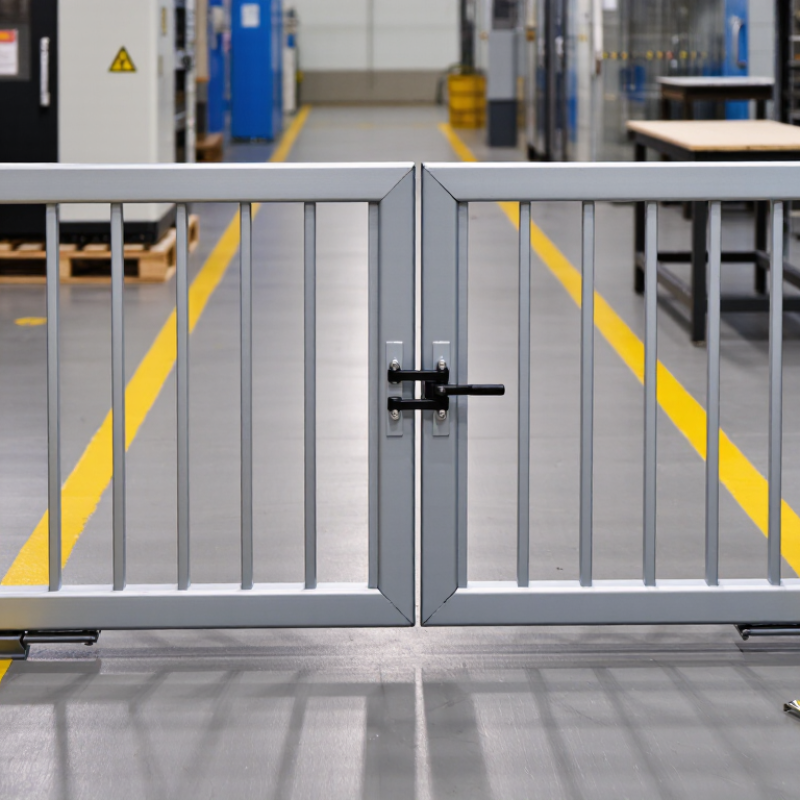
| Hazard being controlled | Identify hazards such as moving machinery, robot cells, conveyors, vehicle routes, or elevated platforms. | Choose a gate and guarding arrangement that prevents access to the hazard during operation. A gate alone may not provide adequate protection if openings or reach-over access remain. | Request drawings showing the gate within the complete guarded area, including adjacent fencing, openings, and access points. |
| Required safety function | Determine whether the gate is a physical barrier, an interlocked access point, or part of a controlled entry system. | Where access must stop or prevent hazardous motion, assess whether a safety-rated interlock and suitable machine control are required. The required performance level depends on the machine risk assessment. | Confirm the proposed interlock type, actuator arrangement, locking function if needed, and compatibility with the machine’s safety control system. |
| Opening size and access route | Record clear opening width and height, approach direction, operator access needs, and any materials moved through the opening. | Size the opening for the actual task and load while avoiding unnecessary gaps. Check that the gate does not obstruct walkways or create pinch points when opened. | Request dimensioned drawings and confirm clear opening dimensions after installation, not just the overall gate size. |
| Opening direction and movement | Specify whether the gate should swing, slide, or lift, and note available clearance and nearby equipment. | Select a movement type that suits the space and traffic flow. Consider door stops, hinges or tracks, closing behavior, and safe access during maintenance. | Confirm the opening direction, mounting method, travel limits, and whether the gate can be secured or monitored in the required position. |
| People and traffic flow | Estimate how often the gate is used and whether pedestrians, carts, forklifts, or production materials pass through. | Frequent access may require a design that is easy to operate and durable under repeated cycles. Separate pedestrian access from vehicle traffic where the layout and risk assessment call for it. | Ask for the rated operating-cycle information, suitable hardware, and any recommended inspection or maintenance intervals. |
| Installation environment | Note indoor or outdoor use, temperature range, moisture, dust, washdown, chemicals, and corrosive exposure. | Choose materials and finishes suited to the environment. Stainless steel may be appropriate for some washdown or corrosive settings; coated steel may suit many dry indoor applications. | Confirm material grade, coating or finish, corrosion resistance, and the environmental limits of electrical components. |
| Mounting surface and structure | Identify whether the gate attaches to a machine frame, floor, wall, or modular guarding system, and verify the supporting structure. | Mounting points must withstand expected use and loads. Check floor level, fixing type, edge distances, and whether the existing structure is suitable. | Provide site measurements and request mounting details, fixing recommendations, and installation tolerances. |
| Applicable safety requirements | Identify the destination market, applicable regulations, machine standards, and the facility’s risk-assessment requirements. | Requirements vary by application and jurisdiction. For example, machinery guarding and interlocking are addressed by standards such as ISO 14120 and ISO 14119; confirm which editions and local rules apply. | Request relevant technical documentation and declarations, and have the final machine installation assessed by a qualified safety professional. |
| Verification before purchase | Define required drawings, samples, inspection records, functional tests, and acceptance criteria. | Check dimensions, operation, guard gaps, latching, interlock function, and finish against the approved specification before shipment and after installation. | Agree on inspection points, test methods, documentation, packaging, and how design changes will be approved. |