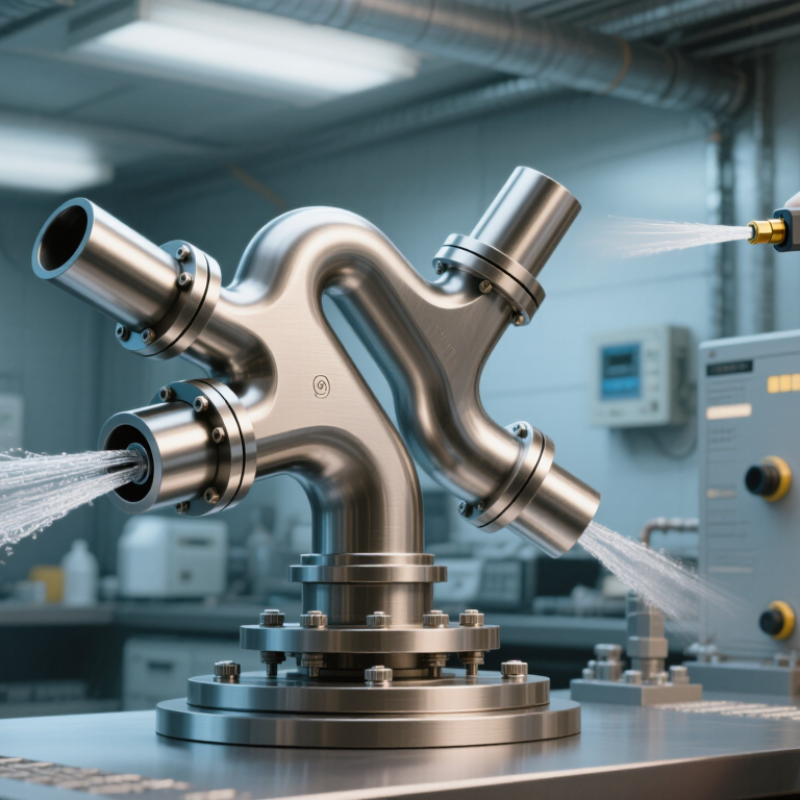
| 304 Stainless Steel | Austenitic stainless steel; approximately 18% chromium and 8% nickel | Continuous service commonly up to about 870°C in air, depending on design and environment | Good resistance to moisture, many food-process fluids, and mild chemicals; vulnerable to chloride pitting and crevice corrosion | Mill finish, brushed, satin, electropolished, mechanically polished | General-purpose spray, air, water, food-processing, packaging, and light chemical service | A balanced choice when corrosion resistance, formability, weldability, and cost are important |
| 316L Stainless Steel | Low-carbon austenitic stainless steel with molybdenum; commonly about 16–18% chromium, 10–14% nickel, and 2–3% molybdenum | Continuous service commonly up to about 870°C in air, subject to the process environment | Better resistance than 304 to chlorides, marine atmospheres, and many process chemicals; not immune to concentrated chlorides | Satin, brushed, electropolished, passivated, mechanically polished | Marine equipment, pharmaceutical and hygienic systems, chemical processing, high-humidity spray environments | Choose the low-carbon version for welded assemblies where intergranular corrosion resistance is important |
| Duplex Stainless Steel | Ferritic-austenitic stainless steel; common families include approximately 22% chromium grades and higher-alloy super-duplex grades | Often selected for moderate-to-high temperature service; prolonged exposure above approximately 300°C may require metallurgical review | High resistance to chloride stress-corrosion cracking, pitting, and erosion-corrosion when correctly specified | Pickled and passivated, bead-blasted, brushed, electropolished where suitable | Seawater, desalination, offshore, high-chloride chemical, and abrasive-fluid systems | Provides high strength and corrosion resistance, but requires controlled welding and more careful fabrication |
| Carbon Steel | Iron-carbon steel with carbon content typically below about 1%; exact grade depends on pressure and fabrication requirements | Commonly suitable for moderate-temperature service; allowable limits depend strongly on grade, pressure, and code requirements | Limited inherent corrosion resistance; requires coating, plating, lining, or controlled dry service | Black oxide, zinc plating, painted or powder-coated surface, machined finish, abrasion-resistant overlay | Dry air, non-corrosive gases, general industrial spray, and cost-sensitive systems | Economical and strong, but avoid unprotected use with water, condensation, acids, or salt exposure |
| Aluminum Alloy | Wrought or cast aluminum alloys; alloy selection determines strength, weldability, and chemical resistance | Commonly used below about 150–200°C; strength decreases as temperature rises | Naturally forms a protective oxide layer; vulnerable to strong acids, strong alkalis, and galvanic contact with dissimilar metals | Anodized, clear or colored conversion coating, brushed, polished, bead-blasted | Lightweight air systems, portable equipment, low-temperature water mist, and applications requiring low inertia | Use isolation washers or compatible fittings to reduce galvanic corrosion against stainless steel or copper alloys |
| Copper Alloy | Copper, brass, or bronze families; exact zinc, tin, or other alloy content affects performance | Suitable temperature depends on alloy; high temperatures can reduce strength and accelerate oxidation | Good thermal conductivity and generally good resistance to many waters; susceptible to ammonia, strong oxidizing chemicals, and some acidic conditions | Natural or polished surface, nickel plating, chrome plating, passivation, protective lacquer | Heat-transfer spray, water service, low-static applications, and decorative or conductive components | Verify fluid compatibility and galvanic pairing; avoid unsuitable copper alloys in ammonia-containing environments |
| Nickel Alloy | Nickel-chromium, nickel-molybdenum, or nickel-iron-chromium alloy families | Often selected for elevated-temperature service; some grades retain useful strength above 600°C | Excellent resistance in many high-temperature, reducing, oxidizing, and chemically aggressive environments; grade-specific evaluation is essential | Machined, ground, polished, passivated, or specialized protective coating | High-temperature gas, aggressive chemical spray, combustion-related, and severe corrosion service | Higher material and machining cost is justified when temperature, corrosion, or service life requirements exceed stainless steel capability |
| Titanium Alloy | Commercially pure titanium or alpha-beta titanium alloy families | Commonly used for moderate-to-high temperatures; design limits depend on alloy, oxygen exposure, and mechanical loading | Excellent resistance to seawater, chlorides, and many oxidizing media; unsuitable for some reducing acids and high-temperature hydrogen conditions | Machined, pickled, passivated, polished, or bead-blasted | Marine, aerospace, medical, and high-purity chemical systems where low mass and corrosion resistance are priorities | High strength-to-weight ratio and excellent corrosion resistance, but costly machining and galling control may be required |