10 Tips for Choosing an LCNG CNG Refueling Station
Choosing an L-CNG/CNG Refueling Station is a practical decision with long-term effects on uptime, operating costs, and driver confidence. A station may look impressive in a brochure, yet still struggle with your actual vehicle mix or daily demand. Details matter. The incoming fuel supply, storage capacity, site layout, and expected peak-hour traffic should all shape the design. For an LCNG system, ask how LNG is stored, pressurized, and vaporized before dispensing. For CNG equipment, examine compressor capacity, pressure management, and the number of vehicles the station can serve at once. These are not interchangeable systems, and a small mismatch can create a frustrating bottleneck.
The ten tips ahead offer a grounded way to compare station options, from supplier experience and equipment quality to maintenance access and operator training. Request performance data, clear equipment specifications, and references from sites with similar operating conditions. Look closely at service response times, spare-parts availability, and how routine inspections are documented. A tidy drawing is useful. A credible service plan is better. Safety features and commissioning procedures deserve careful review, too; do not rely on broad assurances when specific evidence is available. No checklist can predict every site challenge, and real-world conditions may expose assumptions that looked sound on paper. That is worth admitting. Use these questions to identify trade-offs, confirm claims, and choose a station that fits your needs—not merely the lowest initial price.
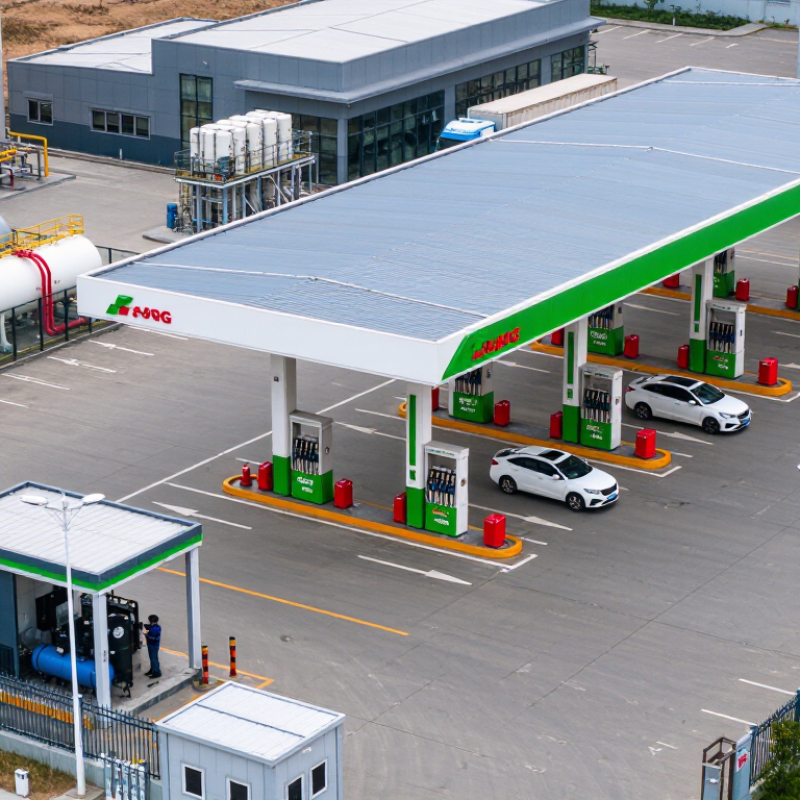
Assess Vehicle Compatibility and Refueling Requirements
Before booking an LCNG station, confirm that your vehicle is designed for compressed natural gas, not direct liquefied natural gas. LCNG stations store LNG and convert it into high-pressure CNG for dispensing. The U.S. Department of Energy’s Alternative Fuels Data Center says CNG vehicle cylinders commonly operate at 3,000 or 3,600 psi. That difference matters: check your vehicle manual and fuel receptacle before choosing a station. A nozzle that looks compatible may still deliver the wrong pressure.
Match the station’s pressure and connector to your vehicle’s specifications. SAE J2600 covers CNG fueling nozzles and receptacles, so ask the operator which connection and pressure class the dispenser supports. Also check your cylinder’s labeled service life and inspection status. Small details matter. A full tank is not useful if it cannot safely accept the fuel.
Estimate your daily distance, tank capacity, and access to other stations. A vehicle covering long routes may need a high-throughput station, while a local fleet can plan around slower fills. Ask whether the dispenser supports your vehicle’s fill pressure and expected turnaround time. The DOE Alternative Fuels Data Center also notes that ambient temperature can affect CNG fill levels. In practice, a gauge may not show the same result after every fill. I would verify range over several trips, not trust one promising reading.
Compare Station Locations, Access, and Operating Hours
A convenient LCNG CNG refueling station is not always the closest one. Check how easily you can reach it from your usual routes, then inspect the final approach. A narrow entrance, tight turn, low clearance, or queue near a busy road can add real delays. Map estimates help, but they cannot show every on-site constraint. If possible, review recent access notes or call ahead before making a long detour.
Tip: Compare normal operating hours with your actual travel schedule. Check holiday hours, overnight access, and whether the pumps are available when staff are absent. Confirm the station serves your vehicle and fueling connection. Keep a second nearby option in mind. Plans change.
A station open late may still be less practical if its access road is poorly lit or difficult to enter after dark. Look for clear directions, safe waiting space, and room to maneuver. An online listing can be outdated, so verify details directly when the trip depends on them. I might favor the shortest route too quickly; a slightly longer drive can be easier to manage when access and hours are predictable.
Check LCNG and CNG Availability and Dispensing Standards
Check whether the station offers both LCNG and conventional CNG on the day you plan to refuel. Supply can change with deliveries, equipment outages, or maintenance, so an online listing may be out of date. Call ahead and ask which dispensers are operating and whether access is limited to certain vehicle types. Ask about opening hours, payment options, and any queuing or appointment rules. Small details matter. A long vehicle may need more room to turn than the station entrance suggests.
Confirm that the dispenser matches your vehicle’s fuel system and rated pressure. LCNG equipment typically stores liquefied natural gas, then pumps and vaporizes it for high-pressure dispensing; station configurations differ. Ask staff which current local codes or recognized technical standards apply to the equipment, and whether inspections and maintenance are up to date. Check that operating instructions, emergency-stop controls, and safety signs are clear and visible. If possible, observe the nozzle, hose, and display before fueling; damaged parts or unclear pressure information deserve a pause. A posted certificate helps, but it may not answer every practical question. Ask how the station handles an interrupted fill, and keep the vehicle manual handy.
Review Safety Measures, Certifications, and Equipment Maintenance
An LCNG station combines cryogenic LNG storage with high-pressure CNG delivery, so check both systems—not just the dispenser. Look for clear hazard signs, unobstructed emergency shutoffs, methane detectors, and visible inspection dates on pressure vessels and hoses. The U.S. Department of Energy’s Alternative Fuels Data Center reports that CNG vehicle tanks commonly operate at 3,000–3,600 psi. That pressure makes documented leak checks and hose replacement schedules essential. Ask to see inspection records and relevant certifications, and confirm that the site follows NFPA 52 and applicable local requirements.
Tips: During a site visit, notice frost, unusual odors, damaged hose covers, or warning lights. Ask when detectors and emergency shutdowns were last tested. Check that staff can explain the evacuation route. Small details matter.
Equipment maintenance should cover compressors, cryogenic pumps, vaporizers, valves, and dispensers, with service dates recorded—not merely promised. A clean pad is reassuring, but it proves little by itself. I would compare maintenance logs with equipment tags and ask how faults are reported and resolved. Records may be incomplete; that is a reason to pause and ask more, not to assume the station is unsafe.
Compare Fuel Pricing, Payment Options, and Customer Services
Tip 1: Compare like with like. The U.S. Department of Energy’s Alternative Fuels Data Center defines one gasoline-gallon equivalent (GGE) of CNG as 5.66 pounds. Check whether each station quotes fuel per GGE, kilogram, or other unit before comparing prices. DOE’s Alternative Fuel Price Report also tracks CNG prices in dollars per GGE, making that a useful benchmark. Look beyond the headline rate: ask about transaction fees, minimum purchases, and fleet discounts. A price board can look clear, yet still leave a small charge unexplained.
Tip 2: Test the payment process before you need fuel. Confirm whether the station accepts common payment cards, fleet accounts, or mobile payment, and whether a deposit or preauthorization is required. Check that receipts show the quantity, unit price, and any added fees. Keep a backup payment method. It is a small precaution.
Tip 3: Compare service details, not just price. Ask about operating hours, live availability, queue updates, and who to contact if a dispenser or payment terminal fails. For LCNG sites, clarify whether both LNG and CNG service are available at your planned stop. A phone call can save a detour, though posted information may still be outdated. Check it again before a long route.
10 Tips for Choosing an LCNG/CNG Refueling Station
Compare fuel pricing, payment options, and customer services—along with the practical factors shown below.
How to use this chart: These are example checklist priority ratings, not measured ratings of real stations. Compare current local fuel prices and payment terms, then check station location, operating hours, equipment compatibility, availability, safety practices, and customer support before choosing.
