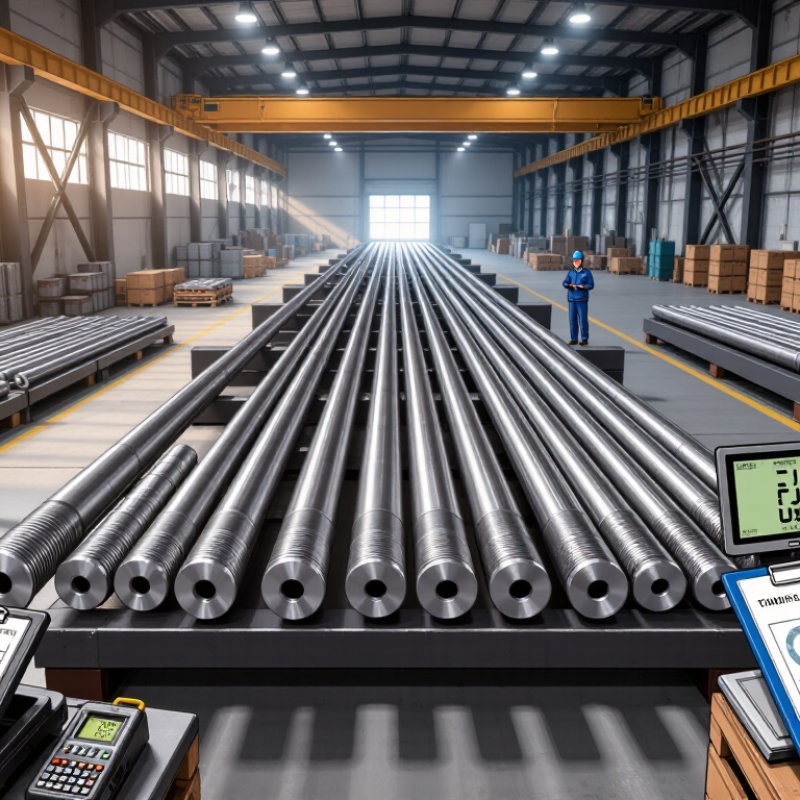
ASTM A193
High-temperature and pressure-service bolting | Alloy steel and stainless steel bolting materials intended for elevated-temperature or pressure-containing service. | B7, B7M, B16, L7, L7M, B8 Class 1, B8 Class 2, B8M Class 1, B8M Class 2 | Grade-dependent strength, temperature capability, corrosion resistance, heat treatment, and hardness requirements. B7 is commonly supplied in quenched-and-tempered alloy steel; B8 and B8M are stainless steel classes. | Flanges, valves, pressure vessels, piping systems, petrochemical equipment, and power-generation equipment. | Specified grade, supplementary requirements, heat-treatment records, chemical composition, tensile properties, hardness, thread dimensions, coating, and certificate traceability. |
DIN 975
Metric threaded rod / studding | General-purpose threaded rods with metric threads; the standard is primarily associated with dimensions and thread form rather than a single universal material grade. | Common market specifications include steel grades such as 4.8 or 8.8 and stainless steel such as A2 or A4, when separately specified. | Performance depends on the separately declared material and property class. Available in full-thread configurations and various lengths; corrosion resistance depends on material or surface treatment. | General construction, equipment installation, pipe supports, cable trays, suspended systems, machinery assembly, and non-pressure structural fastening. | Nominal diameter, pitch, length tolerance, thread tolerance, material grade, property class, surface finish, straightness, packaging, and whether the product is supplied to DIN 975 dimensions or a current equivalent specification. |
ISO 898-1
Metric carbon-steel and alloy-steel fastener property classes | Carbon steel and alloy steel fasteners with specified mechanical-property classes. It is commonly used to define performance classes for metric threaded products. | 4.6, 5.6, 8.8, 9.8, 10.9, and 12.9; the applicable class depends on product design, size range, and manufacturing process. | The first number multiplied by 100 indicates the nominal tensile strength in MPa; the product of the two numbers multiplied by 10 indicates the nominal yield-stress ratio. For example, class 8.8 corresponds to approximately 800 MPa nominal tensile strength and a 0.8 nominal yield ratio. | High-strength machinery, steel structures, automotive and industrial assemblies, equipment frames, and load-bearing metric fastening applications. | Property class, nominal diameter range, tensile and yield requirements, proof load, hardness, decarburization, thread gauge inspection, heat treatment, marking, and test reports. |