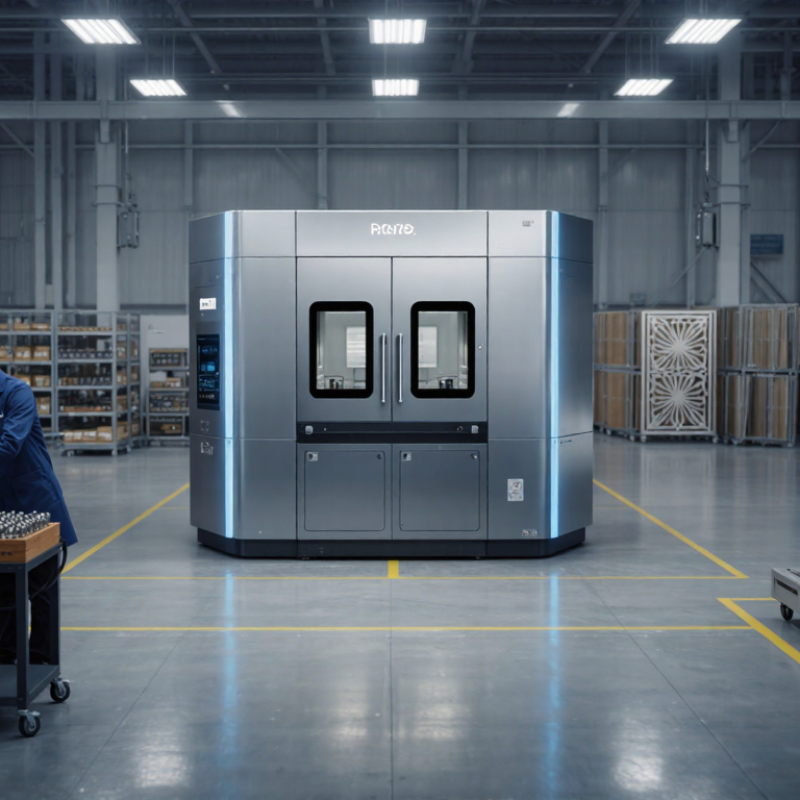
| Compact batch system | Approximately 0.3–0.6 m internal diameter | Small or mixed batches; often a few trays of parts, depending on fixture design | Manual loading; recipe-based process control is commonly available | Confirm door clearance, floor loading, electrical supply, cooling-water capacity, and exhaust connection | Prototyping, job shops, laboratories, and low-volume production | Check whether the usable chamber area and fixture layout accommodate the largest parts—not just the chamber’s stated volume |
| Medium batch system | Approximately 0.7–1.2 m internal diameter | Multiple fixtures or production batches; part count varies substantially by size and spacing | Recipe control with operator loading; optional automated handling may be available | Review transport route, ceiling height, service access, utility connections, cooling, and process-gas storage provisions | Established production with recurring part families and moderate batch volumes | Compare expected parts per load and cycle time, including loading, heating, coating, cooling, and unloading |
| Large batch system | Approximately 1.3–2.0 m internal diameter or larger | High-volume or large-part batches; capacity depends on fixture geometry, part spacing, and coating requirements | Programmable process control; automated handling can reduce repetitive manual work | Check foundation and floor loading, crane or rigging access, electrical demand, cooling-water flow, exhaust, and maintenance clearance | High-throughput production or parts that require large fixtures and a substantial coating area | Validate that the site can support installation and maintenance, not only the equipment’s operating footprint |
| Inline or continuous system | Configuration varies; chamber size is designed around the conveyor and product envelope | Measured by line throughput, such as parts per hour; rate depends on product spacing and process time | High; conveyor movement and process stages are integrated into the line | Assess line length, material flow, ceiling height, conveyor access, utilities, exhaust, and integration with upstream and downstream operations | Stable, repeatable production of high volumes with consistent part geometry | Confirm that product mix and production scheduling justify continuous operation and that the line can be balanced with surrounding processes |