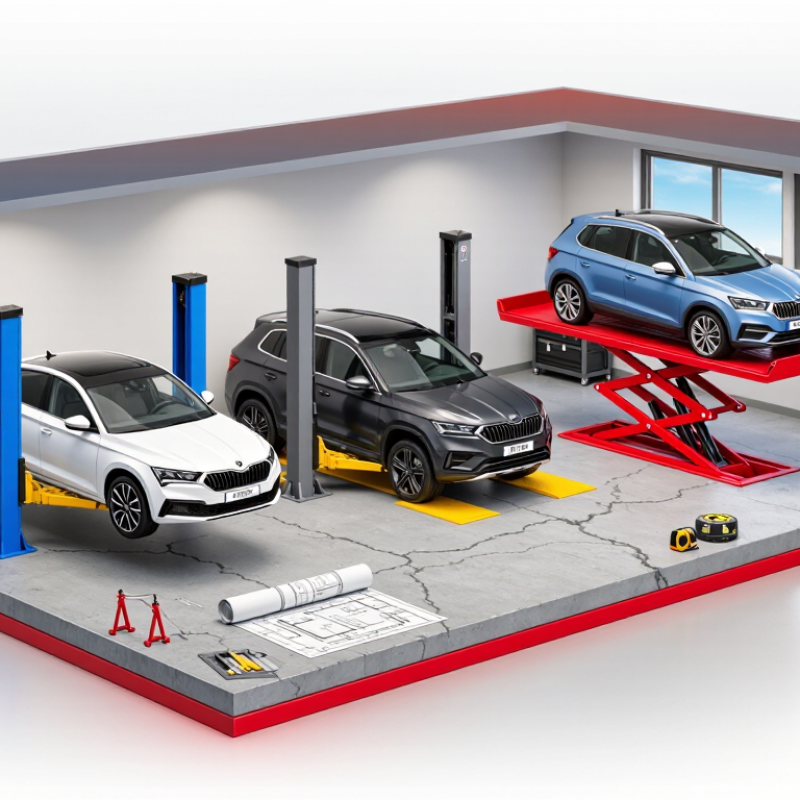
| Two-post lift | Commonly about 9,000–12,000 lb, depending on the model. | Needs room for two columns, swing-arm access, and vehicle doors. Many models need roughly 11–12 ft of ceiling height; verify the exact lift height and overhead clearance. | Cars, crossovers, and many light-duty trucks within the lift’s rated capacity and approved lifting-point range. | Wheel, brake, suspension, and underbody work; provides access beneath the vehicle. | Offers excellent under-vehicle access, but correct arm placement and a suitable floor are essential. It does not provide the same convenient storage platform as a four-post lift. | Check the vehicle’s lifting points, wheelbase range, arm reach, ceiling height, and the manufacturer’s slab and anchoring specifications. |
| Four-post lift | Commonly about 8,000–14,000 lb, with capacity varying by model. | Requires room for four posts and runways. Runways are often around 14–18 ft long; allow space for vehicle approach and confirm ceiling height for the raised vehicle. | Cars, sports cars, and many light trucks that fit the runway length and rated capacity. | Vehicle storage, oil changes, inspections, and work with compatible rolling jacks or accessories. | Stable runways make loading straightforward and can allow a second vehicle to be stored below when clearances permit. Runways can limit direct access to some wheels and underside areas. | Measure vehicle length, wheelbase, tire width, and garage approach space. Confirm whether the lift needs anchors and whether accessories are required for your work. |
| Scissor lift | Often about 6,000–10,000 lb; capacity and lifting height depend on design. | Compact models can suit tighter bays. Check platform length and width, lift height, closed height, and required access around the vehicle. | Cars and some crossovers or light trucks that fit the platform and specified lifting points. | Brakes, tires, suspension, and general service where a full-height lift is not practical. | Uses less permanent floor space than many full-height lifts, but the mechanism or platforms may restrict access to parts of the underside. | Compare lifting height and platform layout with the jobs you plan to do. Confirm the floor requirements and whether the unit is fixed, recessed, or portable. |
| Portable mid-rise lift | Often about 6,000–7,000 lb; check the individual unit’s rating. | Usually needs less ceiling height than a full-rise lift. Allow storage space for the lift when it is not in use and clear floor space for setup. | Many passenger cars and some light vehicles within the stated capacity and lifting-point range. | Wheel, brake, tire, and moderate underbody work in a shared or space-limited garage. | Can be moved or stored between jobs, but typically does not raise a vehicle as high as a full-height lift. | Check the vehicle’s ground clearance, lift-point compatibility, required floor surface, power needs, and the manufacturer’s setup instructions. |