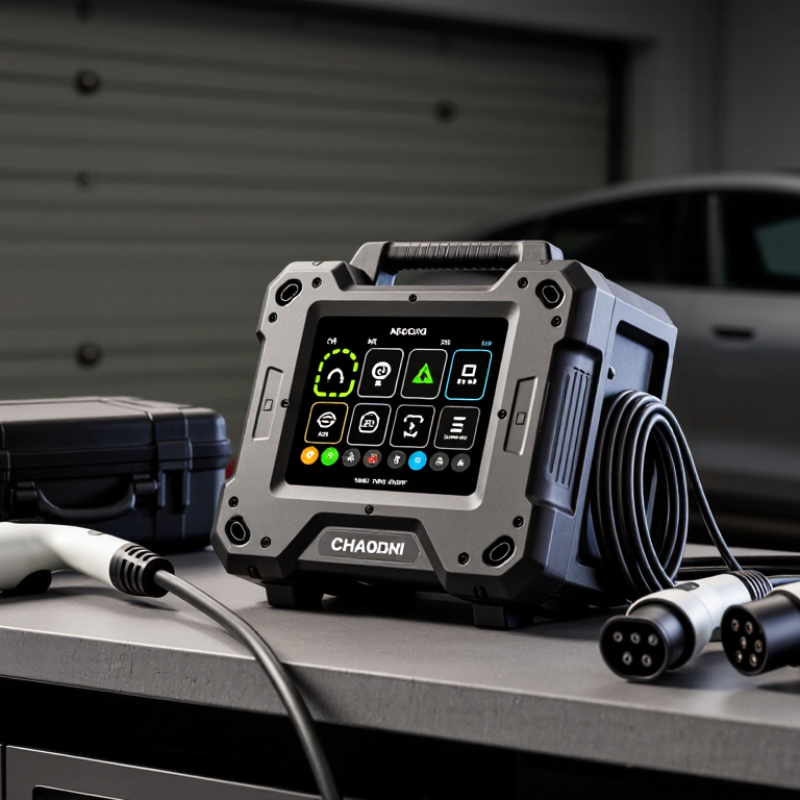
| Basic EVSE simulator or adapter | About $100–$300 | Basic checks by homeowners, technicians, or small service teams | May simulate common control-pilot states, indicate whether an EVSE responds, and provide access for selected electrical measurements. | Often provides limited measurements and may not perform a complete installation safety test or RCD test. | Choose one only when basic operational checks are sufficient. Confirm connector compatibility and exactly which pilot states and tests are supported. |
| Dedicated EV charger tester | About $300–$800 | Installers and service technicians testing charging equipment in the field | Common models can simulate vehicle connection and charging states, check control-pilot behavior, and support selected checks for protective conductors and fault responses. | Functions vary considerably. Some models require separate instruments for voltage, insulation, continuity, or residual-current-device testing. | Compare the test functions against the commissioning procedure and local electrical rules; do not assume every model performs every safety test. |
| Installation multifunction tester with EVSE accessories | About $800–$2,000 or more | Electricians who also need broader installation testing | Depending on the instrument and accessories, may combine EVSE simulation with electrical checks such as voltage, protective-conductor continuity, insulation resistance, and RCD testing. | Accessories may be required for EVSE-specific tests. Confirm that the tester supports the relevant RCD types and test procedures. | Consider this option when one instrument must serve both charger commissioning and general installation work. |
| Advanced diagnostic or power-analysis setup | About $2,000 and up | Specialist service teams, laboratories, and detailed fault investigations | May offer expanded diagnostics, data logging, or power-quality analysis when paired with suitable instruments and probes. | Higher cost and complexity; advanced analysis is not necessary for routine installation checks. | Buy only when the extra diagnostic detail is part of regular work and staff are trained to interpret the results. |
| Connector and standard compatibility | Check before purchase | Anyone testing chargers with more than one connector type or charging system | Testers and adapters are available for different charging interfaces, including Type 1 and Type 2 AC equipment. Compatibility depends on the specific model and accessories. | A connector adapter does not necessarily provide the correct test functions for every charger or charging mode. | Match the tester to the charger’s connector, AC or DC use, and the applicable standards and local requirements. |
| Safety, calibration, and documentation | Include in total ownership cost | All professional users | Usable results depend on suitable measurement ratings, current calibration where required, correct procedures, and clear test records. | A charger simulator alone does not replace a correctly rated electrical safety tester or qualified work practices. | Check measurement ratings, calibration arrangements, supplied documentation, and whether results can be recorded for commissioning reports. |
| Budget figures are approximate USD ranges and vary by region, included accessories, measurement functions, and calibration services. Before buying, verify the manufacturer’s specifications, applicable IEC 61851 requirements, connector compatibility, and local electrical regulations. |