Request Quote

Request a quote from Nidec Drive Technology America Corporation.

This quote form is intended for customers and partners in North America seeking information about Nidec Drive Technology America Corporation’s Precision Gearing Technologies. For inquiries related to the Nidec motor group division or from outside this region, please visit the global Nidec Group website to find the appropriate regional or product-specific contact.

Subscribe to Nidec Newsletter

Subscribe to our email newsletter to stay current with our precision gearing solutions, featured products, company updates, and industry news.

How to Choose the Best RGB Ring Light?

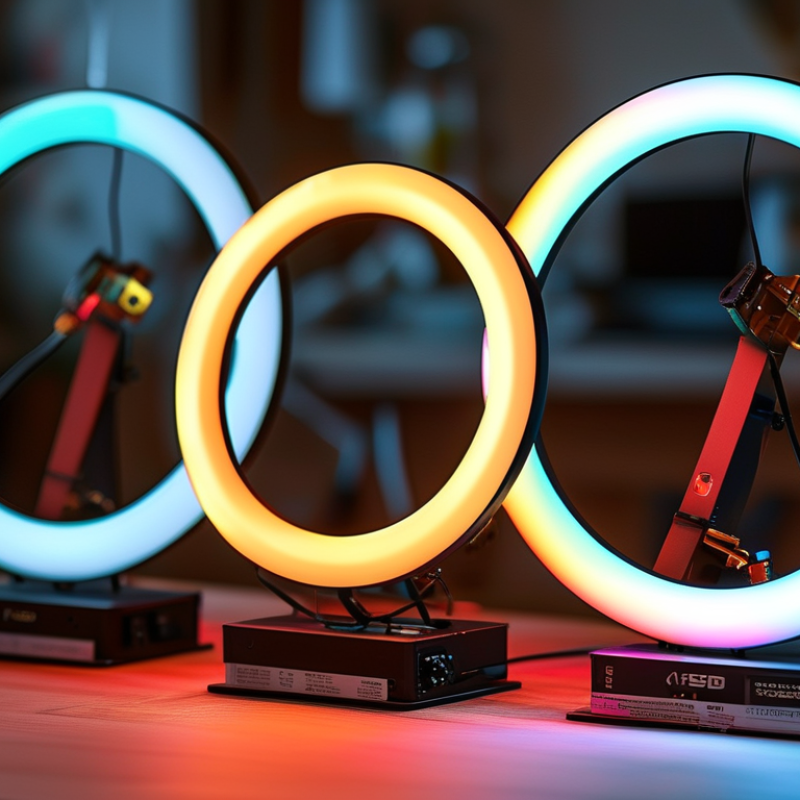
Choosing the right Rgb Ring Light can transform a dull desk into a controlled, professional-looking studio. It can soften facial shadows, improve product colors, and add depth to livestreams, tutorials, or video calls. However, attractive colors do not guarantee useful lighting. Brightness, color temperature, mounting options, power output, and build quality matter more than dramatic advertising.

In this guide, I will examine these factors through practical use and technical comparison. A reliable ring light should provide steady illumination without visible flicker. It should also offer smooth dimming, accurate white balance, and simple controls. For close-up filming, a 10-inch model may fit a small desk. Larger creators may need a 16-inch light for broader, softer coverage. Check the stand carefully. A weak tripod can ruin an otherwise excellent setup.

RGB effects are useful for backgrounds, mood, and creative accents. They should not replace a dependable key light. I have found that some inexpensive models look impressive at first, yet produce uneven color or unstable brightness after extended use. That weakness is easy to overlook. Therefore, this article will compare practical features, user experience, and long-term value. It will also question common buying assumptions, because the most expensive Rgb Ring Light is not always the best choice. Your camera, room size, skin tone, and recording style should guide the final decision. Small details matter.

How to Choose the Best RGB Ring Light?

Define Your RGB Ring Light Needs and Intended Use

Before choosing an RGB ring light, define the scene you will actually create. A desk tutorial needs even, shadow-softening light. A livestream may need stronger output and quick color changes. A makeup video demands accurate skin tones, not only vivid effects. Your camera distance matters too. A small room can look harsh with excessive brightness.

Industry data supports this practical approach. Wyzowl’s State of Video Marketing 2024 report found that 91% of businesses use video as a marketing tool. DataReportal’s Digital 2024 report counted 5.04 billion social media users worldwide. These figures suggest frequent demand for compact, repeatable lighting, but they do not prove that every creator needs RGB. That assumption deserves questioning.

Check three specifications: adjustable color temperature, dimming range, and color accuracy. For natural faces, seek a high CRI, preferably 90 or above. For colored backgrounds, confirm independent RGB control and smooth transitions. A 10–12-inch diameter often suits close-up desk work; larger models can cover shoulders more evenly. I have found that a stable stand matters more than dramatic lighting modes. It prevents small framing changes during recording. Measure your desk first. Space is easy to underestimate. Choose USB power for portability, but verify the adapter’s output. More effects are not always more useful.

How to Choose the Best RGB Ring Light?

Define your RGB ring light needs by matching the light’s most important features to your intended use. The chart uses a practical priority scale from 1 to 5, where 5 means essential.

How to read the chart: Video calls usually need soft illumination and adjustable white balance. Beauty and makeup applications place greater importance on accurate color rendering. Product demonstrations benefit from balanced white light and color accuracy, while creative video production typically gives RGB effects a higher priority.

Compare Light Size, Brightness, and Color Temperature

Choosing an RGB ring light starts with its size, because diameter affects both coverage and softness. A 10-inch model fits a small desk, but it may create sharper shadows. A 16-inch light spreads illumination across the face more evenly. For full-body videos, use a larger ring or add a separate light source.

Brightness should be measured at a stated distance, not judged from the highest percentage. I usually test the light at arm’s length and check whether skin details remain visible. Dimmable output helps when moving between a bright window and a dark room. Look for accurate color rendering, ideally a CRI around 90 or higher. Too much brightness can cause eye strain and shiny skin. I learned this after recording several clips that looked harsh and overexposed.

Color temperature controls the mood and skin appearance. A range near 3,200K creates a warm indoor look, while 5,600K resembles neutral daylight. Adjustable models are more useful when room lighting changes during filming. RGB effects can add blue or red accents, but they should not replace balanced white light for faces. Keep the light near eye level, slightly above the camera. This reduces unflattering shadows under the nose and chin. Still, every room behaves differently. Test before filming.

Evaluate RGB Effects, Controls, and Color Accuracy

When choosing an RGB ring light, test its effects before admiring its color menu. Saturation can look dramatic on a dark wall, yet overwhelm skin tones on camera. I prefer adjustable hue, saturation, and brightness, plus smooth transitions between presets. A useful control panel should respond quickly and show exact values. Physical dials feel better during live shooting. App controls are convenient, but connection delays can interrupt a recording.

Color accuracy deserves more attention than colorful effects. CIE 224:2017 explains that traditional CRI evaluates eight color samples, which can hide weak performance on skin, fabric, or food. IES TM-30-20 uses 99 color evaluation samples and reports fidelity through Rf, with 100 representing the reference. It also reports gamut through Rg, where values near 100 indicate similar color volume. For talking-head videos, I would seek Rf above 90 and inspect red reproduction carefully. Numbers help, but they do not replace a real camera test.

Place a white card beside your face. Record the same shot under neutral, red, and blue settings. Check whether skin shifts green or orange after exposure changes. Also test brightness at the lowest usable level; some lights become unstable there. I once trusted a high color score and ignored flicker during dimming. That was a poor decision. A light meter, camera preview, and daylight comparison reveal more than a polished specification sheet.

How to Choose the Best RGB Ring Light? - Evaluate RGB Effects, Controls, and Color Accuracy

Use the following performance benchmarks to compare RGB ring lights objectively. Values are based on commonly used lighting specifications, broadcast practices, and color-measurement standards.

Evaluation Area Metric Basic Level Recommended Level Why It Matters How to Verify
RGB Effects Hue adjustment Fixed color presets or fewer than 12 selectable hues Provides precise control over the color atmosphere and allows subtle color matching. Check whether the control system offers a continuous hue wheel or only preset buttons.
RGB Effects Saturation control Preset saturation levels only Low saturation creates soft pastel tones, while high saturation produces vivid accent colors. Test the same hue at minimum, medium, and maximum saturation.
RGB Effects Brightness adjustment Three to five brightness steps Smooth dimming helps prevent exposure changes, visible jumps, and harsh transitions during video recording. Reduce brightness gradually and look for flicker or abrupt output changes.
RGB Effects Built-in lighting effects Fewer than 6 effects Useful effects may include fire, lightning, television, candle, police light, strobe, party, and color cycle. Confirm that effect speed, color, and brightness can be adjusted independently.
RGB Effects Effect speed control Fixed-speed effects Adjustable speed makes effects more suitable for interviews, streaming, music, and creative video scenes. Test the slowest and fastest settings for smoothness and consistency.
White Light Color temperature range Approximately 3,200–5,600 K A wider range supports warm indoor scenes, neutral daylight, and cool creative backgrounds. Verify the stated range and check whether the adjustment is continuous.
Color Accuracy CRI or Ra rating Ra 80 or higher Higher CRI generally produces more natural skin tones and more reliable color rendering in white-light mode. Look for an independent test report rather than relying only on an unverified product claim.
Color Accuracy TLCI rating Not specified or below 90 TLCI is designed for television and video workflows and can indicate how colors may appear on camera. Check whether the rating applies to the daylight, tungsten, and mixed-color modes being used.
Color Accuracy Color consistency across brightness levels Visible color shift when dimmed Consistent color prevents skin tones and background colors from changing as brightness is adjusted. Record a gray card and skin-tone reference at several brightness settings.
Color Accuracy White-point stability Noticeable green or magenta tint Stable white balance reduces unwanted color casts and simplifies camera white-balance settings. Use a calibrated color meter or compare the light with a known neutral reference.
Controls On-device controls Power, brightness, and basic color selection Direct controls are useful when a phone or remote control is unavailable. Confirm that essential settings can be changed without entering complicated menus.
Controls Wireless control Remote control only or no wireless control Wireless control enables adjustments while the light is mounted behind a camera or above a desk. Check connection range, response time, preset storage, and compatibility with the operating system.
Controls Preset memory Remembers only the last setting Presets speed up repeated setups for streaming, video calls, product shots, and photography. Power the light off and on to confirm whether saved settings are retained.
Flicker Performance Flicker at common camera shutter speeds Flicker may appear at high frame rates Flicker can create visible banding or brightness pulsing in video recordings. Test slow-motion video at several brightness levels and frame rates.
Output Illuminance at 1 meter Approximately 300–600 lux Higher output provides more flexibility for larger rooms, diffusion, and lower camera ISO settings. Measure with a lux meter at 1 meter using the same color-temperature setting.
Light Quality Diffusion and shadow softness Small emitting area with pronounced shadows A broad, diffused source reduces harsh facial shadows and produces attractive circular catchlights. Inspect the diffuser for hotspots and compare facial shadows at the same distance.
Ease of Use Display and control feedback No display or unclear status indicators Clear feedback makes settings repeatable and reduces setup errors. Check screen readability from the normal operating position and under bright room light.
Purchase Decision Overall suitability Basic Use Recommended for Video The best choice balances adjustable RGB effects, reliable controls, flicker-free output, and high white-light color accuracy. Prioritize independent test data over the number of advertised colors or effects.

Note: CRI, TLCI, lux, and Duv values can vary with brightness, color temperature, measurement distance, diffuser design, and test equipment. For professional work, compare independent measurements made under the same conditions.

Check Mounting Options, Power Sources, and Included Accessories

How to Choose the Best RGB Ring Light?

The mounting system affects stability, framing, and daily convenience. I prefer a ring light with a reinforced tripod mount and adjustable height. A phone holder should rotate smoothly without blocking the light. Check whether the holder fits your device with its protective case attached. Some stands look strong but wobble when fully extended. Test the joints before recording important content. Small movement can ruin a carefully arranged shot.

Power options deserve equal attention. USB-powered models work well with laptops, wall adapters, and portable power banks. They are convenient for small rooms or outdoor sessions. However, a weak power source may cause flickering or reduced brightness. Check the required voltage and current before connecting anything. Battery-powered lights offer greater mobility, but their running time can vary. My own estimates have sometimes been too optimistic. Measure actual use instead.

Included accessories can improve value, but quantity is not quality. Look for a stable stand, phone holder, remote control, diffuser, and suitable charging cable. A diffuser can soften harsh shadows on the face. A remote helps when the light sits several feet away. Still, inexpensive accessories may feel fragile. Inspect the cable length, clamp pressure, and screw threads. Choose practical parts over decorative extras. Better fit matters.

Assess Build Quality, Compatibility, and Overall Value

How to Choose the Best RGB Ring Light?

A strong RGB ring light should feel stable before it ever turns on. Check the frame, hinge, tripod joints, and phone holder for looseness. Metal supports usually resist daily adjustment better than thin plastic parts. However, heavier construction is not automatically better. It can become tiring to carry between rooms. I once chose a light with a solid base but ignored its awkward locking knob. That small detail became annoying during regular filming.

Compatibility deserves a practical test. Measure your phone, camera, and microphone before ordering. The holder should grip securely without covering buttons or ports. Confirm the mounting thread, power connection, and control method. Some lights need constant wall power, while others accept portable batteries. RGB controls should offer adjustable brightness, color effects, and white-light temperatures. Too many effects may look impressive but add little value.

Look beyond the purchase price. A reliable light should include replaceable or durable parts, clear instructions, and responsive support. Check the warranty terms carefully. A two-year promise means less if the exclusions are vague. Read user feedback for repeated complaints about flickering, overheating, or unstable stands. I would also test the light for thirty minutes before important work. Heat can reveal weaknesses quickly. My judgment is not perfect, so I compare specifications with hands-on use. That balance helps separate useful features from attractive distractions.