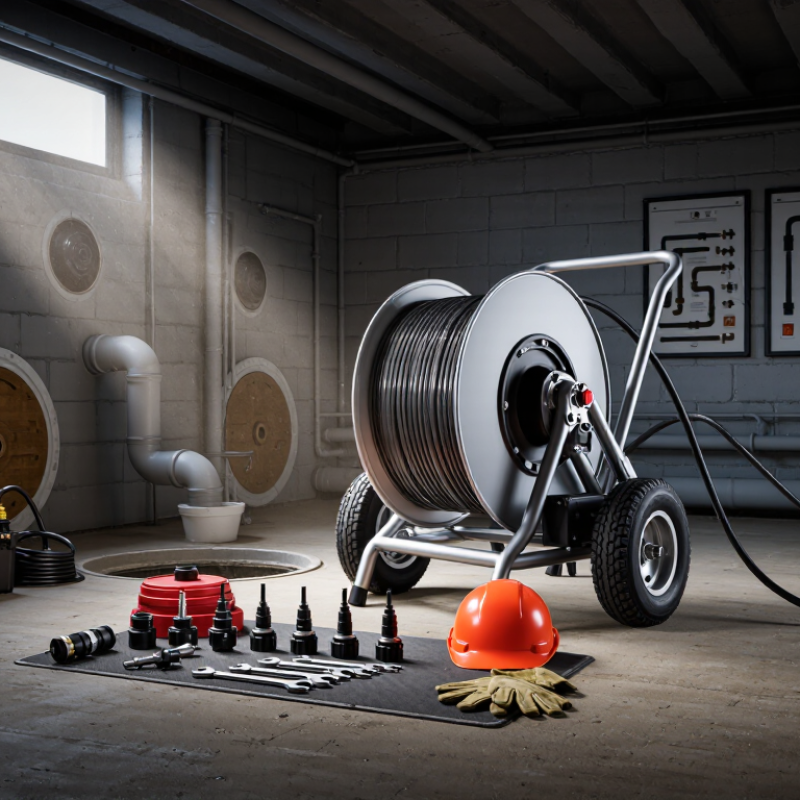
| 1. Match the machine to the pipe and blockage | Confirm the machine’s stated pipe-diameter range, cable or hose size, and compatible cleaning heads. Consider whether the blockage is grease, roots, scale, or another obstruction. | A tool that is too large or unsuitable for the pipe may not pass through bends or may damage a fragile line. Different blockages can require different cleaning tools. | Check the pipe material, diameter, access point, and likely blockage type before comparing machines. Follow the manufacturer’s operating limits. |
| 2. Check essential safety features | Look for appropriate guards, a ground-fault circuit interrupter (GFCI) or equivalent electrical protection where applicable, accessible controls, and clear emergency-stop instructions. | Drain-cleaning cables can catch, twist, or whip, while powered equipment used near water presents electrical hazards. Safety features help reduce, but do not eliminate, these risks. | Read the safety instructions and verify the power requirements and electrical protection needed for the intended worksite. |
| 3. Choose a manageable operating setup | Compare machine weight, handle and wheel design, cable-feed controls, and the space needed to position the unit at a cleanout. | Equipment that is difficult to move or control can slow work and make operation less comfortable, especially in tight indoor spaces. | Consider access stairs, vehicle loading, doorway width, and whether one person or a team will move and operate the machine. |
| 4. Evaluate reach and cable or hose handling | Check the usable cable or hose length, feed method, compatible extensions, and how the machine stores and retrieves it. | Insufficient reach may prevent access to the blockage; poor cable handling can increase tangling and handling risks. | Estimate the distance from the access point to the problem area, including bends, and confirm the machine is designed for that configuration. |
| 5. Look for clear controls and useful feedback | Review the clarity of speed or feed controls, direction indicators, operating instructions, and any available visual inspection options. | Intuitive controls can help operators work more consistently. A camera inspection system, when available, can help assess pipe condition and cleaning results. | Check whether controls can be reached from the operating position and whether instructions explain setup, use, and shutdown. |
| 6. Assess routine maintenance needs | Find out how to inspect and clean the cable or hose, replace wear parts, lubricate moving components, and store the machine. | Regular inspection and cleaning help identify wear or damage before the next use and support reliable operation. | Review the maintenance schedule and confirm that replacement parts and service information are available for the expected ownership period. |
| 7. Compare total ownership and training requirements | Consider purchase or rental cost, consumables, repairs, storage, power needs, warranty terms, and operator training. | The initial price alone does not reflect the full cost of keeping equipment ready and using it safely. | Compare the complete setup required for your jobs, and ensure operators are trained to follow the machine instructions and applicable workplace safety procedures. |