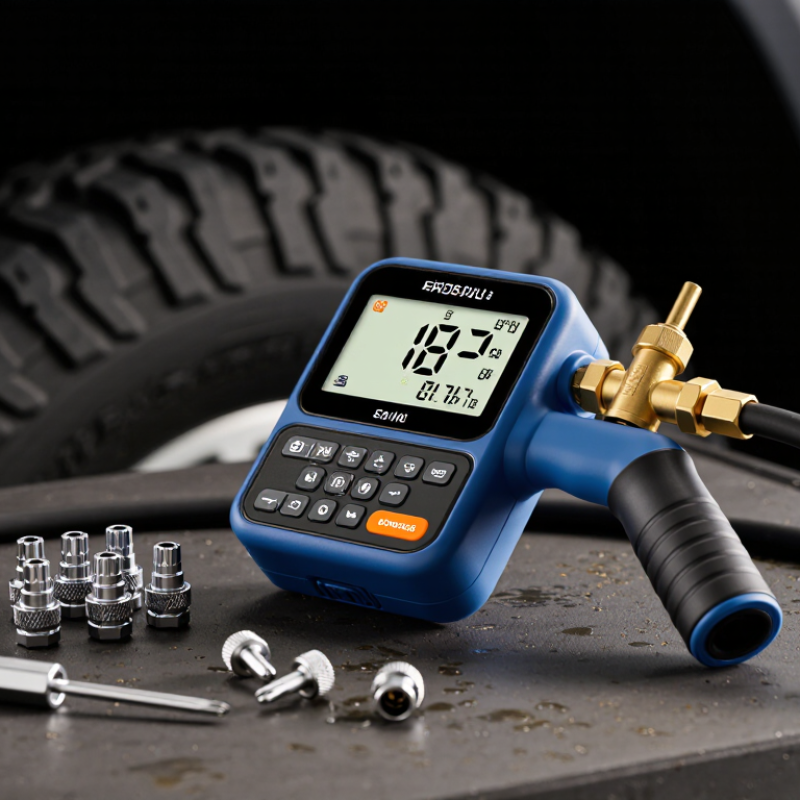
A smart air pressure gauge should be judged beyond its digital display. Calibration is the first serious checkpoint. Ask whether the instrument was tested against a traceable reference and whether the certificate identifies pressure points, uncertainty, and test temperature. Calibration from an ISO/IEC 17025-accredited laboratory offers stronger evidence than a simple factory claim. In field work, I record readings at low, middle, and high pressure. Small errors often appear near the limits. That detail is easy to miss.
IP ratings also deserve careful reading. Under IEC 60529, IP65 generally indicates protection from dust and water jets, while IP67 includes temporary immersion protection. These ratings do not prove resistance to oil, vibration, impact, or repeated pressure shocks. Check the complete operating environment. A gauge mounted near a compressor may face condensation, metal dust, and sudden pulses. A sealed case helps, but it cannot correct poor installation.
Temperature performance can change the result more than expected. Compare the stated accuracy across the full operating range, not only at 20°C. Look for temperature compensation, thermal drift data, and a response standard that matches your application. For demanding measurements, request test evidence linked to recognized calibration procedures. I once trusted a wide temperature claim without checking warm-up time. The readings stabilized slowly. That mistake remains worth remembering. Short specifications can hide long maintenance problems.