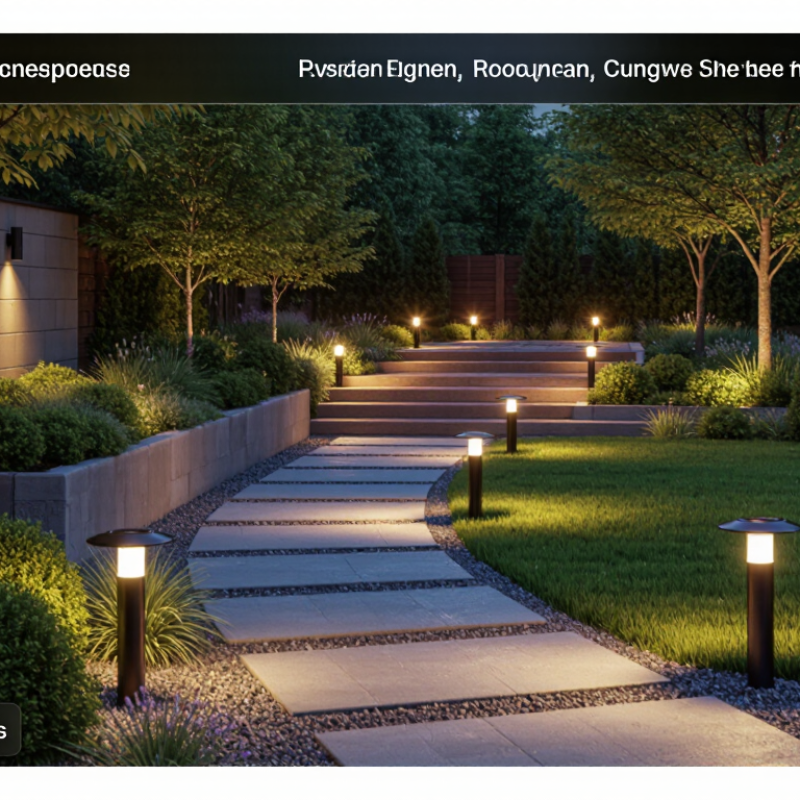
| Main purpose | Path guidance, step visibility, or landscape accent | Prioritize clear visibility of the walking surface; decorative effects should not create glare or obscure changes in level. | Walkways, garden paths, entrances, and steps |
| Power source | Solar, battery, or wired low-voltage lighting | Solar units depend on available sunlight and weather. Wired systems need a suitable outdoor-rated transformer and correctly installed cable. | Solar: sunny areas; battery: locations without wiring; wired: regular or extended lighting needs |
| Light output | Compare stated lumens; many path lights are designed for localized, low-level illumination | Lumens measure total light output, not how evenly the path is lit. Beam direction, spacing, mounting height, and surroundings also matter. | Use modest, shielded output for wayfinding; choose brighter directed light where visibility needs are greater. |
| Color temperature | Warm white (about 2700–3000 K) to neutral white (about 3500–4000 K) | Lower Kelvin values look warmer; higher values look cooler. Keep nearby fixtures consistent for a coordinated appearance. | Warm white for a softer garden feel; neutral white where a cleaner-looking view is preferred |
| Weather protection | Check the fixture’s IP rating and outdoor-use instructions | An IP rating describes protection against dust and water under specified test conditions. Choose a rating appropriate to the actual exposure and installation location. | Exposed paths, damp areas, and locations subject to sprinklers or rain |
| Spacing and layout | Set spacing based on beam spread, brightness, mounting height, and path width | There is no universal spacing that suits every fixture. Test a short section at night and adjust to avoid dark gaps, excessive overlap, and glare. | Straight paths, curves, and wider walkways |
| Materials and finish | Metal, plastic, or composite housings; finishes vary by product | Check corrosion resistance, UV exposure guidance, lens durability, and replacement-part availability for the installation environment. | Coastal, sunny, wet, or high-traffic locations |
| Controls and maintenance | Manual switch, timer, photocell, or motion sensor (where available) | Check operating schedules, sensor coverage, battery replacement needs, and access for cleaning or servicing. | Homes seeking scheduled, dusk-to-dawn, or occasional activated lighting |