How to Choose the Right Flour Pouch in 2026?
Choosing the right Flour Pouch in 2026 requires more than comparing prices or attractive artwork. Flour absorbs moisture quickly, so packaging performance can affect texture, shelf life, and customer trust. A pouch that feels strong in a warehouse may still fail during delivery. Small pinholes matter.
This guide examines practical factors used by experienced food-packaging teams. These include barrier protection, seal strength, material structure, filling equipment, storage conditions, and recycling expectations. A paper-based pouch may suit a bakery brand seeking a natural appearance. However, it may need an inner barrier for humid environments. A laminated pouch can offer stronger protection, but its end-of-life options require careful review.
Reliable decisions should begin with evidence. Ask suppliers for food-contact documentation, specification sheets, migration information, and test results. Check whether the pouch survives drop tests, compression, and repeated handling. Also inspect the zipper, gusset, valve, and printed surface. Ink transfer or weak seals can damage an otherwise excellent package. Very practical details matter.
The best choice depends on flour type, pack size, distribution route, and filling speed. A 500-gram retail pouch has different demands from a 25-kilogram commercial bag. Even proven packaging deserves questioning. Real conditions are often messier than laboratory tests. Trial several samples before placing a large order, and record what happens after transport, stacking, and opening. This approach supports a safer, more dependable Flour Pouch strategy for 2026.
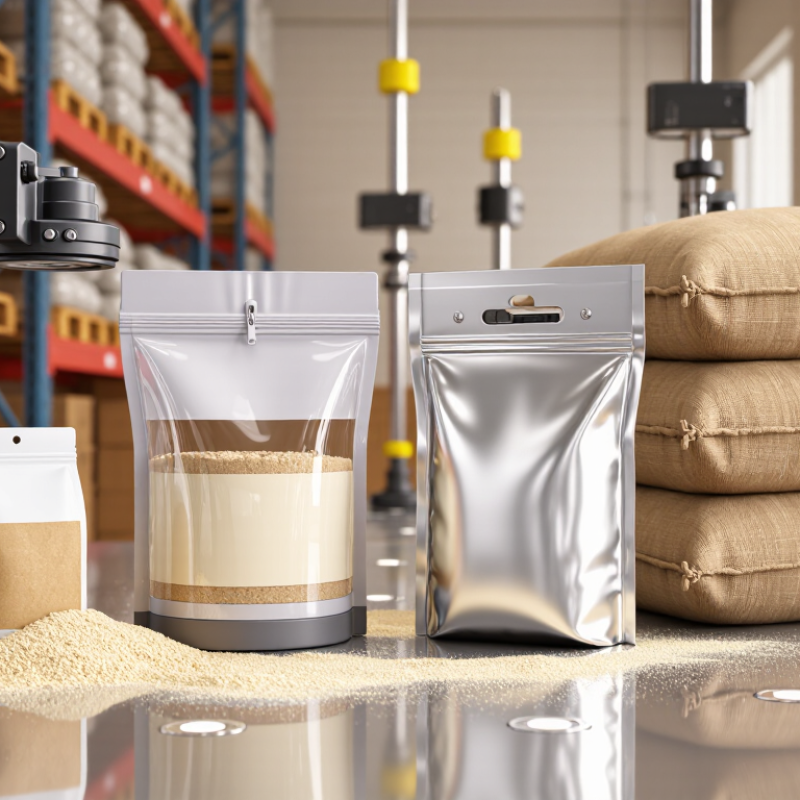
Define Flour Pouch Requirements and Product Specifications
A flour pouch should be specified before you compare suppliers or materials. Define the fill weight, pouch dimensions, flour type, shelf life, and storage climate. Fine flour needs clean seals and dust control. Whole-wheat flour needs stronger oxygen protection because natural oils can oxidize. Codex Standard 152-1985 sets wheat flour moisture at no more than 15.5%. Your pouch should support that quality target.
Choose the barrier after reviewing real distribution conditions. A laminated structure may resist moisture, oxygen, punctures, and light better. A thinner structure can reduce material use, but it may fail during stacking. The OECD Global Plastics Outlook reports that only 9% of plastic waste was recycled in 2019. Therefore, recyclability should be part of the specification, not a late marketing decision. Request seal-strength, drop, compression, and migration test results. Pilot filling also matters. A pouch can pass laboratory tests and still wrinkle beside a fast filling line. That mistake is common.
Tips: Write every requirement in measurable terms. Specify oxygen transmission, water-vapor transmission, seal temperature, pouch tolerance, and allowable leakage. Test at the lowest and highest warehouse temperatures. Ask for batch traceability and food-contact declarations. Do not choose the lightest film automatically. I would challenge that assumption. A cheaper pouch can create more waste through damaged flour, returns, and rework. Use data from Smithers’ flexible packaging market analysis and your own filling trials to balance protection, cost, and material recovery.
Compare Flour Pouch Materials, Barriers, and Structural Designs
Choosing a flour pouch in 2026 requires more than picking paper or plastic. Flour is hygroscopic, and Codex Standard 152-1985 sets a maximum moisture level of 15.5% for wheat flour. A weak moisture barrier can leave flour lumpy, stale, or difficult to pour. Kraft paper gives a familiar texture and good printability, but paper alone offers limited moisture resistance. A paper outer layer with a polyethylene inner seal improves protection without making the pouch excessively rigid.
For higher humidity routes, compare multilayer film, coated paper, and woven polypropylene structures. Check water vapor transmission rate and oxygen transmission rate, not only thickness. Oxygen protection matters more for whole-grain or fat-containing flour. Smithers’ The Future of Flexible Packaging to 2028 valued the global flexible packaging market at roughly US$250 billion in 2023, reflecting strong demand for lighter structures. Lighter is useful, but thinner is not automatically better.
Structure changes handling. A flat-bottom pouch stands neatly on a shelf and supports larger fill weights. A side-gusset pouch uses less board space and pours smoothly. Pinch-top or heat-sealed closures reduce leakage, while resealable zippers improve household storage. The 2024 State of Flexible Packaging report estimated U.S. flexible packaging sales at US$39.8 billion in 2023. Cost pressure is real. Still, a low-cost pouch that fails after opening creates waste. I would test filled samples through humid storage, drop testing, seal checks, and repeated opening. Laboratory results help, but actual flour dust can expose weaknesses that specifications miss.
How to Choose the Right Flour Pouch in 2026?
Compare flour pouch materials, barrier performance, and structural design requirements.
How to read this chart: The 1–5 scale represents relative barrier performance, where 5 indicates the strongest protection. Paper/PE structures offer basic protection, while metallized PET/PE and aluminum-foil laminates provide substantially stronger oxygen, moisture, and light barriers. For larger flour packs, gusseted or quad-seal structures improve volume efficiency and stability; for retail convenience, stand-up pouches can improve shelf presentation and resealability. Actual performance depends on film thickness, seal quality, filling conditions, and storage humidity.
Select the Best Flour Pouch for Cost, Branding, and Supply Needs
Choosing a flour pouch in 2026 requires more than comparing unit prices. Cost begins with material yield, filling speed, sealing performance, and transport weight. A lightweight pouch can reduce freight expenses, but weak seals may create product loss and customer complaints. The Flexible Packaging Association reported that the United States flexible packaging industry generated about 39.7 billion dollars in sales in 2023. This scale shows strong demand, yet it also exposes buyers to volatile resin, paper, and energy costs.
Branding should support recognition without sacrificing practical performance. A matte surface can create a premium appearance, while a clear panel lets shoppers inspect flour texture. However, large printed areas may increase production costs and complicate future artwork changes. Use a pouch size that fits the actual flour volume. Excessive headspace looks careless and wastes warehouse capacity. It is a small detail, but shoppers notice it.
Supply needs deserve equal attention. Ask converters about minimum order quantities, lead times, backup materials, and quality testing. The Packaging Machinery Manufacturers Institute has repeatedly identified labor shortages and supply-chain disruption as major packaging pressures in recent industry outlooks. A cheaper pouch is not cheaper if it arrives late. Request seal-strength, drop, moisture, and compression results before approving production. I would also question whether a multilayer structure is truly necessary. Better barrier protection can extend shelf life, but it may reduce recycling options. The right decision is sometimes less impressive, and more dependable.