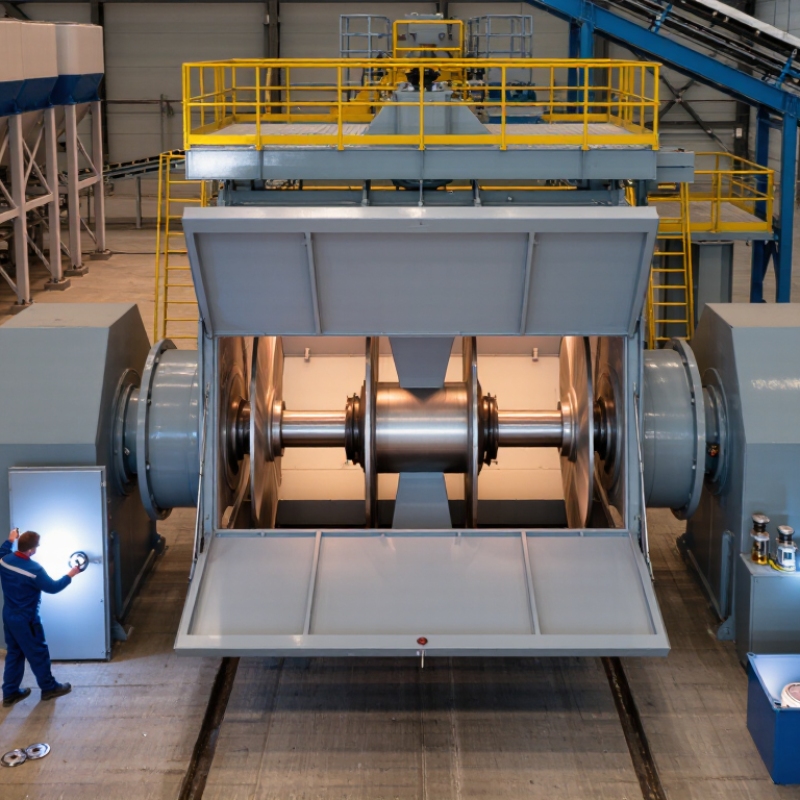
| Nominal batch capacity | 1.0 m³ | 1.5 m³ | 2.0 m³ | 3.0 m³ | Match the mixer size with the required concrete volume per batch, not only the maximum daily output. |
| Typical practical output* | 30–45 m³/h | 45–65 m³/h | 60–85 m³/h | 85–120 m³/h | Confirm the complete plant cycle, including loading, mixing, discharge, and cleaning time. |
| Typical mixing time per batch | 30–45 seconds | 35–50 seconds | 40–55 seconds | 45–60 seconds | Request a trial using the actual aggregate grading, moisture content, cement dosage, and admixtures. |
| Typical installed motor power | 2 × 18.5–22 kW | 2 × 22–30 kW | 2 × 30–37 kW | 2 × 45–55 kW | Verify voltage, frequency, starting current, control-panel rating, and local electrical capacity. |
| Approximate mixer body footprint | 2.4 × 1.6 m | 2.8 × 1.8 m | 3.2 × 2.0 m | 3.8 × 2.3 m | Allow additional clearance for inspection, discharge gates, covers, walkways, and maintenance access. |
| Recommended maintenance clearance | ≥ 0.8 m | ≥ 0.8 m | ≥ 1.0 m | ≥ 1.0 m | Measure the complete installation area and keep access routes clear of aggregate, piping, and cables. |
| Foundation requirement | Reinforced concrete base | Reinforced concrete base | Engineered reinforced base | Engineered reinforced base | Obtain equipment loads, anchor-bolt details, vibration data, and soil conditions before construction. |
| Wear protection to inspect | Replaceable liners and paddles | Replaceable liners and paddles | Heavy-duty liners and paddles | Heavy-duty liners and paddles | Check material thickness, hardness, replacement method, bolt accessibility, and spare-part availability. |
| Routine lubrication points | Bearings and drive components | Bearings and drive components | Bearings, seals, and drive components | Bearings, seals, and drive components | Request the lubrication chart and confirm safe access without entering the mixing chamber. |
| Suggested cleaning frequency | After each shift | After each shift | After each shift | After each shift | Remove hardened concrete regularly; buildup can reduce capacity, increase power demand, and affect mixing quality. |
| Essential safety provisions | Fixed guards, interlocked access covers, emergency-stop devices, lockout/tagout points, overload protection, safe walkways, and clear warning labels | Check compliance with applicable local machinery, electrical, guarding, and workplace safety requirements. |
| Typical specific electricity use* | 1.5–2.5 kWh/m³ | 1.5–2.4 kWh/m³ | 1.4–2.3 kWh/m³ | 1.4–2.2 kWh/m³ | Calculate energy cost from actual operating hours, electricity tariff, material properties, and batch utilization. |
| Main operating-cost drivers | Electricity, wear liners, mixing paddles, seals, bearings, lubricants, water, cleaning labor, and unplanned downtime | Compare total cost per cubic meter rather than purchase price alone. |
| Best operating profile | Small or intermittent production | Medium production | Regular commercial production | High-volume continuous production | Select the smallest capacity that meets peak demand while maintaining an adequate production margin. |